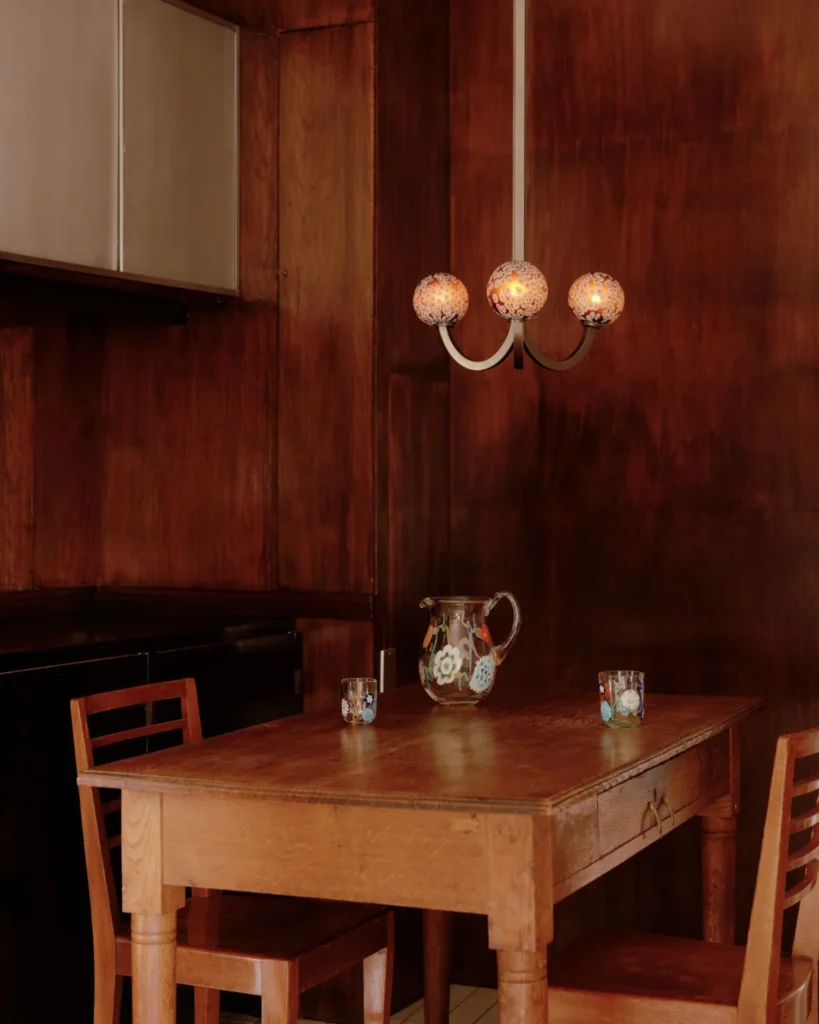

The annual New York Design Week, commonly referred to as NYCxDESIGN, is a period characterized by a relentless schedule of product launches, gallery openings, and high-concept exhibitions. In the most recent iteration of this city-wide festival, the sheer volume of new entries often makes it difficult for a single brand to capture the collective attention of the design community. However, Laguna~B, the venerable Venetian glass atelier, managed to achieve this feat through a strategic double-release of collaborations that bridged the gap between Old World craftsmanship and contemporary Brooklyn-based aesthetics. By partnering with the pattern-centric studio Dusen Dusen and the sophisticated lighting designers at In Common With, Laguna~B demonstrated the enduring relevance of Murano glass in a market increasingly hungry for authenticity and tactile uniqueness.
Founded in 1994 and operating out of the historic glassmaking hub of Murano, Italy, Laguna~B has spent nearly three decades refining its signature style. The brand is perhaps most famous for its "goti de fornasa"—traditional drinking glasses originally made by glassblowers for their own use, often utilizing leftover scraps of colored glass. Under the leadership of the late Marie Brandolini and now her son, Marcantonio Brandolini d’Adda, the atelier has maintained a core commitment to handmade, one-of-one production. This commitment remained steadfast even as the brand pivoted toward high-profile collaborations that have placed its work in some of the most exclusive settings in global culture, from Hollywood film sets to billionaire nuptials.

A Synthesis of Pattern and Form: The Dusen Dusen Collaboration
The partnership with Dusen Dusen, led by designer Ellen Van Dusen, represented a significant technical challenge for the Murano-based artisans. Dusen Dusen is a brand synonymous with bold, geometric patterns and a vibrant, often irreverent use of color. Translating these two-dimensional graphic sensibilities into the fluid, three-dimensional medium of molten glass required a departure from standard production methods.
The resulting collection features a series of anthropomorphic pitchers—stylized as a zebra, a parrot, and a fish—alongside a suite of patterned drinking glasses. These pieces utilize Laguna~B’s layered Murano glass technique to recreate Van Dusen’s signature abstract prints. Ellen Van Dusen noted that the collaboration was particularly "freeing," as she provided highly technical drawings without knowing exactly how the master glassmakers would achieve the desired visual effects. The process required the hot shop to access new technical solutions to ensure the bold stripes and spots of the Dusen Dusen aesthetic were preserved within the swirling, organic textures inherent to Murano glass.
This collection bridges the gap between functional homeware and pop art. By combining Van Dusen’s playful, modern sensibility with the weight and history of Venetian glass, the collaboration appeals to a younger demographic of collectors who value both design heritage and contemporary whimsy.

Illuminating Tradition: The In Common With Lido Series
While the Dusen Dusen collaboration focused on the tabletop, the partnership with In Common With took Laguna~B into the realm of architectural lighting. In Common With, a Brooklyn-based studio founded by Nick Ozemba and Felicia Hung, is known for its meticulous approach to materiality and its ability to blend industrial precision with artisanal warmth.
The "Lido Series," which debuted at the studio’s Tribeca showroom and event space, Quarters, includes sconces, flush mounts, and a modular chandelier known as the Cosmos Chandelier. This series marks the first time the New York studio has ventured into the specialized world of Murano glass at this level of lineage. The production utilized the "murrine" style, a labor-intensive process where glass canes are layered, stretched, and then sliced crosswise to reveal intricate, kaleidoscopic patterns.
A defining characteristic of this collaboration was the physical involvement of the designers in the production process. Nick Ozemba traveled to Venice to work directly in the hot shop, adjusting the proportions of the fixtures in real time as the material reacted to the heat. Ozemba described the process as a "choreography" between the maker and the material, emphasizing that the nuances of glassblowing are difficult to grasp without physical presence in the atelier. The resulting fixtures are not merely lighting tools but sculptural objects that respond to the "mercurial nature" of glass, with each bulb and shade possessing individual characteristics that cannot be replicated by a machine.

A Chronology of Cultural Influence and Luxury Associations
The prominence of Laguna~B at New York Design Week is the latest chapter in a multi-year trajectory of increasing cultural visibility. The brand’s ascent into the upper echelons of the luxury market has been supported by a series of high-stakes appearances and partnerships:
- July 2023: A pair of Laguna~B’s signature Goto glasses were featured prominently in Greta Gerwig’s Barbie, a film that catalyzed a global trend in vibrant, "Barbiecore" aesthetics.
- Summer 2023: The atelier was commissioned to produce wedding favors for Jeff Bezos’s ceremony in Venice, further cementing its status as a preferred brand for the global elite.
- Luxury Fashion Partnerships: Prior to these events, Laguna~B had already established a firm footing in the fashion world through collaborations with Yves Saint Laurent and JW Anderson. These partnerships often involved limited-edition runs that treated glassware as a collectible fashion accessory.
- Curated Collections: The brand’s "Curated By" series, including a set designed with renowned perfumer Frédéric Malle, has allowed it to tap into the sensibilities of various creative industries, from fragrance to high fashion.
Caterina Capelli, head of communications for Laguna~B, attributes the brand’s allure to the inherent unpredictability of the medium. "Things don’t always turn out the way you expect," she noted, highlighting that this lack of total control is precisely what modern consumers are looking for in an era of mass-produced perfection.
Technical Mastery: Goti de Fornasa and the Murrine Technique
To understand the value of these collaborations, one must look at the technical heritage Laguna~B preserves. The goti de fornasa (furnace glasses) are a symbol of the glassmaker’s identity. Historically, these were "impromptu" creations, made quickly and without a mold, resulting in the irregular, swirling patterns that define the Laguna~B look. This "process-as-product" philosophy is a direct counterpoint to the sterile uniformity of industrial glassware.

The murrine technique used in the In Common With collection is even more complex. It requires the creation of a "cane" of glass with a specific internal pattern. When this cane is sliced, the pattern is revealed in cross-section. These slices are then fused together to create a mosaic-like surface. This technique dates back centuries and remains one of the most difficult skills to master in the Venetian tradition. By bringing these ancient techniques to New York Design Week, Laguna~B is not just selling a product; it is acting as a steward for a form of craftsmanship that is increasingly threatened by rising energy costs and a shrinking workforce of master artisans in Murano.
Market Analysis: The Shift Toward "Slow Design" and Authenticity
The success of Laguna~B’s recent ventures reflects a broader shift in the global design market. Consumers, particularly in the luxury segment, are showing signs of "fatigue" regarding mass-produced items that merely "perform" heritage without actually possessing it. Felicia Hung of In Common With noted that the market is disillusioned with objects that "pantomime" historical significance while coming off a conveyor belt.
The demand for "slow design"—objects that take time to produce, involve human touch, and carry a specific provenance—has created a fertile environment for brands like Laguna~B. From an economic perspective, the Murano glass industry has faced significant headwinds, including the influx of cheap imitations and the volatility of natural gas prices required to run the kilns. However, by positioning itself as a collaborative partner for modern design studios, Laguna~B has found a way to modernize its output without sacrificing its artisanal soul.

Broader Impact and Future Implications
The reception of the Dusen Dusen and In Common With collections suggests that the future of traditional crafts lies in their ability to adapt to new aesthetic languages. The "Lido Series" is expected to expand with additional drinkware releases, and the brand continues to explore new territories in both functional and decorative art.
For the broader design community, Laguna~B serves as a case study in how to navigate the tension between tradition and trend. By maintaining the integrity of the handmade process while embracing the "zany" and "kaleidoscopic" visions of contemporary designers, the atelier ensures that Murano glass remains a living, breathing medium rather than a museum piece. As New York Design Week concludes, the consensus among critics and collectors alike is that the most vibrant way forward for design is one that looks back at history through a colorful, hand-blown lens. In a world of digital replication, the "irreplicable" nature of a single piece of Venetian glass remains its most potent luxury.