
The semi-autonomous Kurdistan Region of Iraq has intensified its bid to become a significant player on the global cinematic stage, marked by the recent unveiling of the Kurdistan Film Fund at the Cannes Film Festival. This second consecutive appearance at the world’s most prestigious film festival saw the Kurdistan Film Commission (KFC) — which broadened its scope from its initial designation as the Kurdistan Film Commission Slemani — announce an annual fund of $2 million, signaling a robust commitment to fostering local talent, attracting international productions, and reshaping the region’s narrative through the powerful medium of film. Under the leadership of Deputy Prime Minister H.E. Qubad Talabani, who serves as the organization’s president, and Bavi Yassin, its founder and chair, the commission is strategically positioning Kurdistan as an authentic, accessible, and cost-effective destination for filmmakers worldwide.
The Genesis of a Vision: Kurdistan’s Cinematic Debut
The journey of the Kurdistan Film Commission to international prominence began just last year, with its inaugural presence at the Cannes Film Festival. This initial outing marked a pivotal moment, introducing the cultural ambitions of the Kurdistan Region, a geographically significant semi-autonomous entity within northern Iraq, to a global audience. The strategic decision to launch at Cannes, an unparalleled platform for film industry professionals, underscored the seriousness of Kurdistan’s intent to engage with the international filmmaking community. From its initial focus in the cultural hotspot city of Slemani, often affectionately known as "Suli," the commission has rapidly expanded its activities, leading to the broader designation of the Kurdistan Film Commission, reflecting a region-wide commitment.
The commission’s core mission, articulated from its inception, is multifaceted: to empower Kurdish creatives through comprehensive training and support programs, to actively draw foreign creatives to the Kurdistan Region, thereby establishing it as a premier filming destination, and crucially, to facilitate the telling of the region’s rich and often untold stories to the world. This ambitious agenda seeks to transcend conventional perceptions, leveraging cinema as a powerful tool for cultural diplomacy and economic diversification.
"Owning Our Story": The Launch of the Kurdistan Film Fund
This year’s return to Cannes was not merely an encore; it was a declaration of intent, highlighted by the official unveiling of the Kurdistan Film Fund during a dedicated event titled "Owning Our Story" at the Cannes Marché du Film. The Marché, the business counterpart to the festival, provides a crucial marketplace for film professionals to buy, sell, and finance projects, making it an ideal venue for such a significant announcement. The newly established fund, committing $2 million annually, represents a tangible investment in the future of Kurdish cinema and a bold statement of the region’s readiness to play an active role in global film production.

Deputy Prime Minister Qubad Talabani, a driving force behind the commission, eloquently articulated the profound societal role of storytelling at the event. He emphasized cinema’s unique ability to bridge divides, stating, "We want to show the world that despite political differences, despite regional tensions, or war, that cinema can cross those boundaries, that storytelling can unite where politics divides." This sentiment positions the fund not merely as a financial mechanism but as a strategic instrument for peace and understanding. Talabani further underscored the regional implications, adding, "This fund is not just an opportunity for Kurdistan. It’s a signal to the region that we see the momentum and that we want to be part of it, that we are willing to invest in the relationships, the collaborations, the partnerships that make this region stronger."
He eloquently framed Kurdistan’s historical and geographical identity, noting, "For centuries, Kurdistan has been a bridge between cultures, between civilizations, between worlds. That is our geography, that is our history." This rich heritage informs the commission’s forward-looking vision: "We want to be a bridge, not a battlefield. We want to build, not destroy. We want to create an industry, an opportunity where there is currently division." A central theme of his address was the imperative to reclaim and redefine the narrative surrounding Kurdistan. "We have decided that today, Kurdistan stories will no longer be told by others on our behalf," Talabani declared to the Cannes audience. "We will tell them ourselves, on our terms, with the depth and accuracy that only we can provide." He stressed the indispensable role of the film and creative sectors in this endeavor, asserting, "They are essential parts, because how a nation tells its story determines how it is seen, how it is understood, how it attracts investment, talent and partnerships. We are ready to be seen, to be understood, to be part of the global conversation, not as subjects, certainly not as victims of history, but as participants."
A Strategic Mandate: Empowering Local Talent and Attracting Global Collaborations
Bavi Yassin, the visionary founder and chair of the Kurdistan Film Commission, elaborated on the strategic objectives of the new fund and the commission’s broader work. She highlighted a historical dependency, noting, "Kurdish films have always relied on external support, without a solid system of their own. The fund changes that by placing the Kurdish narrative at the center, wherever it is told in the world." For Yassin, the initiative transcends mere financing; it is about "creating ownership, continuity, and visibility for Kurdish stories on an international level." Simultaneously, it is meticulously "designed to open the door for global creators and producers to engage with Kurdish talent and stories through meaningful collaboration."
The overarching goal is to construct "a structure that supports our narrative, while also encouraging international interest – and ultimately, to start bringing that attention back to Kurdistan itself." The evaluation process for fund applicants is comprehensive, extending beyond pure artistic merit. Yassin detailed the criteria: "Projects are assessed on their international co-production potential, their ability to circulate, and their relevance to the local ecosystem. We are looking for films that can connect Kurdistan with global partners while also contributing to the industry’s development on the ground." This approach ensures that funded projects not only elevate Kurdish storytelling but also contribute to the sustainable growth of the local film industry.
Kurdistan’s Unique Selling Proposition: Authenticity, Access, and Cost-Effectiveness
Attracting film and television productions to a new region necessitates a compelling value proposition. Yassin identifies Kurdistan’s distinct advantages as a powerful combination of authenticity, access, and cost-effectiveness, yielding both immediate economic activity and long-term cultural benefits.

Authenticity and Untapped Narratives:
"For Kurdistan, this is about diversification," Yassin emphasized, pointing to the audiovisual sector’s capacity to generate "immediate economic activity — jobs, services, infrastructure — but beyond that, it builds long-term value." Crucially, it "shapes how a region is seen globally and opens the door to cultural tourism." The power of screen tourism, where viewers connect with a place through its portrayal in film, is a well-documented phenomenon. Kurdistan offers "a strong narrative identity," a "treasure trove of stories" that have yet to be widely seen. "Kurdistan offers stories, locations, and cultural depth that have not been overexposed," Yassin stated. "For European and Asian partners, this represents originality — something audiences have not seen repeatedly." This freshness is a significant draw in an increasingly saturated content landscape.
Diverse and Accessible Locations:
The authenticity of Kurdistan’s narratives is matched by the originality and diversity of its landscapes. Yassin highlighted how "authenticity meets access when it comes to location scouting," noting that professionals have reached out, "saying they are tired of the overused locations that always stand in for other countries they so much need." Kurdistan, strategically located in the MENA (Middle East/Northern Africa) region, boasts remarkable geographical variety. It enjoys "four proper seasons per year, a wide range of diverse locations, from extreme greenery to drylands, waterfalls, mountains and hills, rivers, and urban cities." This versatility means these locations "can stand in for Syria, Afghanistan, Pakistan, Iran, and so many more," offering unparalleled flexibility for international productions. Yassin even shared an amusing anecdote: "I have had professionals reach out to us… they said, ‘It looks precisely like Ireland!’ Can you believe that: In the heart of the MENA, there is a country with corners that look like Ireland!" This unexpected similarity underscores the region’s vast, largely unknown scenic potential.
Economic Advantage: Cost-Effective Filming:
In an industry where budgets are often astronomical, cost-effectiveness is a paramount consideration. Yassin acknowledged the inherent expense of the film industry, asserting that Kurdistan "offers a cost-effective filming environment." This advantage is not just for international partners but also for regional collaborations. "How many times have we seen Egyptian films seeking locations in Europe for their greenery and landscapes, and how much does it cost them?" Yassin posed. "They can find it all right here." The efficiency argument is equally compelling: "Within a very compact geography, productions can access a wide range of locations — urban, rural, mountainous — without the logistical complexity or costs found in many other countries. This has a direct impact on budgets and timelines." Beyond direct financial savings, Kurdistan offers "production support and soft incentives," which Yassin describes as "often underestimated" in an industry traditionally fixated on cash rebate percentages. "What matters in practice is the total cost of production," she emphasized. "In Kurdistan, facilitated permits, flexible coordination, access to locations, and overall lower operational costs make it highly competitive — even without relying solely on large rebate schemes." This holistic approach to cost management provides a significant competitive edge.
Investing in Human Capital: Training and Development Initiatives
Recognizing that a robust film industry requires skilled professionals, the Kurdistan Film Commission Slemani has diligently invested in training, education, and skills development initiatives over the past year. These programs are designed to equip local talent with the expertise needed to meet international production standards and to foster a sustainable creative ecosystem.
Among the key initiatives was a five-day Kurdistan Producers Lab, tailored for producers and directors. This intensive program covered critical aspects of film production, including budgeting, financing strategies, funding applications, and marketing. The lab was conducted in collaboration with European Audiovisual Entrepreneurs (EAVE), a highly respected professional training, development, and networking organization for producers. This partnership ensured world-class instruction and invaluable networking opportunities for participants.

Another significant training event was a four-day workshop focused on location management and scouting. This crucial aspect of filmmaking was led by industry luminaries: John Rakich, the president of the Location Managers Guild International (LMGI), and Andrea Keener, an LMGI board member and senior location manager with an impressive resume that includes TV series like Cold Case and Scandal, and feature films such as Ant-Man, Captain America, and Killers of the Flower Moon. Such high-caliber training directly enhances Kurdistan’s appeal as a filming destination by ensuring a professional and competent local crew base.
Looking ahead, the commission plans to expand its training opportunities significantly. "This year, we will work with top professionals around the world and highly established institutions on scriptwriting, documentaries, and more focused professional training for crews, especially below-the-line," Yassin affirmed. In addition to professional development, the commission is launching "Suli Screens," a program offering free film screenings across the city of Slemani, aimed at cultivating film appreciation and engaging the local community.
Building Infrastructure: Location Database and Production Support
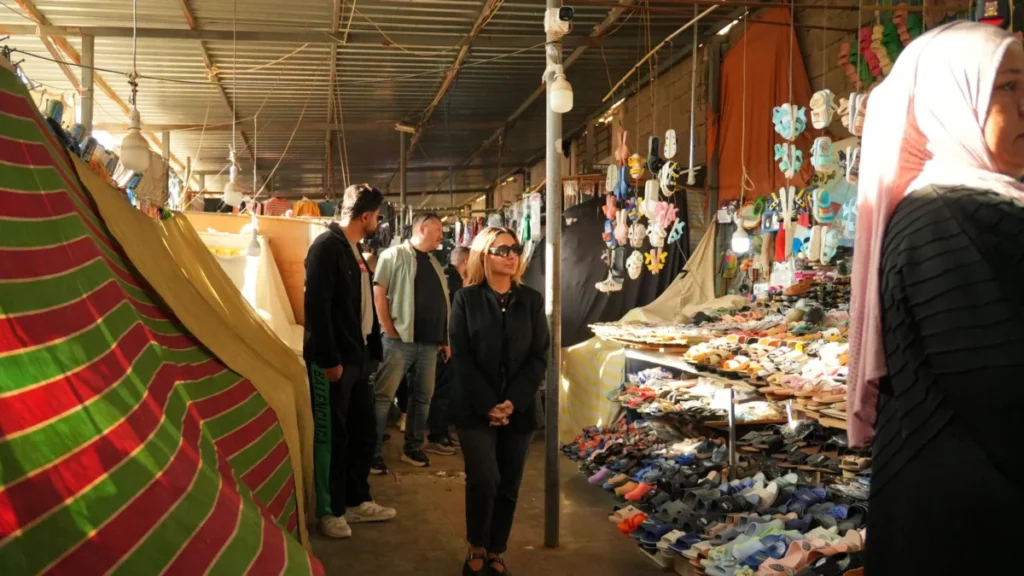
To further streamline the production process for filmmakers considering Kurdistan, the commission is actively developing and offering a comprehensive database of diverse locations. This resource is invaluable for scouting and pre-production planning. The database highlights unique and historically significant sites such as the archaeological remains of Bazyan, an ancient Christian site believed to date back to the 6th century, offering a glimpse into early regional history. Also featured is the Red Prison Museum, a site notorious for its brutality under previous regimes before its abandonment and reopening in 2003 as a museum, providing a powerful backdrop for dramatic narratives. Nature’s splendor is also showcased, with Tuni Baba, a gorge celebrated for its stunning scenery, providing breathtaking natural vistas. These varied locations, coupled with the commission’s commitment to facilitated permits and flexible coordination, create an attractive environment for film production.
Navigating Regional Realities: Stability Amidst Geopolitical Tensions
The conversation at Cannes inevitably touched upon the geopolitical landscape of the Middle East, particularly the ongoing conflicts in Iran and Gaza, which cast a shadow over the entire MENA region. Yassin acknowledged this "elephant in the room," stating, "I appreciate this question, because it goes beyond Kurdistan — it speaks to the reality of an entire region." She offered a nuanced perspective on the challenges faced by many countries in the region, which are "affected by conflicts they are not directly part of."
As Kurds, this experience is deeply ingrained: "As Kurds, this is something we have lived with for decades. We are often carried by the consequences of wars that are not ours, yet we absorb their impact — politically, economically, and culturally." She highlighted the vulnerability of the film sector in such circumstances: "One of the first sectors to suffer is film: production slows down, and, more importantly, a region’s reputation—something that takes years to build — can be affected almost overnight."

However, Yassin was quick to emphasize a crucial distinction between perception and reality. "But there is another reality that is often overlooked. If you look at daily life in a place like Kurdistan, it is stable, functional, and safe. There is a disconnect between perception and reality, and part of our role is to correct that." This assertion underscores the strategic importance of Kurdistan’s continued presence at international forums like Cannes. "Our presence is a statement: that we are open, that we are building, and that we are not waiting for perfect conditions to start," she declared. In challenging times, the arts become even more vital: "In times of conflict, support for the arts is not secondary — it becomes essential. Culture is what preserves identity, what sustains people, and what allows a region to define itself rather than be defined by others."
Fostering Global Connections: The Kurdistan Producers Circle and International Projects
Beyond showcasing its potential, the Kurdistan Film Commission is actively facilitating direct connections for local and regional filmmakers. At Cannes, the commission is bringing filmmakers to network and pitch their projects at the Marché du Film. A significant new initiative is the organization of the first-ever Kurdistan Producers Circle at its Cannes market stand. "We are selecting 10 projects," Yassin explained. "They will have the opportunity to meet top established producers and present their work in a focused setting. This is not about visibility alone — it is about creating real connections and opening doors."
Crucially, the Producers Circle is not confined to domestic projects. "Importantly, as we reintroduce Kurdistan to the international industry, we are not limiting ourselves to the domestic market. We are selecting projects from across the wider region, not only Kurdistan. This is a deliberate choice. It reflects how we see our role: not only building locally, but positioning Kurdistan as a platform for collaboration." This regional outlook aligns with the Deputy Prime Minister’s vision of Kurdistan as a bridge.
Evidence of the commission’s growing international appeal is already emerging. Yassin shared news of an upcoming international project: "We have a Canadian film production, Daudistan, coming this year." The drama, from writer-director Ariel Nasr, has a compelling synopsis: "On the eve of Kabul’s fall to the Taliban, Afghanistan’s star runner Daud Ahmadi returns from a Canadian detention center to reunite with his sister Tayiba. Together, they must confront a city in collapse and fight to reclaim their shattered dreams before everything they love is lost forever." While this project is confirmed, Yassin noted that "a few more [projects] in the pipeline" have been affected by the unexpected war in the region, underscoring the delicate balance of operating in the MENA.
A Long-Term Vision: Redefining Kurdistan’s Global Image
Bavi Yassin concluded her remarks with a clear articulation of the commission’s long-term vision, acknowledging that significant transformation takes time. "After one year since the official establishment of our film commission, I do not expect a mountain of productions coming our way. The fact that, in less than a year, we were contacted multiple times and considered for production gives me hope for what comes next," she shared. While welcoming foreign productions remains a top priority, Yassin recognizes the foundational work that still needs to be done. "People still don’t know us yet! All they know is stories related to sadness, war and politics. My main objective is to change people’s minds about how they see us." She expressed confidence that once perceptions shift, the region’s inherent advantages will become undeniable: "Once they do that, trust me, they won’t be able to resist the beauty and versatile location, and the enormous cost-effectiveness."

Ultimately, the Kurdistan Film Commission is engaged in a profound act of cultural construction. "Ultimately, this is what we are doing — building bridges that did not exist before," Yassin summarized. This endeavor is not merely about attracting film shoots; it is about challenging ingrained stereotypes, fostering cross-cultural understanding, and asserting Kurdistan’s place as a vibrant, creative, and collaborative hub on the world stage.
Broader Implications for the MENA Film Industry
The emergence of the Kurdistan Film Commission and the establishment of its dedicated fund carry significant implications for the broader Middle East and North Africa (MENA) film industry. In a region often characterized by geopolitical complexities, Kurdistan’s proactive stance represents a beacon of cultural investment and economic diversification. By creating a robust support system for local talent and actively engaging international partners, Kurdistan is not only building its own cinematic future but also contributing to the overall growth and legitimacy of film production within the MENA region.
This initiative could serve as a catalyst, encouraging other regional entities to invest more strategically in their creative economies. The emphasis on fostering international co-productions and positioning Kurdistan as a platform for regional collaboration could lead to a more interconnected and resilient film ecosystem across the MENA. Furthermore, by actively working to correct the "disconnect between perception and reality," Kurdistan is undertaking a vital form of cultural diplomacy. Success in this endeavor could inspire a broader movement to challenge reductive narratives about the MENA region, showcasing its rich cultural tapestry, diverse landscapes, and burgeoning creative talent. As Kurdistan continues to build bridges and redefine its global image through the power of cinema, its journey will be closely watched by filmmakers and policymakers alike, potentially setting a new standard for cultural development in a complex part of the world.