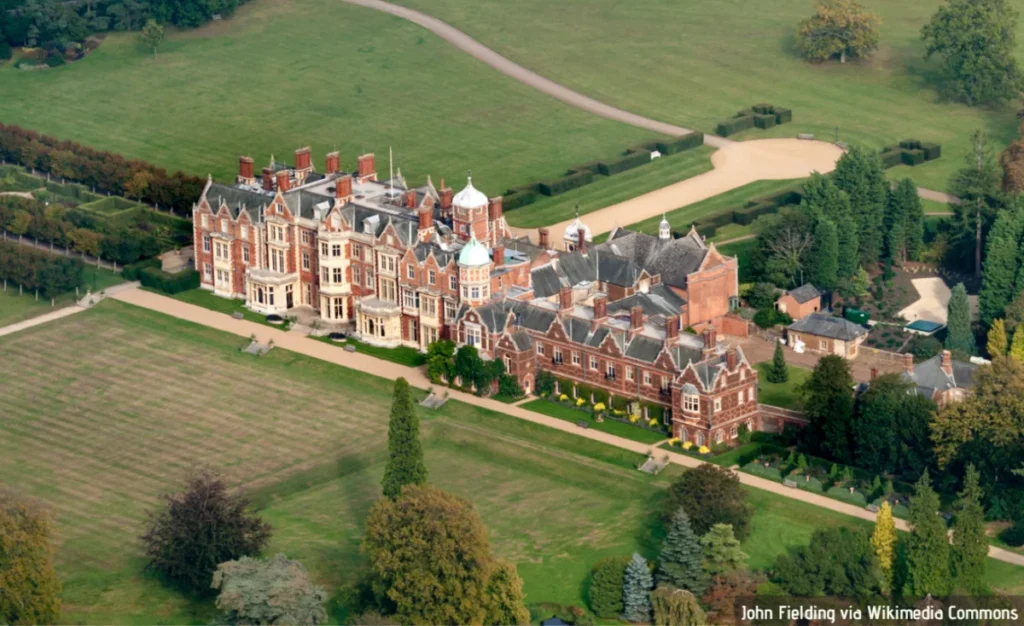

The intersection of British royalty and the paranormal has long captivated public imagination, but rarely do such accounts involve the reigning monarch directly. According to prominent paranormal historian Richard Felix, King Charles III was left "terrified" following a face-to-face encounter with an unexplained ghostly presence at Sandringham House, one of the Royal Family’s most cherished private estates in Norfolk. Speaking recently on HELLO! magazine’s Right Royal Podcast, Felix detailed how the monarch—then serving as the Prince of Wales—was stalked by an invisible entity while inside the grand library of the historic estate.
This startling revelation sheds light not only on the private, lesser-known experiences of senior members of the House of Windsor, but also adds to a growing catalogue of supernatural lore associated with the crown’s extensive property portfolio. From historic country houses in Scotland to the heart of the British monarchy in London, Britain’s royal residences have accumulated centuries of history, and with it, a persistent shadow of folklore and ghostly traditions.
The Sandringham Library Incident: Chronology and Details
The alleged paranormal event at Sandringham House occurred during the years preceding Charles’s ascension to the throne in September 2022. While exact dates and timestamps remain part of private royal memory, Felix outlined the core narrative during his podcast appearance.
According to the historian, the then-Prince of Wales was accompanied by a royal footman inside the sprawling library at Sandringham. The library, a central hub of the Norfolk residence historically used for quiet study, correspondence, and relaxation, became the setting for an unsettling disturbance. Felix stated that both the future king and the member of his household staff were "followed around the library by a ghost."
The sensation of being trailed by an unseen presence left a profound impression on the Prince. "Prince Charles was apparently terrified at Sandringham when he was again in the library at Sandringham; he and a footman were in there and followed around the library by a ghost," Felix recounted to listeners.
Sandringham House, situated near King’s Lynn in Norfolk, has been a private home of four generations of British monarchs since 1862, when it was purchased by Queen Victoria for Albert Edward, Prince of Wales (later King Edward VII). Encompassing a sprawling 20,000-acre estate that includes royal parkland, extensive gardens, and the main house, the property is steeped in domestic royal history. It is traditionally the location where the Royal Family gathers to celebrate Christmas, attending services at St Mary Magdalene Church. Despite its warm associations with festive family gatherings, the estate’s deep antiquity provides a fertile backdrop for centuries of accumulated local legends and architectural ghost stories.
A Legacy of Royal Hauntings: Queen Camilla at Dumfries House
While the Sandringham incident offers a rare glimpse into King Charles’s personal encounters with the unexplained, he is not the only senior royal to report a chilling supernatural phenomenon. Queen Camilla has previously spoken candidly about her own spine-chilling experience at Dumfries House in Ayrshire, Scotland—an architectural masterpiece saved by Charles through a consortium in 2007.
In the television documentary The Real Camilla, the Queen detailed her initial visit to the 18th-century Palladian mansion while it was undergoing extensive structural and interior renovations led by her husband. Upon entering the historic building, Camilla experienced an overwhelming, physical sensation of an adversarial presence that brought her movement to a complete halt.

"There was definitely a ghost—without a shadow of a doubt," Camilla recalled during the documentary. Describing the physiological impact of the encounter, she added, "I remember the first time I walked up the steps, got into the hall and I thought, ‘I can’t go any further.’ I literally froze. If my hair could stand on end, it would have done."
The intensity of the experience was such that the future Queen retreated from the building, vowing to avoid it altogether. "I remember leaving and thinking, ‘I don’t want to come back here again,’ and I didn’t for a few years," she admitted.
However, Camilla’s perspective on the estate shifted dramatically following the completion of the multi-million-pound restoration project, which rescued the dilapidated estate and its priceless collection of Chippendale furniture from being auctioned off. According to the Queen, once the physical fabric of the house was revitalized, the oppressive atmosphere lifted entirely. "Whatever was there had disappeared. The whole thing seemed to be smiling again," she observed, suggesting a symbolic link between the physical care of historic buildings and the tranquility of their atmosphere.
Buckingham Palace and the Monk of the Corridors
Expanding further on the architectural history of royal residences, Richard Felix also highlighted accounts surrounding Buckingham Palace, the official London residence and administrative headquarters of the monarch. According to the historian, the sprawling London palace harbors its own permanent spectral resident: a monk who wanders through the corridors.
Felix explained that the site upon which Buckingham Palace now stands has deep historical roots predating the modern monarchy. Long before the construction of Buckingham House in the early 18th century—which was subsequently expanded by John Nash and Edward Blore into the vast palace seen today—the land was associated with the monks of Westminster Abbey.
According to traditional accounts cited by paranormal researchers, the apparition is typically described as wearing a traditional cowl or hooded robe. The spirit is said to inhabit a specific area of the palace, though formal reports or acknowledgements from current royal staff members regarding the monk remain scarce, as palace officials traditionally maintain a strict policy of silence concerning supernatural anecdotes to preserve the dignity and privacy of the household.
Historical Context and Sociological Implications
The public fascination with royal ghost stories is underpinned by the unique intersection of ancient architecture, institutional longevity, and public curiosity. British royal residences are rarely static museums; they are living, breathing homes that have absorbed centuries of births, deaths, coronations, political intrigue, and personal tragedies.
From a sociological perspective, tales of hauntings in historic properties serve multiple functions. They humanize public figures, demonstrating that even monarchs and consorts—accustomed to high-security protocols, statecraft, and immense privilege—are susceptible to the universal human emotion of fear in the face of the unknown. Furthermore, ghost stories function as cultural touchstones that reinforce the antiquity and historical depth of the British state, linking modern institutions directly to medieval and early modern precursors.
While no official statement has ever been issued by Buckingham Palace or Clarence House confirming or denying these specific supernatural encounters, the willingness of senior royals—such as Queen Camilla—to publicly share their unease highlights a cultural shift toward greater candor in media appearances. As historic properties continue to open their doors to historians, documentary film crews, and the public, the folklore surrounding the Crown’s architectural heritage will undoubtedly continue to evolve, bridging the gap between history and mystery.