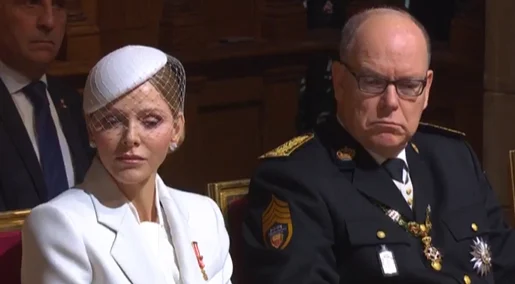

The Princely House of Monaco has been plunged into mourning following the untimely passing of Antoine de Massy, a second cousin to Sovereign Prince Albert II. The 29-year-old, whose life was defined by an enduring passion for competitive sports and an ambition to represent the Principality on the global athletic stage, was found dead in a park on October 25. The news has sent shockwaves through the tightly knit community of Monaco, prompting an outpouring of grief from the highest levels of the royal court.
As investigations continue into the circumstances surrounding his death, the tragedy has reopened discussions regarding the private pressures faced by members of extended royal families, while underscoring the deep sports legacy shared by the House of Grimaldi. Prince Albert and Princess Charlene have led tributes to the young athlete, highlighting his dedication, his vibrant spirit, and his deep-rooted ties to the sporting history of the Mediterranean microstate.
Official Statements and Immediate Reactions
The confirmation of Antoine de Massy’s passing prompted an immediate and solemn response from the Palais Princier. In a formal statement released shortly after the news was verified by local authorities, Prince Albert II and Princess Charlene expressed their profound sorrow.
"Their Serene Highnesses were deeply saddened to learn of the death of Antoine de Massy," the palace communication read. Emphasizing his athletic heritage, the statement added that "he was part of a family history closely linked to sports in the Principality." Concluding the message of condolence, the palace noted, "Their Highnesses share in the grief of his family and loved ones and offer them their sincere condolences at this painful time."
Local authorities in France and Monaco have maintained discretion regarding the specifics of the investigation. French regional newspaper Nice Matin was among the first to report that de Massy’s body was discovered in a park, but law enforcement agencies have withheld further medical or forensic details out of respect for the grieving family. The lack of detailed public disclosures has fueled local mourning while shielding the immediate family—including his father, Christian Louis de Massy—from excessive public intrusion during an exceptionally vulnerable period.
A Life Dedicated to Athletics: The Pursuit of the Olympic Dream
To understand Antoine de Massy is to understand a young man whose entire identity was anchored in the discipline, rigor, and ambition of elite sports. Born into a lineage with strong athletic inclinations, de Massy carved out a path for himself in competitive tennis from a very early age.
Recognizing that the localized infrastructure of Monaco, while supportive, might limit his trajectory on the global circuit, de Massy made the bold decision to relocate to the United States as a young man. Settling in Miami, Florida—a renowned hub for international tennis training—he immersed himself in rigorous daily regimens designed to elevate his game to the professional level.
In various interviews granted to European sports media outlets over the years, de Massy articulated a singular, unwavering ambition: to represent Monaco at the Olympic Games. Wearing the colors of the Principality on the international tennis court was not merely a career goal for him; it was viewed as a continuation of his family’s proud sporting legacy. Friends, coaches, and sports administrators in both Europe and North America have remembered him as a tenacious competitor, a disciplined training partner, and a passionate ambassador for tennis.
Lineage and Royal Heritage: The De Massy Family Tree
Antoine de Massy occupied a unique and historic position within the extended lineage of the Monegasque royal family. He was the son of Christian Louis de Massy and his fourth wife, Cecile Gelebale. Through his paternal line, sports were practically in his DNA. His grandfather, Alexandre-Athenase Noghès, was an accomplished international tennis player and a pivotal figure in Monegasque sports administration, famously credited with founding the prestigious Monte-Carlo Masters tennis tournament and the Automobile Club of Monaco’s iconic events.
The familial connections extend directly to the reigning sovereign. Antoine’s grandmother was Princess Antoinette of Monaco, the elder sister of Prince Rainier III, who ruled the Principality from 1949 until his death in 2005. This makes Prince Albert II—the son of Prince Rainier III—a first cousin to Christian Louis de Massy, thereby making Antoine a second cousin to the reigning Prince of Monaco.
The ancestry of the de Massy branch is intrinsically tied to the complex constitutional and dynastic history of the House of Grimaldi. Princess Antoinette and Prince Rainier III were the children of Princess Charlotte, Duchess of Valentinois. Princess Charlotte herself was born to Prince Louis II and his mistress, Marie Juliette Louvet. In a move designed to secure the succession, Prince Louis II formally adopted Charlotte when she was twenty years old. She subsequently became the heiress presumptive to the throne before formally renouncing her succession rights in 1944 in favor of her son, Prince Rainier III.
Because of this intricate web of lineage, the descendants of Princess Antoinette—including the de Massy family—have historically maintained a distinct status: part of the broader royal family and regular attendees at major national events, yet situated outside the direct line of succession to the Monegasque throne. Despite this structural distance from active governance, they have remained culturally and socially integrated into the inner life of the court.
Broader Impact and Historical Context on the Princely House
The sudden loss of Antoine de Massy comes at a sensitive time for the Princely House of Monaco. The family has historically experienced its share of public triumphs alongside private tragedies, balancing the relentless scrutiny of European gossip columns with the solemn duties of statecraft.
Monaco, as a sovereign city-state of roughly 39,000 residents, operates much like a small, interconnected community where major family events within the House of Grimaldi are felt deeply by the citizenry. National celebrations, such as the upcoming National Day of Monaco, are typically marked by unified public gatherings on the palace balconies. The shadow of this recent bereavement will inevitably imbue upcoming state functions with a more somber and reflective tone.
Furthermore, the tragedy highlights the psychological pressures and mental health challenges that can affect young adults, even those born into privilege and royal lineages. While public figures and their extended families often project an image of absolute stability and glamour, incidents like the passing of Antoine de Massy serve as a stark reminder of the universal vulnerability of human life. Sport psychologists and youth advocates have frequently noted that young athletes striving for elite performance—such as Olympic qualification—face intense physiological and psychological demands that require robust support networks.
Chronology of Events
To provide a clear factual framework of the developments surrounding the passing of Antoine de Massy, the timeline of events is structured as follows:
- Early Life and Relocation: Antoine de Massy grows up with a profound passion for tennis, heavily influenced by his family’s sporting heritage. Seeking to maximize his athletic potential, he moves from Monaco to Miami, Florida, at a young age to train intensively and pursue Olympic qualification.
- October 25: Antoine de Massy, aged 29, is found dead in a park. Local authorities and emergency responders attend the scene, and preliminary investigations are initiated.
- Late October: Regional news outlets, notably Nice Matin, break the initial reports regarding the discovery of his body, prompting widespread mourning across athletic circles in Europe and the United States.
- Following the Confirmation: Prince Albert II and Princess Charlene issue a joint formal statement through the Palais Princier, acknowledging his athletic contributions, expressing profound sadness, and extending official condolences to Christian Louis de Massy and the rest of the grieving family.
- Ongoing Inquiries: Monegasque and French authorities maintain privacy regarding the medical and technical findings of the investigation, allowing the family space to grieve away from public speculation.
Fact-Based Analysis of Implications
The death of Antoine de Massy carries several distinct implications for the Principality of Monaco and its ruling house:
- Cultural and Sporting Resonance: Given his family’s historical contributions to Monegasque sports—most notably through his great-grandfather Alexandre-Athenase Noghès—Antoine’s unfulfilled Olympic dream represents a poignant loss for the local athletic community. The Principality has long punched above its weight in international sports, and local sports federations may seek to establish a memorial or tribute in his honor to recognize his dedication to tennis.
- Royal Solidarity in Times of Crisis: The tragedy serves to publicly bind the extended Grimaldi family closer together. Public statements issued jointly by Prince Albert and Princess Charlene demonstrate solidarity, reinforcing the stability and mutual support within the royal household during moments of acute personal crisis.
- Media Ethics and Public Discretion: The handling of the case by European media outlets highlights a growing editorial shift toward respecting the privacy of royal families during non-political, personal tragedies. By focusing on his athletic ambitions and heritage rather than sensationalizing the circumstances of his death, media coverage has largely remained respectful, echoing the tone set by the palace’s official communications.
As the Principality prepares for its traditional autumn and winter calendar of state events, the memory of Antoine de Massy—a young man who traded the shores of the Mediterranean for the tennis courts of Florida in pursuit of an Olympic dream—will remain a poignant chapter in the modern history of the House of Grimaldi. The formal investigations into his passing will conclude in due course, but the legacy of his sporting passion and the profound grief of his loved ones will endure within the institutional and personal memory of Monaco.