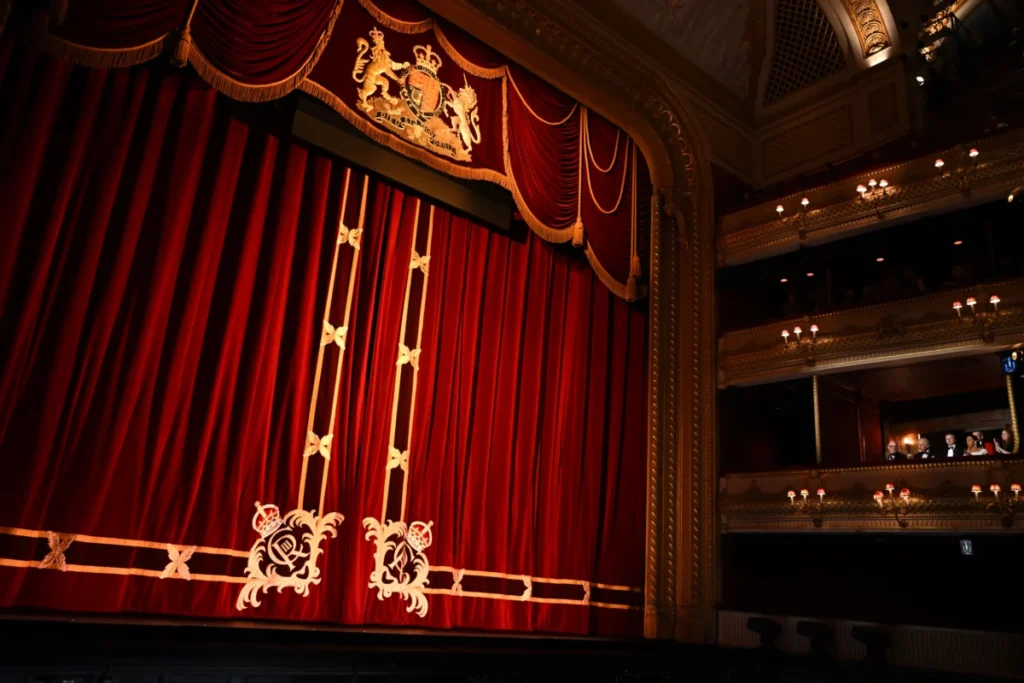

A radiant King Charles III presided over a memorable evening at the Royal Opera House in Covent Garden, central London, on [Date of Event – to be inferred as May 14, 2026, based on image URLs], as he watched the grand unveiling of the venue’s spectacular new main stage curtains. These magnificent draperies, meticulously crafted with an embroidered design featuring the King’s personal cipher, were revealed to an appreciative audience of over 2,000 guests, marking a significant moment for one of the world’s most prestigious performing arts institutions. The unveiling, introduced by the esteemed Sir Ian McKellen, served as the majestic prelude to the Spring Gala, a star-studded event titled "Stories From The Royal Ballet And The Royal Opera," showcasing the unparalleled talent of both resident companies.
A Royal Occasion: The Unveiling Ceremony
The atmosphere within the opulent Royal Opera House was electric with anticipation as guests, including dignitaries, patrons of the arts, and leading figures from the cultural world, gathered for the much-anticipated Spring Gala. King Charles, a longstanding patron of both The Royal Ballet and The Royal Opera, was visibly pleased, his expression beaming as the new curtains slowly ascended, revealing the intricate details of his royal monogram. The collective cheer from the assembled guests underscored the significance of the moment, a fusion of artistic heritage and monarchical tradition.
The ceremony commenced with a thoughtful introduction by legendary actor Sir Ian McKellen, who eloquently spoke to the enduring power of live performance and the Royal Opera House’s pivotal role in the global arts landscape. His words set the stage, quite literally, for an evening designed to celebrate the rich narratives brought to life through ballet and opera. Following the dramatic reveal, performers took to the stage, ushering in an evening of exquisite music and captivating dance, a testament to the vibrant artistic life nurtured within the historic venue.

A Tapestry of Craftsmanship and Royal Symbolism
The new main stage curtains are not merely functional theatre accessories but significant works of art in their own right, steeped in symbolism and executed with exceptional skill. Measuring an impressive 9.75 metres wide and boasting a dramatic 10.8-metre drop, these curtains are crafted from luxurious mohair velour, a material chosen for its rich texture, acoustic properties, and durability. The central feature, the King’s personal cipher, has been meticulously embroidered, creating a striking visual emblem that links the institution directly to the Crown.
This cipher, a sophisticated monogram combining King Charles’s initial ‘C’ with ‘R’ for Rex (Latin for King), and the Roman numeral ‘III’ to signify his regnal number, serves as a powerful symbol. Executives at the Royal Opera House emphasized that its inclusion is intended to underscore the enduring relationship between the British monarchy and the arts. This connection, stretching back centuries, highlights the Crown’s role as a patron and guardian of cultural excellence, a tradition that King Charles III continues with dedication.
Before the grand unveiling, King Charles took the opportunity to engage with the master craftspeople behind this monumental project. He met with representatives from Gerriets, the renowned curtain production specialists, and the expert embroiderers of the Royal School of Needlework (RSN). He was shown a display of the items and techniques used to create the new curtains, viewing original designs and intricate embroidery samples. This interaction provided a fascinating glimpse into the painstaking process and the remarkable artistry involved in bringing such a grand vision to fruition. Anne Butcher, representing the Royal School of Needlework, was among those who had the honour of explaining the intricate handiwork to His Majesty, highlighting the precision and dedication required for such a prestigious commission.
The Royal Opera House: A Legacy of Performance and Renewal
The replacement of the main stage curtains was a practical necessity driven by the sheer volume of performances they had witnessed. The previous set, installed in 1997, had opened and closed on more than 10,000 performances over nearly three decades. This remarkable lifespan attests to the continuous vibrancy of the Royal Opera House’s programming, but daily wear and tear inevitably necessitated an upgrade. The decision to commission new curtains reflects the institution’s commitment to maintaining world-class facilities and investing in the future of its stage.

The Royal Opera House itself boasts a rich and complex history, evolving from its initial incarnation as the Theatre Royal, Covent Garden, in 1732. It has been rebuilt twice following fires in 1808 and 1856, each time rising from the ashes to become an even grander edifice. Today, it stands as one of the world’s leading opera houses, home to The Royal Opera and The Royal Ballet, two companies that consistently produce work of international acclaim. Its stage has been graced by legendary artists and witnessed countless historic performances, cementing its status as a cultural beacon. This latest investment in its physical infrastructure reinforces its dedication to providing an unparalleled experience for both performers and audiences.
Monarchy and the Arts: An Enduring Patronage
The inclusion of the King’s cipher on the Royal Opera House curtains is more than a mere decorative flourish; it is a tangible representation of the long-standing and profound relationship between the British monarchy and the arts. From the commissioning of composers and playwrights in medieval courts to Queen Elizabeth II’s extensive patronage of cultural institutions, the Crown has historically played a significant role in fostering artistic development and ensuring the preservation of cultural heritage.
King Charles III, in particular, has a deep and well-documented personal interest in the arts, architecture, and heritage. Throughout his life, both as Prince of Wales and now as monarch, he has been a vocal advocate for the importance of creativity, traditional craftsmanship, and the role of the arts in national life. His patronage of numerous cultural organizations, including The Royal Ballet and The Royal Opera, reflects his belief in their power to inspire, educate, and unite. The unveiling of these curtains, bearing his personal emblem, symbolically reaffirms this commitment and signals a continuation of royal support for these vital institutions into a new era.
Behind the Scenes: The Making of a Masterpiece
The creation of the new stage curtains was a collaborative effort, bringing together specialized expertise in textile production and traditional embroidery. Gerriets, a German company renowned globally for its stage technology and textile solutions, was responsible for the fabrication of the enormous mohair velour panels. Their expertise ensured the curtains met the rigorous technical specifications required for such a prominent stage, including precise dimensions, flawless drape, and acoustic performance.

The exquisite embroidery of the King’s cipher was entrusted to the Royal School of Needlework (RSN), an institution with a distinguished history stretching back to 1872. Based at Hampton Court Palace, the RSN is dedicated to preserving and teaching the art of hand embroidery, a craft that has long been associated with royal commissions. Their skilled artisans, known for their meticulous attention to detail and mastery of various embroidery techniques, undertook the delicate task of rendering the King’s monogram with precision and elegance. This collaboration highlights a blend of modern industrial capability with traditional heritage crafts, a fitting combination for an institution like the Royal Opera House. The process would have involved careful design scaling, selection of appropriate threads, and many hours of intricate hand stitching to achieve the desired effect, ensuring the cipher would be clearly visible and impactful from every seat in the grand auditorium.
The Spring Gala: A Celebration of Artistic Excellence
Beyond the ceremonial unveiling, the Spring Gala: "Stories From The Royal Ballet And The Royal Opera" was a magnificent showcase of the resident companies’ artistic prowess. This annual event serves not only as a highlight of the cultural calendar but also as a crucial fundraising initiative, supporting the Royal Opera House’s extensive programme of performances, educational outreach, and artist development.
The evening featured a curated selection of performances from both the Royal Ballet and the Royal Opera, designed to illustrate the breadth and depth of their repertoire. Audiences were treated to a captivating array of excerpts from beloved operas and ballets, performed by some of the world’s leading singers and dancers. Among the celebrated artists who graced the stage were Welsh Bass-baritone Sir Bryn Terfel and South African soprano Pretty Yende, both internationally acclaimed for their powerful voices and captivating stage presence. Their performances, along with those of their colleagues, underscored the exceptional talent nurtured within the Royal Opera House and its commitment to artistic innovation and excellence.
Voices from the Evening
The event drew significant praise from those involved and attending. Alex Beard, Chief Executive of the Royal Ballet and Opera, articulated the profound honour of hosting His Majesty. "It was a privilege to welcome His Majesty King Charles III, our Patron, to this year’s Spring Gala, which brought together artists from both companies in a shared celebration," Beard stated. He further emphasized the significance of the new curtains: "The unveiling of the new stage curtains marks an important moment for the organisation, reflecting our continued investment in the future of our stage and in the remarkable craft that underpins every performance."

Following the performance, King Charles went backstage to personally meet the cast and get a closer look at the newly unveiled curtains. He engaged with Sir Ian McKellen, Sir Bryn Terfel, and Pretty Yende, among others, expressing his appreciation for their artistry. Ms. Yende, visibly moved by the evening, described it as "an extraordinary night" and hailed the Royal Opera House as "one of the most extraordinary opera houses in the world." She added that it is "a singer’s dream" to perform on such a revered stage, highlighting the profound impact the venue has on artists globally. Sir Lloyd Dorfman, Chairman of the Royal Ballet and Opera, also shared a moment with His Majesty, underscoring the collaborative spirit of the evening and the strong leadership guiding the institution. The expressions of delight from the artists and executives alike resonated with the audience’s palpable enthusiasm, solidifying the event’s success.
Philanthropy in Action: The Julia Rausing Trust’s Contribution
The commissioning of these grand new curtains was made possible thanks to a generous grant from the Julia Rausing Trust. This philanthropic organization is dedicated to supporting excellence in the arts, culture, and education, and its contribution to the Royal Opera House underscores its commitment to fostering vibrant cultural institutions. Such significant private funding is vital for major cultural landmarks like the Royal Opera House, enabling them to undertake large-scale projects, maintain their historic venues, and continue to attract the world’s best talent. The Trust’s investment in the curtains is an investment in the future of the stage, ensuring that the Royal Opera House can continue to present breathtaking performances in an environment that matches the artistic quality on display. This philanthropic partnership exemplifies how private support can sustain and enrich public cultural life.
Looking Ahead: Investing in the Future of the Stage
The unveiling of the King Charles III-era main stage curtains represents more than just a renovation; it is a powerful statement of continuity, investment, and forward-looking vision for the Royal Opera House. By integrating the monarch’s cipher, the institution reinforces its unique connection to the Crown and its place within the national fabric. The project also highlights the enduring value of traditional crafts and specialized manufacturing, bringing together centuries-old skills with modern theatre demands.
This investment ensures that the Royal Opera House remains at the pinnacle of global performing arts. It provides its artists with a stage worthy of their immense talent and its audiences with an experience that is both visually stunning and emotionally resonant. As the curtains rise and fall on countless future performances, they will not only mark the beginning and end of each act but also symbolize the ongoing legacy of artistic excellence, royal patronage, and dedicated craftsmanship that defines the Royal Opera House. The event served as a potent reminder of the importance of the arts in society, their capacity to bring people together, and the dedication required to sustain such magnificent cultural treasures for generations to come.