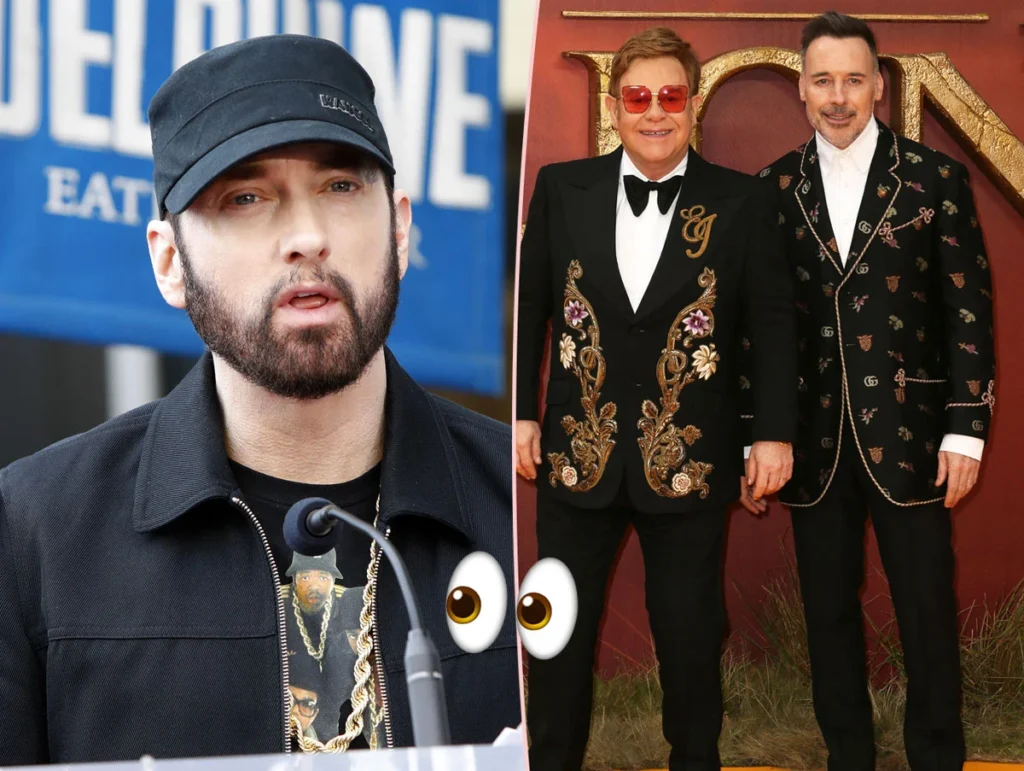

A provocative and highly revealing anecdote shared by legendary filmmaker John Waters has cast a surprising new light on the relationship between rap icon Eminem and global superstar Elton John, particularly regarding Eminem’s stance on LGBTQ+ issues. The revelation, made on Matt Rogers and Bowen Yang’s acclaimed Las Culturistas podcast, detailed Eminem’s unique wedding gift to Elton John and David Furnish: matching gold "c*ck rings." This disclosure, reported on May 14, 2026, has ignited fresh discussions about celebrity allyship, the complexities of public image, and the enduring power of unexpected friendships in the cultural landscape.
The statement by Waters — "He’s not homophobic. He gave Elton John and David Furnish matching gold c*ck rings for their wedding" — immediately went viral, not only for its audacious content but also for the profound implications it carries. For decades, Eminem, born Marshall Mathers III, has navigated a career marked by both unparalleled success and persistent controversy, particularly concerning lyrics perceived as misogynistic and homophobic. This gift, however, presented through the lens of a counter-culture icon like John Waters, serves as a stark counter-narrative, suggesting a deeper, more nuanced understanding of the artist often dubbed "Slim Shady."
The Unconventional Gift: Symbolism and Subversion
The "gold c*ck rings" as a wedding gift represent a significant departure from conventional marital tokens. The choice of such an overtly sexual and playful item speaks volumes about the nature of the friendship between Eminem and the esteemed couple. It suggests a level of comfort, irreverence, and mutual understanding that transcends typical celebrity courtesies. From a semiotic perspective, the gift could be interpreted in several ways:
- A Gesture of Intimacy and Trust: Such a personal and provocative gift would only be exchanged between individuals who share a profound bond and a robust sense of humor. It signals a relationship free from pretense and conventional boundaries.
- Subversion of Expectations: Given Eminem’s public persona, often associated with aggressive masculinity and controversy, this gift boldly defies expectations. It showcases a willingness to be playful and affectionate in a manner that challenges his own public image.
- Affirmation of Gay Love: The very nature of the gift, explicitly referencing male anatomy in a celebratory context for a gay couple’s wedding, acts as a powerful, albeit unconventional, affirmation of their union and their sexuality. It strips away any pretense of homophobia from the giver, instead replacing it with a celebratory, albeit raunchy, acknowledgment of their love.
- A Nod to Waters’ Sensibility: The fact that John Waters found this detail noteworthy enough to share, and used it as evidence against homophobia, also highlights its alignment with his own artistic ethos of pushing boundaries and embracing the unconventional. Waters, known for his transgressive cinema, would naturally appreciate the subversive humor and underlying message of such a gift.
The Voices Behind the Revelation: John Waters and Las Culturistas
The platform for this surprising revelation was Las Culturistas, a podcast hosted by comedians Matt Rogers and Bowen Yang. Launched in 2017, the podcast has garnered a significant following for its sharp wit, pop culture commentary, and candid discussions, often viewed through a queer lens. Both Rogers and Yang are prominent figures in comedy and entertainment, known for their insightful observations and ability to connect with a diverse audience. Yang, in particular, has achieved mainstream recognition as a cast member on Saturday Night Live, further amplifying the podcast’s reach and cultural impact. The show often features celebrity guests, providing a relaxed environment for candid conversations.
John Waters, the source of the anecdote, is a celebrated filmmaker, author, and artist, often dubbed the "Pope of Trash." His cult films like Pink Flamingos, Hairspray, and Cry-Baby are renowned for their camp aesthetic, transgressive themes, and celebration of outcasts and unconventional beauty. Waters has long been an icon within the LGBTQ+ community and a critical voice on American culture. His endorsement of Eminem’s allyship carries significant weight, as Waters is unlikely to praise someone he genuinely perceives as homophobic. His statement suggests a personal observation or perhaps a second-hand account he deemed credible, further underscoring the sincerity of Eminem’s gesture. The context of Waters sharing this on a podcast popular within the queer community adds another layer of significance, framing it as an internal dialogue within a trusted space.
Eminem’s Complex History with the LGBTQ+ Community
Eminem’s journey with public perception regarding homophobia has been tumultuous. From his breakout albums in the late 1990s and early 2000s, his lyrics frequently drew criticism for their aggressive content, including the use of homophobic slurs. Songs like "Criminal" and passages in "St*n" (though the latter was more about obsession) were cited by critics and advocacy groups as examples of harmful rhetoric. This led to widespread protests and accusations of promoting hatred.
However, a pivotal moment in Eminem’s career, and in reshaping public perception of his stance, came at the 2001 Grammy Awards. Faced with immense pressure and criticism, he performed his hit "Stan" alongside Elton John. This collaboration was a powerful visual statement: one of the most celebrated gay artists in the world standing shoulder-to-shoulder with a rapper accused of homophobia. Elton John, who is openly gay and a staunch advocate for LGBTQ+ rights, became a vocal defender of Eminem, arguing that his lyrics were a form of storytelling and character portrayal, not a reflection of personal hatred.
Elton John consistently maintained that Eminem was not homophobic, and that their friendship was genuine and deep. He famously stated in interviews that Eminem was a "sweetheart" and that their bond transcended public controversy. This steadfast support from Elton John over two decades has been crucial in rehabilitating Eminem’s image in certain circles, though the lyrical content of his past work continues to be debated. The "gold c*ck rings" incident, revealed years after their initial collaboration, serves as tangible, albeit unconventional, evidence supporting Elton John’s long-held assertion about Eminem’s true character and lack of homophobia. It moves beyond mere words and into the realm of action, demonstrating a personal and intimate expression of acceptance and friendship.
Elton John and David Furnish: A Landmark Union
Elton John and David Furnish’s relationship has been a beacon of visibility and advocacy for LGBTQ+ rights globally. They began their relationship in 1993, entering a civil partnership on December 21, 2005, the very first day that civil partnerships became legal in England and Wales. This event was a landmark moment for LGBTQ+ rights in the UK, symbolizing a significant step towards equality. Their union was celebrated by many as a powerful example of lasting gay love in the public eye.
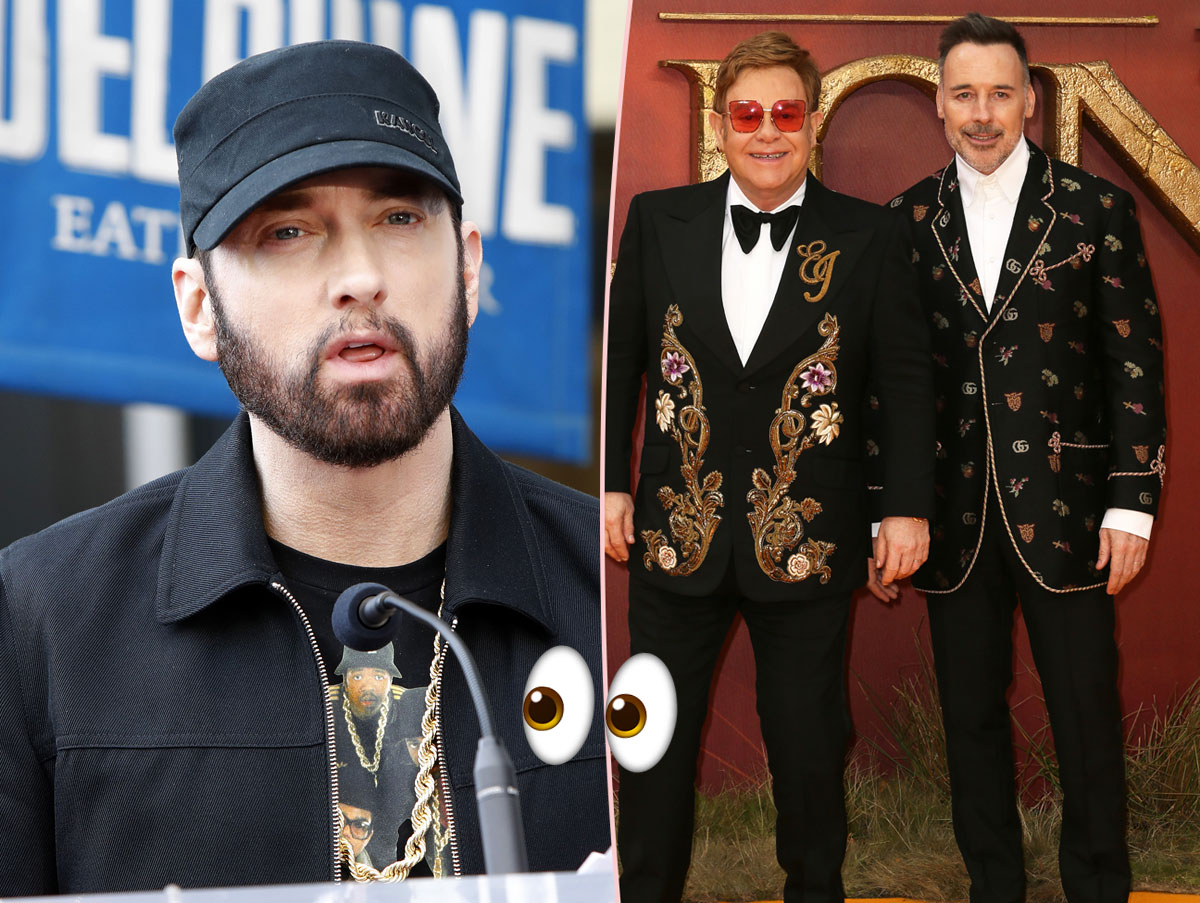
Almost a decade later, when same-sex marriage was legalized in England and Wales in March 2014, Elton and David decided to convert their civil partnership into a marriage. Their wedding ceremony took place on December 21, 2014, the ninth anniversary of their civil partnership, at their Windsor estate. This second celebration was again a high-profile event, attended by numerous celebrities and further cementing their status as pioneers for marriage equality. It was for this momentous occasion, their formal marriage, that Eminem’s distinctive gift was reportedly presented. Their long-standing public relationship and their tireless work through the Elton John AIDS Foundation have made them powerful figures in both entertainment and philanthropy, advocating for love, acceptance, and human rights.
Chronology of Key Events
To contextualize the revelation, a timeline of significant events highlights the evolution of these relationships and public perceptions:
- Late 1990s – Early 2000s: Eminem rises to superstardom with albums like The Slim Shady LP (1999) and The Marshall Mathers LP (2000), marked by intense lyrical controversy, including accusations of homophobia.
- February 21, 2001: Eminem performs "Stan" with Elton John at the 43rd Annual Grammy Awards. This unexpected collaboration becomes a defining moment, sparking discussions about Eminem’s true sentiments and Elton John’s surprising support.
- December 21, 2005: Elton John and David Furnish enter a civil partnership in England, a historic event for LGBTQ+ rights in the UK.
- March 29, 2014: Same-sex marriage becomes legal in England and Wales.
- December 21, 2014: Elton John and David Furnish officially marry at their Windsor estate, converting their civil partnership into a marriage. This is the wedding for which Eminem’s gift was reportedly given.
- May 14, 2026: John Waters reveals the detail of Eminem’s wedding gift on the Las Culturistas podcast, reigniting public interest and discussion about Eminem’s stance on LGBTQ+ issues and his friendship with Elton John.
Broader Cultural Implications and Analysis
The revelation of Eminem’s gift holds several significant implications for cultural discourse:
-
Challenging Simplistic Narratives: It serves as a potent reminder that public figures, particularly artists, are often more complex than their most controversial works or public personas suggest. Eminem’s lyrics have been dissected for decades, often leading to a unidimensional view of his character. This anecdote introduces a crucial nuance, suggesting a capacity for genuine warmth, humor, and acceptance that defies easy categorization. It forces a reconsideration of the artist beyond the shock value of his early material.
-
The Power of Personal Connections: The enduring friendship between Eminem and Elton John highlights the transformative power of personal relationships. Despite their vastly different backgrounds and public images, their bond has proven resilient, capable of bridging cultural divides and challenging preconceived notions. Elton John’s consistent defense of Eminem was rooted in their personal connection, which now seems further validated by this intimate gesture. It suggests that real-life interactions can often provide a more accurate picture of a person’s character than media portrayals or artistic output alone.
-
Evolving Definitions of Allyship: While traditional allyship might involve public statements or activism, Eminem’s gesture offers an alternative, more private form of support. It’s an act of personal affirmation, delivered through a unique and memorable gift, that speaks volumes about his acceptance of Elton John and David Furnish’s relationship. In an era where performative allyship is often scrutinized, this genuine, albeit unconventional, expression of friendship stands out.
-
Humor as a Tool for Acceptance: The provocative nature of the gift also underscores the role of humor in navigating sensitive topics and fostering acceptance. The "gold c*ck rings" are undeniably cheeky and even audacious, but their context as a wedding gift from a heterosexual male friend to a gay couple transforms them into a symbol of irreverence and affection, rather than disrespect. It demonstrates a shared sense of humor and a comfort level that transcends societal taboos.
-
Impact on LGBTQ+ Visibility and Acceptance: The fact that this anecdote, shared by a prominent queer icon on a popular queer podcast, reinforces the idea of an unexpected ally in a figure previously viewed with suspicion, contributes positively to the broader conversation around LGBTQ+ visibility and acceptance. It illustrates how even figures from traditionally "masculine" or "straight" cultural spaces can demonstrate genuine support for gay love, further normalizing it within mainstream consciousness.
In conclusion, John Waters’ revelation on Las Culturistas about Eminem’s unique wedding gift to Elton John and David Furnish is far more than a mere celebrity anecdote. It is a potent cultural touchstone that challenges long-held perceptions, underscores the depth of unlikely friendships, and offers a nuanced perspective on a complex artist. It serves as a powerful testament to the evolving landscape of celebrity image, the importance of genuine connection, and the unexpected ways in which individuals can express acceptance and love, even when those expressions are wrapped in gold and delivered with a provocative wink. The incident adds a compelling chapter to the ongoing dialogue about identity, allyship, and the ever-shifting dynamics of popular culture.