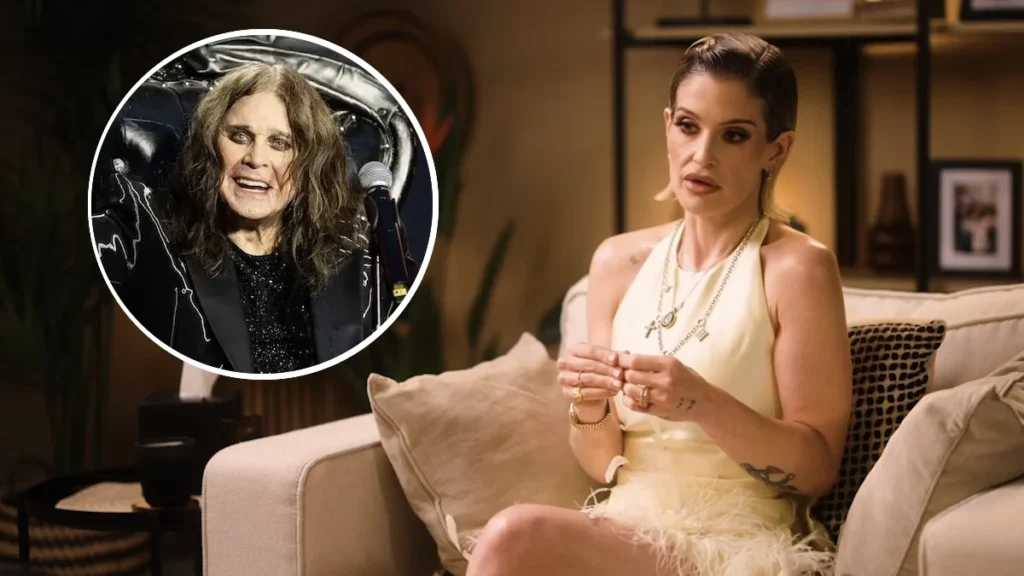

The music world and fans of the legendary "Prince of Darkness," Ozzy Osbourne, continue to grapple with the profound loss of the heavy metal icon, who passed away on July 22, 2025. While his public legacy is cemented by decades of chart-topping albums and a career that helped define the heavy metal genre, recent insights shared by his daughter, Kelly Osbourne, offer a poignant look at the man behind the persona. In a candid two-hour interview on the We Need to Talk podcast with host Paul C. Brunson, Kelly provided a window into the final, intimate moments she shared with her father, revealing a conversation that occurred just 72 hours before his passing at his Buckinghamshire, England, residence.
A Final Testament of Devotion
During the podcast, Kelly Osbourne recounted a deeply personal moment that occurred as her father’s health began its final decline. Addressing her by her affectionate nickname, "Tots," the Black Sabbath frontman sought to reassure his daughter regarding her own sense of self-worth.
"He sat me down and said, ‘Tots, I need you to know something… No matter what happens in this life, you can live the rest of your life knowing that there was one man on this planet that truly loved you, that truly loved you for every single thing you are. And that man is me,’" Kelly shared. The emotional weight of the admission was immediate. Kelly noted that her initial reaction was one of resistance, fueled by the natural desire to deny the gravity of his failing health.
"I started to cry, saying, ‘Please don’t talk like this,’ because he said, ‘You know, I’m not going to be here forever, and I know you struggle with people and believing you are loved. But I love you more than anyone,’" she told Brunson. The conversation serves as a poignant reminder of the enduring bond between the Osbournes, a family whose lives were frequently broadcast to the world through reality television, yet who remained deeply private in their most vulnerable moments.
The Evolution of the Osbourne Family Legacy
To understand the weight of this final conversation, one must look at the trajectory of the Osbourne family’s public life. Ozzy Osbourne’s career began in the late 1960s with the formation of Black Sabbath, a band that is widely credited with inventing the sound of heavy metal. Throughout the 1980s and 1990s, Ozzy transitioned into a successful solo career, marked by both musical innovation and a penchant for headline-grabbing antics.
However, the family’s cultural footprint shifted significantly in 2002 with the debut of MTV’s The Osbournes. The reality show, which featured Ozzy, his wife Sharon, and their children Kelly and Jack, provided an unprecedented look into the daily lives of a rock-and-roll family. It humanized a man previously viewed by many as a dangerous or eccentric caricature. By the time of his passing in 2025, the public perception of Ozzy had evolved from the "Madman" of the stage to a beloved patriarch and pop-culture staple.
The recent podcast interview highlighted how the loss has fundamentally altered Kelly’s identity. Reflecting on her internal state, she remarked, "The girl that I was before my father passed is dead. That girl will never come back… I lost not just my father, but my best friend." This sentiment underscores the complex reality of grieving a parent who was also a global icon, where the boundary between the private individual and the public figure is often blurred.
Chronology of the Final Weeks
The timeline of July 2025 remains a focal point for those mourning the artist. According to reports, Ozzy had been managing various health challenges for years, including a diagnosis of Parkinson’s disease revealed in 2020 and multiple spinal surgeries following a 2019 fall. Despite these setbacks, the rocker had remained active in the public eye, often expressing a desire to return to the stage.
- Mid-July 2025: Reports indicated a decline in the artist’s mobility and general health, necessitating a focus on comfort and palliative care at the Buckinghamshire estate.
- July 19, 2025: The pivotal conversation between Ozzy and Kelly occurred, in which he shared his final, heartfelt affirmations.
- July 22, 2025: Ozzy Osbourne passed away peacefully at home, surrounded by his immediate family.
- Late July 2025: Global tributes poured in from fellow musicians, industry leaders, and world leaders, marking the end of an era in music history.
The Broader Context of Grief and Public Perception
Kelly Osbourne’s appearance on We Need to Talk did not focus solely on the tragedy of her father’s passing. The conversation spanned a wide array of topics, including her public journey with weight loss, the historical pressures of being part of the Osbourne household, and the complexities of sibling dynamics, specifically referencing her relationship with her sister, Aimee.

These topics provide a broader context for why Ozzy’s final words were so resonant. Kelly has been open in the past about the challenges of navigating adulthood under the intense scrutiny of the media. The fact that Ozzy addressed her specific struggles with "believing she is loved" suggests a father who was deeply attuned to the psychological toll that fame and public criticism had taken on his daughter.
From a psychological perspective, these "final conversations" are often cited by experts in bereavement as essential components of healthy closure. By acknowledging his own mortality and validating his daughter’s worth, Ozzy provided a psychological anchor for Kelly to lean on in his absence.
Industry Reactions and Historical Impact
The death of Ozzy Osbourne triggered a global outpouring of sentiment that transcended musical genres. Representatives from the Rock and Roll Hall of Fame noted that Ozzy’s influence was not merely stylistic but foundational. "Ozzy was the architect of a genre," noted one music historian. "But for his family, he was the center of gravity. When that center shifts, the impact is seismic."
While official statements from the Osbourne estate have remained brief—asking for privacy and expressing gratitude for the outpouring of support—the insights provided by family members like Kelly serve to humanize the massive cultural void left by his death. The focus on the personal over the professional is a common theme in the aftermath of such high-profile losses, as the public seeks to understand the human elements of a life that was lived so largely in the spotlight.
Analysis: The Shift in Public Discourse
The nature of the discussion on the We Need to Talk podcast reflects a growing trend in celebrity culture: the "unfiltered" retrospective. Unlike the highly curated press junkets of the 1990s or early 2000s, modern podcasts allow for a level of raw, unedited emotional expression that was previously rare.
Kelly’s vulnerability in discussing her grief and her past experiences offers a more nuanced view of the Osbourne family. It moves the discourse away from the sensationalist headlines that often defined The Osbournes era and toward a more mature understanding of intergenerational trauma, recovery, and the enduring power of familial love.
The implication for the future of the Osbourne legacy is significant. While his music will undoubtedly continue to be archived, analyzed, and streamed by future generations, the personal anecdotes shared by his children ensure that his identity as a father and a mentor remains intact. For the music industry, this represents a transition period where the legends of the 20th century are passing, and the focus shifts toward how their families manage the preservation of both the catalog and the character of the artist.
Conclusion: A Legacy of Connection
As fans continue to process the loss of Ozzy Osbourne, the words shared by Kelly serve as a reminder of the universality of the human experience. Despite the fame, the sold-out arenas, and the iconic status, the core of the experience remains the same: a father expressing love to his child before saying goodbye.
The interview with Paul C. Brunson has provided a sense of completion for many followers who felt they knew the family through the television screen. It frames the final days of a rock icon not as a grand performance, but as a quiet, domestic moment of profound emotional honesty. As the music world continues to pay tribute, the narrative remains centered on the enduring impact of a man who, despite his "Madman" moniker, left his greatest mark in the simple, loving words he whispered to his daughter.
For those wishing to reflect on his artistic journey, the enduring availability of his discography—including commemorative editions of classics like Diary of a Madman—ensures that the professional legacy remains as vibrant as ever. Yet, it is the personal testimony of his family that will likely remain the most enduring memory of the man who redefined the sound of a generation and, in his final days, offered the reassurance that true love remains the most vital connection of all.