
For nearly three decades, the professional landscape of the Women’s National Basketball Association (WNBA) was defined by a stark, paradoxical reality: athletes at the pinnacle of their sport often found themselves without a stable place to call home. Since the league’s inception in 1996, the economic constraints of the WNBA forced a majority of its stars to spend their off-seasons competing in international leagues across Europe, Asia, and the Middle East. While some veterans secured comfortable living arrangements abroad—ranging from the high-end, chauffeured lifestyle of stars in Russian hubs like Yekaterinburg to more modest, functional setups in Eastern Europe—the pursuit of financial stability prevented these elite athletes from establishing permanent roots within the United States. This "nomadic" career trajectory became the industry standard, fundamentally separating the WNBA from the North American professional sports archetype, where players typically view their team city as their primary residence.

The tide began to turn in May 2026, when the WNBA and the Women’s National Basketball Players Association (WNBPA) ratified a landmark collective bargaining agreement (CBA). This document did more than just adjust salary caps; it fundamentally restructured the professional lives of the league’s players, providing the financial foundation necessary to end the era of involuntary off-season migration.

A New Economic Reality: The 2026 CBA
The centerpiece of the 2026 agreement is a dramatic recalibration of player compensation. The league-wide minimum salary has been elevated to $270,000, representing a 300% increase from the $66,079 minimum seen in 2025. Furthermore, the supermax salary cap has been pushed to $1.4 million. While these figures remain lower than those in the NBA, they represent a watershed moment for women’s professional sports.

The economic shift is designed to prioritize wealth accumulation and domestic stability. During the contentious year-long negotiations leading up to the agreement, the issue of housing was a primary sticking point. Historically, the league provided team-funded housing as a subsidy to keep player costs down. When the league proposed an immediate phase-out of these benefits, the WNBPA—led by veteran forward Nneka Ogwumike—pushed back. The union argued that without a significant increase in base pay, stripping away housing subsidies would create an immediate crisis for mid-to-lower-tier roster players. The final compromise established a gradual phase-out of league-provided housing, giving athletes the runway to build individual financial portfolios and invest in personal real estate.

Nneka Ogwumike: Leading from the Front
Nneka Ogwumike, who has served as the president of the WNBPA for much of the last decade, is the face of this transition. Often referred to as "Madame President," Ogwumike has spent 15 years in the league, 13 of which were with the Los Angeles Sparks. Her advocacy for the 2026 CBA has been the crowning achievement of her leadership.

For Ogwumike, the ability to purchase a home in Los Angeles in 2022 was a hard-fought victory of frugality and long-term planning. Her residence is a reflection of her identity, blending her Nigerian-American heritage with a vibrant, 1970s-inspired aesthetic. The home, which her sister and fellow broadcaster Chiney Ogwumike dubbed the "Nneka-lodeon" room, serves as a testament to the stability she fought to provide for the entire league. Beyond her own comfort, Ogwumike has cultivated a "hotel-like" atmosphere for her family, ensuring that her space remains a sanctuary for her relatives. Her legacy, which includes a planned retirement after the 2026 season, will be measured not just by her points per game, but by the generational shift in how WNBA players view their residency in the U.S.

The Heartland and the High-Rise: A Diverse Landscape
The shift in player lifestyle is visible across the country, as athletes choose environments that cater to their personal lives and family dynamics. Lexie Hull, a guard for the Indiana Fever, represents the new generation of WNBA players who are embracing the Midwest as a permanent home. When Hull was drafted in 2022, she admitted she never expected to settle in Indiana. However, after purchasing a ranch-style home in 2024 and moving in with her fiancée, Will Matthiessen, her perspective shifted.

Hull’s experience highlights a crucial aspect of the WNBA’s new era: community integration. Neighbors who were once indifferent now fly team flags and offer support, such as yard maintenance or trash removal, during the team’s travel periods. For Hull, this Midwestern kindness has solidified her commitment to the region. Her home serves as a hub for family, frequently hosting large groups of visitors, and provides a sense of normalcy that was impossible during the years when players were constantly on the move.

Conversely, Natisha Hiedeman of the Seattle Storm has embraced the high-rise urban lifestyle. Having moved to the West Coast, Hiedeman opted for team-provided housing that accommodates her four pets—a testament to the increasing sophistication of team-supported living arrangements. Despite the team’s current rebuilding phase, Hiedeman remains optimistic, viewing her Seattle apartment as a base of operations. She has also successfully balanced this with the purchase of real estate in her native Green Bay, Wisconsin, demonstrating a dual-market investment strategy that is becoming more common among league stars.

The "Point Gawd" and Family-First Living
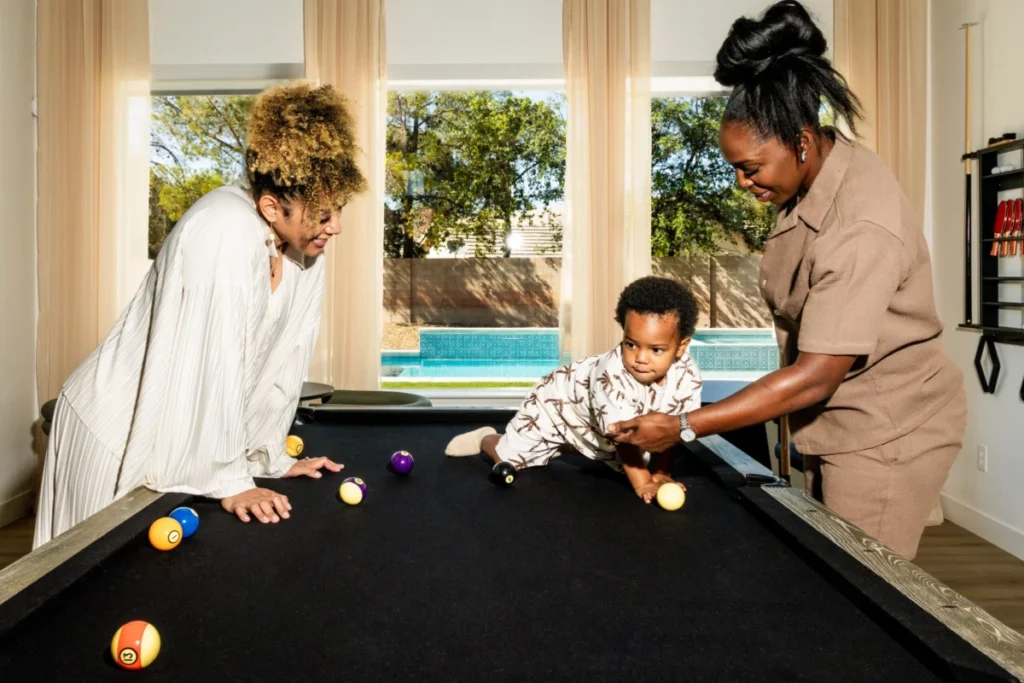
Chelsea Gray, the four-time WNBA champion and Las Vegas Aces guard, offers a look at the domestic side of the league’s top-tier earners. Alongside her wife, Tipesa, and their two-year-old son, Lennox, Gray has built a home that prioritizes child development and family history. Their residence is an exercise in intentional design, featuring spaces that encourage interaction and learning.

Gray’s kitchen-centric lifestyle, where her son acts as a "sous-chef," reflects a level of domestic normalcy that was largely inaccessible to players of previous eras. Their home serves as a cultural archive, featuring family photos, jerseys, and art that celebrate Black history and professional achievement. By investing in a home that can "grow" with their child, the Grays are demonstrating that WNBA players are finally in a position to prioritize long-term domestic planning over the short-term requirements of international league play.

Broader Implications and Future Outlook
The transition toward year-round domestic residency in the U.S. has profound implications for the league’s growth. First, it allows for a more consistent training and recovery schedule. Without the physical toll of intercontinental travel between the WNBA season and overseas commitments, players are expected to see longer, more productive careers and a reduction in chronic injuries.

Second, the shift changes the marketing and engagement landscape. When players live in their team cities year-round, they become more integrated into the local economy and community. This increases the visibility of the WNBA, as players can participate in off-season charity work, local media appearances, and youth outreach programs.

Third, the financial stability afforded by the 2026 CBA creates a more professionalized environment. With higher salaries, players have the bandwidth to invest in personal brands, private training staff, and nutrition, further elevating the on-court product. As the league continues to expand, the ability to retain talent domestically will likely be seen as the most critical factor in the WNBA’s long-term commercial success.

While the pay gap between the WNBA and the NBA remains a significant subject of public debate, the 2026 CBA acts as a bridge to a more sustainable future. For Nneka Ogwumike, Lexie Hull, Natisha Hiedeman, and Chelsea Gray, the "hoop dream" is no longer just about the game on the court; it is about the right to build a life, a family, and a home that remains theirs long after the final whistle blows. As these athletes settle into their own spaces, they are not just changing their own lives—they are cementing the WNBA’s place as a permanent, stable, and thriving institution in the American professional sports landscape.