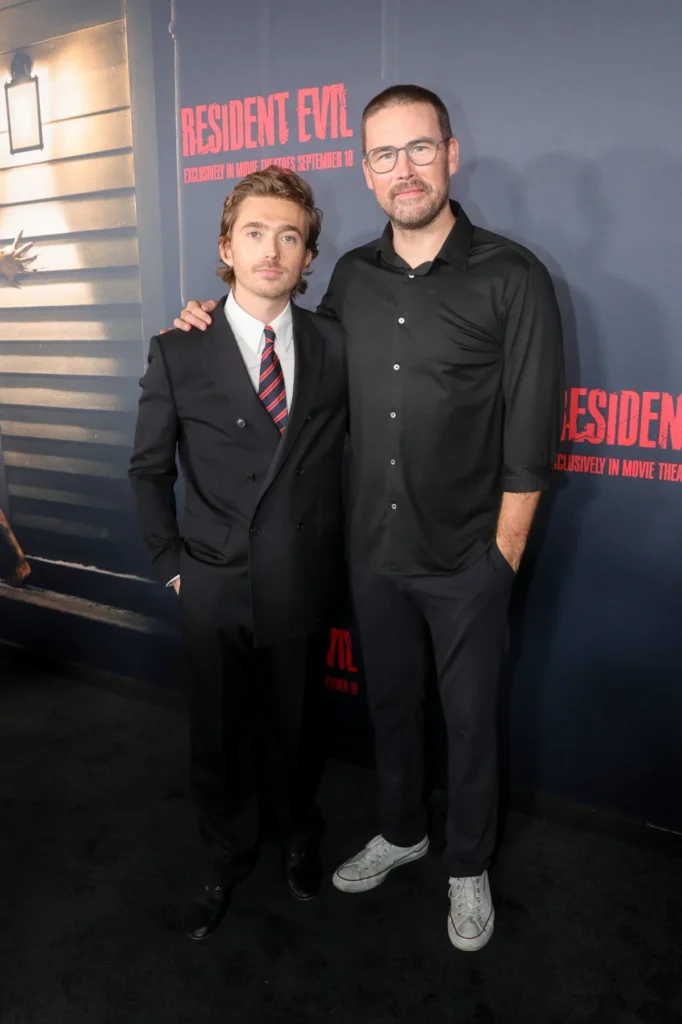

The landscape of cinematic horror adaptations is shifting once more as acclaimed filmmaker Zach Cregger steps into the director’s chair for a fresh cinematic installment of Capcom’s legendary survival horror franchise, Resident Evil. Following the breakout commercial and critical successes of his original features Barbarian and Weapons, Cregger is turning his distinctive creative lens toward one of the most commercially recognizable and enduring intellectual properties in video game history. Hitting theaters on Friday, this new entry arrives with immense anticipation, driven by Cregger’s unconventional choice to bypass established game lore and traditional legacy characters in favor of a completely original narrative framework.
For a quarter of a century, the Resident Evil cinematic universe has undergone multiple iterations, reboots, and television adaptations. As Cregger’s project prepares for its wide theatrical release, industry analysts, longtime franchise followers, and casual moviegoers alike are examining how this latest venture breaks away from a 25-year history of adaptations while attempting to honor the atmosphere that made the source material a global phenomenon.
A Quarter-Century of Cinematic Iterations
Since Paul W.S. Anderson directed the first live-action Resident Evil film in 2002, starring Milla Jovovich as the original cinematic protagonist Alice, the franchise has generated seven major feature films. Collectively, these productions have grossed over $1.2 billion worldwide, making it one of the most financially lucrative video game adaptations in cinema history. However, the critical reception of these films has historically been mixed. While praised for their high-octane action sequences and stylized set pieces, many hardcore fans of the video games frequently criticized the reliance on original cinematic characters rather than the iconic figures from Capcom’s software catalogue, such as Leon S. Kennedy, Jill Valentine, Chris Redfield, and Claire Redfield.
Subsequent attempts to pivot closer to the source material—such as the 2021 reboot film Resident Evil: Welcome to Raccoon City—attempted to adapt the events of the first two games more faithfully. Yet, these projects struggled to achieve the broad box office traction or critical acclaim that studios desired. Consequently, when Sony Pictures enlisted Cregger to helm a new iteration, the studio provided the filmmaker with the creative autonomy to chart an entirely unprecedented course, effectively sidelining the complex canon accumulated over decades of games, animated features, and live-action films.
Plot Mechanics and the Focus on Originality
Cregger’s film centers on a grounded, high-stakes scenario. The plot follows a medical courier, portrayed by Austin Abrams, who finds himself thrust into a terrifying night of survival during a sudden zombie outbreak while making a routine delivery to Raccoon City General Hospital. By focusing on an everyday working-class protagonist caught in the early, chaotic hours of the biological disaster, Cregger deliberately distances the narrative from the government agents, special forces operatives, and global conspiracies that usually dominate the franchise’s storytelling.
Speaking at the Los Angeles premiere on Tuesday, Cregger explained the rationale behind discarding legacy characters. “I feel like I had a clear idea of what would be my favorite Resident Evil movie and I was lucky enough to have a studio that gave me the resources to make it,” Cregger told reporters. Addressing the absence of series mainstays like Leon or Jill, the director elaborated, “The idea that I had just didn’t need any of them, and I felt like to bring them in would be to invite a lot of problems that I felt like would be distracting from the central story.”
This choice has naturally sparked spirited debates across online fan forums and social media platforms. The exclusion of beloved characters is historically a lightning rod for adapted properties. Nevertheless, Cregger remains confident that the spirit of the games remains intact. “I know that when you dive into an IP you’re going to get flack, a certain degree, from the fandom,” Cregger acknowledged. “It would be weird if I were shocked that that was happening. But I think that when the people who love these games the way I do see the movie, my hope is that they feel seen and they feel like this movie is paying homage to the games, because it is, it’s obvious.”
Collaborative Chemistry and Cast Perspectives

The production also marks a reunion between Cregger and actor Austin Abrams, who previously collaborated on the director’s upcoming horror film Weapons. Abrams admitted that he was initially surprised when offered the lead role in a major studio franchise film so soon after wrapping their previous project.
“He asked me if I wanted to do it and I was kind of shocked honestly,” Abrams recalled. “I thought maybe he just wanted notes on the script or something.”
Abrams voiced strong support for Cregger’s decision to avoid strict adherence to established game plots, noting that narrative freedom ultimately serves the cinematic adaptation better. “I dig that because it means Zach can be more creative and be more free with what he’s making while also keeping it very strongly in the feeling of the game,” Abrams said. “I want him to put his fingerprints on it.”
For Abrams, the project represents a continuation of an intensive run in high-stress, survival-oriented cinema. With roles in Cregger’s filmography and the upcoming survival thriller Whalefall—which casts him as a scuba diver swallowed by a whale—the actor has found himself frequently navigating high-concept physical ordeals. Despite his recent cinematic trajectory, Abrams joked about future career directions when asked if he intentionally seeks out punishing roles. “I’m not trying to punish myself,” he laughed, adding that a romantic comedy “sounds kind of nice. Something in the sun, something on a beach. Well not in the water—but outside on the beach, looking at the water, on the sand.”
The Evolution of Zach Cregger’s Career
Cregger’s transition into one of contemporary Hollywood’s most sought-after horror auteurs represents an unusual career trajectory. He initially rose to prominence as a founding member of the sketch comedy troupe The Whitest Kids U’Know, spending years writing and performing comedic material. However, his pivot to feature-length horror with 2022’s low-budget, high-return sensation Barbarian completely redefined his professional standing. The film utilized misdirection, taut pacing, and claustrophobic tension to become a breakout box office hit and a critical darling.
Following that momentum, Cregger’s subsequent projects have positioned him as a filmmaker with a distinct tonal signature. When asked at the premiere if he would ever consider returning to his comedic roots, Cregger offered a measured response. “Never say never,” he noted, before tempering expectations regarding a genre switch. “I’m open to it, but I doubt it. My creative tuning fork tends to resonate with darkness.”
Broader Implications for Video Game Adaptations
Cregger’s Resident Evil arrives at a watershed moment for adaptations of interactive media. For decades, Hollywood treated video game properties with varying degrees of fidelity, often resulting in critical failure and fan alienation. However, recent years have demonstrated that audiences and critics reward creative bravery and high production values when handled by distinct artistic voices, as evidenced by cinematic and television successes like The Last of Us, Fallout, and The Super Mario Bros. Movie.
By handing a massive multi-million-dollar intellectual property to an auteur known for original, independent-spirited horror, Sony Pictures is signaling a new strategy. Rather than manufacturing a calculated, focus-grouped checklist of Easter eggs and fan-service moments, the studio has backed an original narrative vision built around atmosphere, tension, and a visceral sense of dread. Whether this gamble pays off with both mainstream audiences and die-hard survival horror purists will be determined at the box office this weekend. As Cregger stated with cautious optimism regarding his creative choices: “We’ll see, maybe I’m delusional, but I don’t think so. I’ve seen the movie and I like it.”