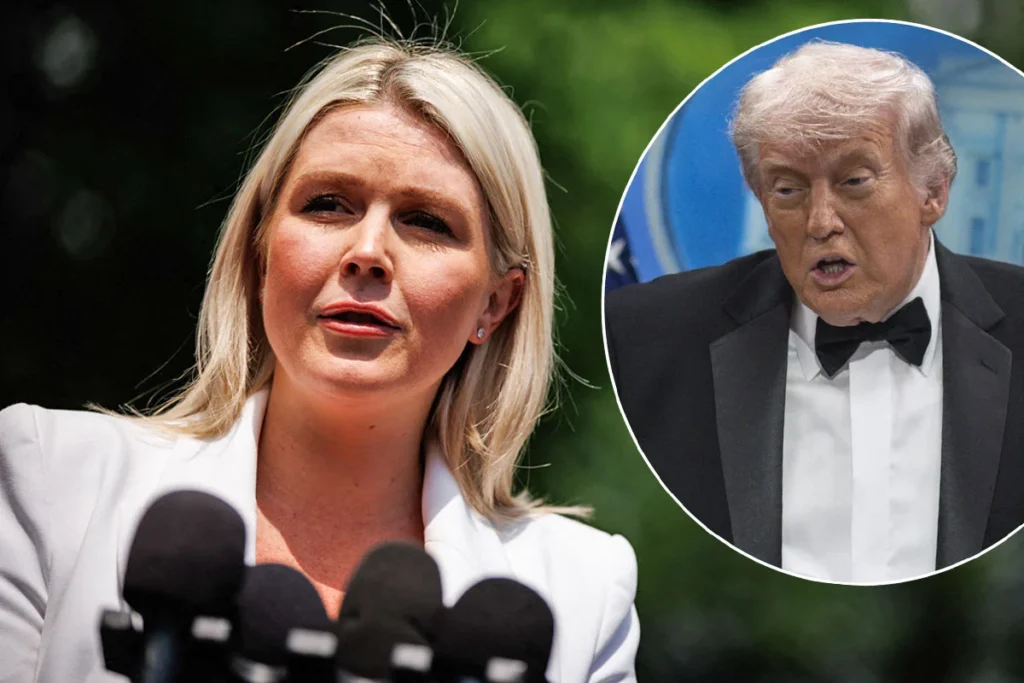

The White House Correspondents’ Dinner, traditionally a night of lighthearted political satire and journalistic camaraderie, was marred by an unprecedented act of violence on Saturday, casting a somber shadow over Washington D.C. In a chilling twist of fate, mere minutes before a gunman opened fire at the event’s venue, Press Secretary Karoline Leavitt had offered a prescient, albeit innocently intended, remark to Fox News, quipping that "there will be some shots fired tonight in the room" in reference to anticipated comedic jabs from President Donald Trump. This unfortunate coincidence has amplified the gravity of the incident and drawn widespread attention to the intersection of political rhetoric and real-world violence.
The White House Correspondents’ Dinner: A Tradition Under Siege
The White House Correspondents’ Dinner (WHCD) is an annual gathering of journalists, politicians, and celebrities, hosted by the White House Correspondents’ Association (WHCA). Established in 1914, its primary purpose is to raise money for journalism scholarships and to honor excellence in the profession. Historically, the event is famous for its comedic roast tradition, where the sitting President and a celebrity comedian deliver speeches often filled with self-deprecating humor and playful jabs at political figures, media organizations, and even the First Family. It is meant to be a moment of détente, where the often adversarial relationship between the press and the presidency is temporarily set aside for an evening of shared laughter and mutual understanding. The event is typically held at the Washington Hilton hotel, a large, well-known venue capable of accommodating hundreds of high-profile guests.
In recent years, the dinner has faced scrutiny, particularly regarding its evolving role in an increasingly polarized political landscape. While past presidents, regardless of party, often attended, former President Donald Trump notably broke with tradition during his first term by largely boycotting the event. His decision stemmed from his often-contentious relationship with much of the mainstream media, whom he frequently labeled as "fake news." His attendance at this particular 2026 dinner, marking a return to the tradition, was seen by some as a significant, albeit potentially fraught, moment. Press Secretary Karoline Leavitt, a prominent figure in the Trump administration, was naturally a key representative for the President at such an event.
Pre-Event Remarks: A Fateful Coincidence
On the red carpet of the Washington Hilton, amidst the usual pre-dinner buzz and media interviews, Karoline Leavitt engaged with Fox News. In anticipation of President Trump’s speech, which she characterized as "funny" and "entertaining," Leavitt made a comment that would soon resonate with an unforeseen and tragic irony. She stated, "There will be some shots fired tonight in the room." Her intention was undoubtedly to convey the expectation of sharp, witty political humor—the metaphorical "shots" that are a staple of such comedic roasts. This phrasing, common in describing intense verbal exchanges or comedic attacks, was a standard part of the WHCD’s playful lexicon.
At 28 years old and pregnant with her second child, Leavitt’s remarks were delivered in what appeared to be good spirits, reflecting the traditional atmosphere of the event. No one could have predicted that within minutes, the phrase would transition from a figure of speech to a chilling literal description of events unfolding just yards away from the main ballroom. The timing of her comment, captured live on camera, would later become a focal point of discussion, highlighting the stark contrast between anticipated political banter and the sudden eruption of real-world violence.
The Unfolding Crisis: Shots Fired at the Washington Hilton
The evening’s festive atmosphere was shattered when actual gunshots rang out within the Washington Hilton. Authorities quickly identified the assailant as Cole Allen. The incident occurred outside the main ballroom, preventing the gunman from reaching the President, First Lady, or other high-ranking administration officials and media personalities attending the dinner. However, the attack was not without consequence. During the chaotic moments, one law enforcement officer sustained a gunshot wound. Fortunately, the officer’s life was saved by a bulletproof vest, a critical piece of protective gear that prevented a fatal injury. The immediate and decisive action of law enforcement, including the agent who took the bullet, was instrumental in neutralizing the threat and preventing further casualties.
The Secret Service, responsible for the protection of the President and other dignitaries, swiftly implemented emergency protocols. President Trump and the First Lady, along with other key officials, were quickly ushered to safety backstage, away from the immediate danger zone. The rapid response underscored the constant vigilance required at high-profile events and the effectiveness of security measures designed to protect top government officials. The incident sent shockwaves through the hotel, transforming a glamorous social event into a scene of panic and emergency. Guests inside the ballroom, initially unaware of the full scope of the situation, soon became aware of the gravity of the events unfolding just outside.
Immediate Response and Evacuation Protocols
The Secret Service, along with local law enforcement agencies, executed their emergency response plans with precision and speed. Upon the first sound of gunfire, agents immediately moved to identify and neutralize the threat posed by Cole Allen. The wounded officer’s bravery in confronting the assailant directly was critical in containing the situation. Bulletproof vests, standard issue for protective details, once again proved their invaluable role in saving lives in high-risk environments. The quick thinking and coordination among various security personnel ensured that the President and First Lady were extracted from potential harm’s way without delay.
For attendees, the experience was one of sudden fear and confusion. While the dinner proceeded for a short period, news of the shooting quickly spread, leading to a palpable shift in mood from celebratory to apprehensive. Eyewitness accounts later detailed the swift deployment of armed personnel, the sealing off of areas, and the somber realization that a night intended for camaraderie had been tragically interrupted by violence. The incident served as a stark reminder of the ever-present threats faced by public figures and the dedicated efforts of security forces to mitigate them.
Karoline Leavitt’s Post-Incident Reflection
The day after the traumatic event, Karoline Leavitt took to Instagram to share her reflections, offering an unfiltered account of her perspective and the administration’s stance. Her statement was a stark contrast to her lighthearted pre-dinner remarks, reflecting the gravity of the preceding night.
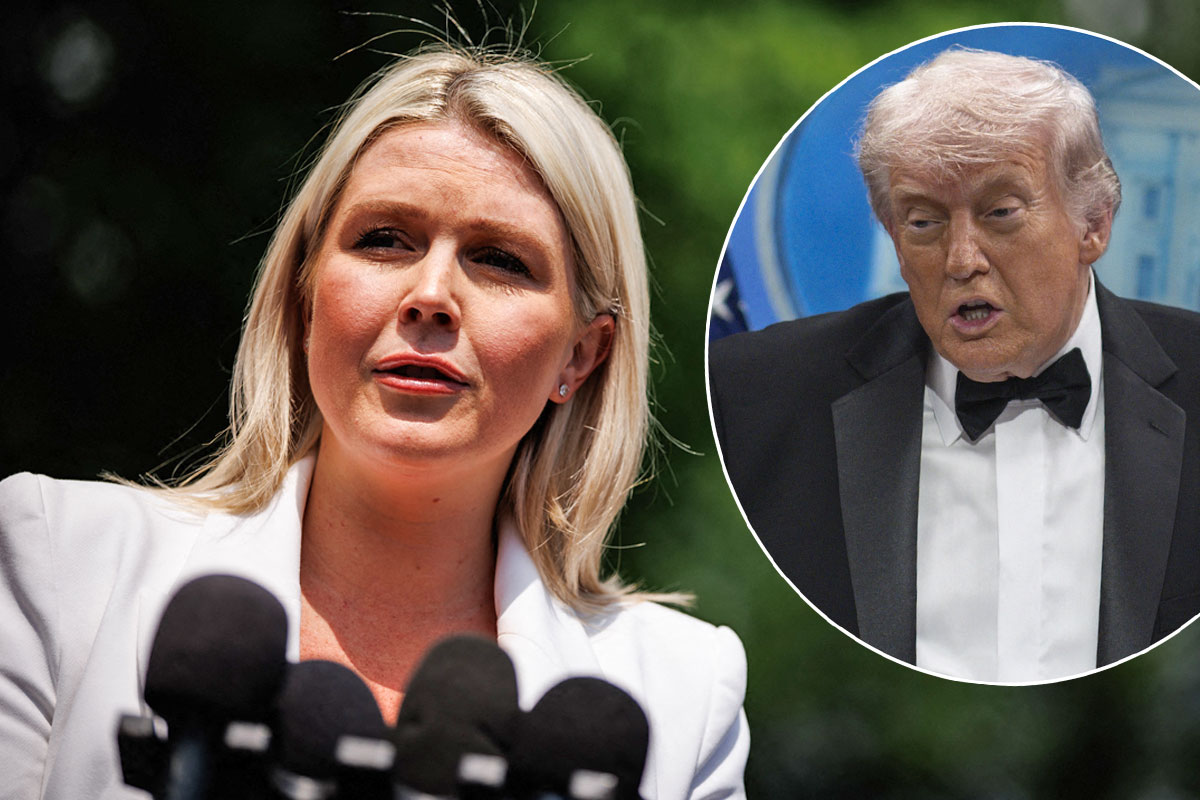
"What was supposed to be a fun night with President Trump delivering jokes and celebrating free speech was hijacked by a depraved anti-Trump lunatic who sought to assassinate the President and kill as many top Trump administration officials as possible," Leavitt wrote. Her words painted a clear picture of the perceived motive behind the attack, framing it as a politically motivated assassination attempt targeting the highest levels of government. This narrative immediately positioned the incident within the broader context of political extremism and its dangerous consequences.
Leavitt further detailed the immediate aftermath from her vantage point: "I was with President Trump and the First Lady back stage after we were quickly ushered to safety by Secret Service. President Trump was truly fearless, but as he said last night, this political violence needs to end. Thank you to law enforcement for keeping all of us safe, including the brave agent who took a bullet to the chest and immediately moved to neutralize the shooter." Her account highlighted the President’s composure under duress and echoed a broader call for an end to political violence, a sentiment often voiced in times of national crisis. She concluded her message with a solemn plea: "Pray for our country."
Her statement served multiple purposes: confirming the immediate safety of the President and First Lady, praising the heroic actions of law enforcement, and framing the incident as a politically motivated act. It also underscored the personal impact on those present, including Leavitt herself, who is currently pregnant.
President Trump’s Reaction and Call for Unity
While the original article references a separate piece detailing Trump’s reaction to being "confronted about WHCD shooting suspect’s motive," Leavitt’s Instagram post offers direct insight into his immediate response. She describes President Trump as "truly fearless" in the face of the threat and quotes him as stating, "this political violence needs to end." This sentiment aligns with a recurring theme in political discourse, particularly after acts of violence, where leaders often call for national unity and a de-escalation of divisive rhetoric.
President Trump’s attendance at the WHCD, breaking from his previous pattern of absence, was itself a significant political statement. The subsequent attack on the venue further complicated the narrative around his engagement with the media and his administration’s perceived vulnerabilities. His call for an end to political violence, coming after an apparent attempt on his and his officials’ lives, carries significant weight and adds another layer to the ongoing debate about the tone and impact of political discourse in the United States.
Investigating the Motive: The Gunman and His Intent
The identity of the gunman, Cole Allen, immediately became a central focus of the investigation. Authorities would be working to uncover his background, any potential affiliations, and, most critically, his precise motives. Leavitt’s statement directly labeled Allen as a "depraved anti-Trump lunatic who sought to assassinate the President and kill as many top Trump administration officials as possible," indicating that initial intelligence or the nature of the attack itself strongly suggested a politically motivated act.
Investigations into such incidents typically involve a thorough review of the assailant’s digital footprint, personal history, mental health records, and any communications that might shed light on their intent. The presence of specific targets—the President and high-ranking officials—would elevate the investigation to the highest levels, involving federal agencies like the FBI and Secret Service. Understanding what drove Allen to commit such an act is crucial not only for justice but also for informing broader strategies to prevent future political violence. This investigation would likely explore whether Allen acted alone or if there were any co-conspirators, and how he managed to penetrate the perimeter of a high-security event.
Broader Implications for Political Discourse and Security
The White House Correspondents’ Dinner shooting carries profound implications for political discourse, event security, and the general atmosphere of political engagement in the United States. The unfortunate literalization of Karoline Leavitt’s "shots fired" remark serves as a stark reminder of the power of language and the potential for misinterpretation or exploitation in an already charged political climate. While her comment was clearly intended metaphorically, its immediate juxtaposition with actual violence highlights the fine line between rhetorical flourish and the dangerous reality of political extremism.
The incident is likely to intensify discussions around the responsibility of public figures and media outlets in shaping political rhetoric. Critics on both sides of the political spectrum often point fingers at the other for inflammatory language, and this event will undoubtedly fuel calls for more measured and unifying communication. The call to "end political violence" by President Trump and others reflects a widespread concern that partisan divisions are increasingly manifesting in dangerous real-world actions.
From a security standpoint, the shooting at a meticulously planned event like the WHCD will necessitate a comprehensive review of existing protocols. Despite the quick and effective response of the Secret Service, the fact that an assailant could fire rounds at the perimeter of such a high-profile gathering will prompt questions about ingress points, screening procedures, and overall threat assessment at venues hosting top government officials. Future events of this nature may see even more stringent security measures, potentially altering the very character of these public interactions.
The Future of High-Profile Events
The attack casts a long shadow over the future of events like the White House Correspondents’ Dinner. While the tradition of the dinner is deeply ingrained, the specter of violence could lead to calls for increased security, which might, in turn, affect the accessibility and atmosphere of such gatherings. There might be discussions about moving the event to a more secure, controlled environment, or even reconsidering its format altogether to minimize risk.
The incident serves as a grim testament to the persistent threat of political violence in a polarized society. It underscores the bravery of law enforcement personnel who stand on the front lines of protecting public figures and the institutions they represent. As the nation grapples with the aftermath, the White House Correspondents’ Dinner of 2026 will be remembered not for its jokes and camaraderie, but for the shocking moment when a figure of speech became a terrifying reality, forcing a reevaluation of political rhetoric, public safety, and the delicate balance of democracy. The call to "Pray for our country" by Press Secretary Leavitt resonates deeply, reflecting a collective yearning for peace and an end to the divisions that threaten the fabric of society.