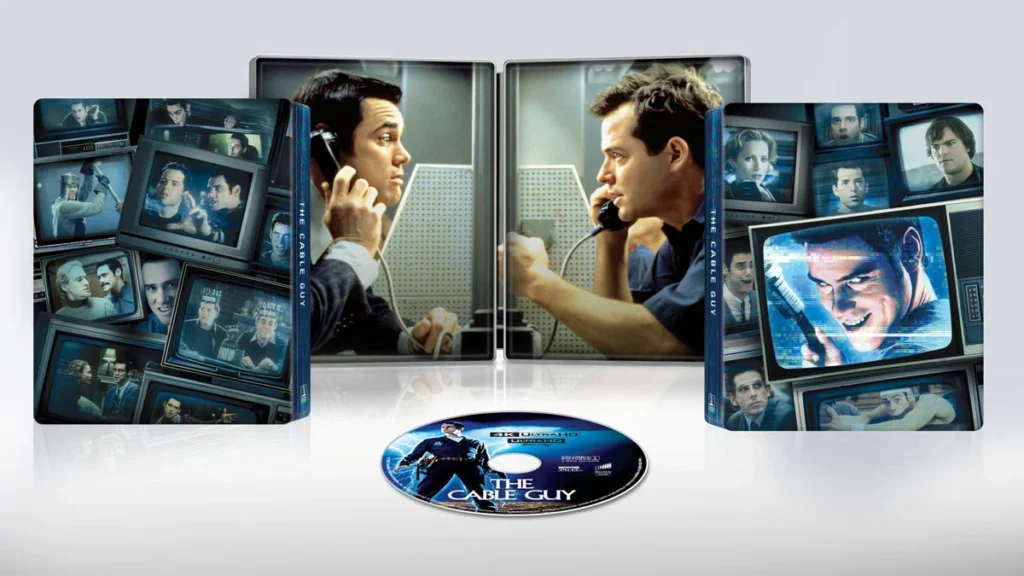

Sony Pictures Home Entertainment has officially announced that Ben Stiller’s acclaimed dark comedy, The Cable Guy, will receive a special 4K Ultra HD Steelbook edition, slated for release on October 6th, 2026. This premium physical media offering arrives as the film approaches its 30th anniversary, providing fans and cinephiles with an opportunity to experience the cult classic in the highest fidelity picture and sound available, alongside a comprehensive suite of bonus features, including new archival content. Pre-orders for the Steelbook are currently live via Amazon, signaling a significant push by the studio to re-introduce beloved catalog titles to the modern home entertainment market.
A Deep Dive into the Premium Release Details
The forthcoming 4K Ultra HD Steelbook for The Cable Guy promises a significant upgrade in both visual and auditory experience. The film, originally released in 1996, has been meticulously remastered to 4K Ultra HD resolution, ensuring unparalleled clarity and detail that surpasses previous home video iterations. Complementing the enhanced picture, the release will feature Dolby Vision sound, delivering a dynamic and immersive audio landscape designed to bring the film’s unique sound design to life. This technical overhaul is a standard for premium 4K releases, catering to audiophiles and videophiles who prioritize the ultimate viewing experience outside of a theatrical setting.
Beyond the technical enhancements, the Steelbook is packed with a robust collection of bonus materials, offering deep insights into the film’s production and legacy. These features include:
- Audio Commentary: A retrospective track featuring director Ben Stiller, producer Judd Apatow, and star Jim Carrey. This commentary is expected to provide valuable anecdotes, behind-the-scenes stories, and reflections on the film’s challenging production and its evolving critical reception over the decades.
- Extended and Deleted Scenes: Offering a glimpse into footage that didn’t make the final cut, these scenes often provide additional character development, plot points, or comedic moments that were trimmed for pacing or narrative flow.
- Gag Reel: A staple of comedy releases, the gag reel showcases outtakes and bloopers, highlighting the improvisational talents of the cast and the lighter moments on set, contrasting with the film’s often dark subject matter.
- Rehearsal Footage: Rare insight into the creative process, this footage can reveal how scenes were developed, how actors approached their roles, and the collaborative effort between Stiller, Carrey, and the rest of the cast.
- Jerry Cantrell’s Music Video for "Leave Me Alone": The inclusion of the music video for the Alice in Chains guitarist’s contribution to the film’s soundtrack provides a nostalgic tie-in to the film’s original release and its musical landscape.
Crucially, the anniversary release will also feature a brand-new piece of content: a conversation between director Ben Stiller and co-star Matthew Broderick, recorded during the 2026 Tribeca Film Festival. This exclusive feature is particularly noteworthy, as it offers a contemporary reflection from two of the film’s key creative forces, providing fresh perspectives on its impact and enduring relevance as it marks its thirtieth year. Such retrospective conversations are highly valued by film historians and fans alike, often shedding new light on the creative intentions and challenges faced during production.
Synopsis: A Twisted Tale of Friendship
The official synopsis, provided by Sony Pictures Home Entertainment, encapsulates the film’s premise: "Jim Carrey is Chip Douglas, cable installer. Raised on television sitcoms, he wants life to look just like My Three Sons. And when he meets single guy Steven Kovacs (Matthew Broderick), he sees his chance for some serious male bonding. But Chip’s idea of friendship — which includes physical assault, a game of ‘Porno Password’ and a medieval joust — may be hazardous to Steven’s health. In Chip’s own immortal words, ‘I can be your best friend…or your worst enemy.’" Directed by Ben Stiller (Tropic Thunder, Zoolander), the film also features a notable supporting cast including Leslie Mann, Jack Black, and Owen Wilson, many of whom were rising stars at the time.
This synopsis hints at the film’s central conflict: the increasingly unsettling relationship between Chip, a lonely and socially maladjusted cable installer who grew up with television as his primary social educator, and Steven, a mild-mannered architect seeking to move on from a recent breakup. Chip’s desperate need for connection quickly devolves into obsessive and dangerous behavior, blurring the lines between friendship, stalking, and psychological torment. The narrative explores themes of loneliness, the dark side of media consumption, and the perils of parasocial relationships, all wrapped in a distinctive blend of dark humor and suspense.
Production History and Initial Reception (1996)
The Cable Guy arrived in theaters on June 14, 1996, with a significant amount of anticipation, primarily due to the star power of Jim Carrey. At the time, Carrey was arguably at the zenith of his career, having delivered a string of massive box office hits with Ace Ventura: Pet Detective (1994), The Mask (1994), and Dumb and Dumber (1994), followed by Ace Ventura: When Nature Calls (1995). Audiences had come to expect his signature brand of physical comedy and zany, over-the-top characters.
However, The Cable Guy represented a significant departure for Carrey and for mainstream studio comedies. Directed by Ben Stiller, who had previously helmed the Gen X romantic comedy Reality Bites (1994), the film was conceived as a much darker, more subversive project. The screenplay, originally written by Lou Holtz Jr. and later revised by Judd Apatow (who also served as a producer), leaned heavily into psychological thriller elements and black comedy. This tonal shift was a deliberate choice to challenge Carrey’s established persona and explore the unsettling facets of his comedic energy.
The film was produced on a substantial budget for a comedy at the time, approximately $47 million. Carrey himself commanded an unprecedented salary of $20 million for his role, making him the first actor to reach that benchmark, a testament to his immense box office appeal. Despite the star power and significant investment, The Cable Guy garnered a mixed reception upon its initial release. While it performed reasonably well at the box office, grossing over $102.5 million worldwide, it was considered a commercial disappointment relative to Carrey’s previous blockbusters, which often exceeded $300 million.
Critics were divided. Many were taken aback by the film’s bleak tone and Carrey’s unsettling portrayal of Chip Douglas, which veered sharply from his more lovable or outright goofy characters. Some praised Carrey for his brave and challenging performance, recognizing his attempt to expand his acting range. Others found the film too dark, uncomfortable, or simply not funny enough, failing to meet the expectations set by Carrey’s previous work. The divergence in critical opinion and audience expectations largely stemmed from the film’s genre-bending nature, which defied easy categorization and challenged conventional notions of a "Jim Carrey comedy."
Retrospective Appreciation and Cultural Significance
Over the nearly three decades since its release, The Cable Guy has experienced a significant re-evaluation, solidifying its status as a cult classic and an "ahead-of-its-time" film. What was once perceived as its weakness – its dark tone and unsettling themes – is now widely celebrated as its strength.
One of the most frequently cited aspects of the film’s prescience is its commentary on media consumption and the burgeoning digital age. Released when cable television was becoming ubiquitous and the internet was just beginning to enter mainstream consciousness, the film eerily foreshadowed many contemporary issues. Chip Douglas, raised by television, views life through the distorted lens of sitcoms and infomercials, embodying the dangers of media saturation and the blurring of reality with manufactured narratives. His desperate attempts to form connections, often through technological means (installing cable, hacking into systems), prefigure the rise of online stalking, parasocial relationships, and the isolation paradoxically fostered by interconnectedness in the internet era. The film’s depiction of a character whose entire social education comes from screens resonates even more powerfully in an age dominated by social media and digital interaction.
Jim Carrey’s performance as Chip Douglas is now widely regarded as one of his most compelling and complex. It showcased his ability to inhabit a character who is simultaneously pathetic, terrifying, and oddly sympathetic. The performance was a crucial turning point in his career, demonstrating a desire to move beyond pure slapstick and explore darker, more nuanced roles. It laid the groundwork for his later critically acclaimed dramatic work in films like The Truman Show (1998) and Eternal Sunshine of the Spotless Mind (2004). Carrey’s ability to maintain a veneer of comedic charm while subtly revealing the character’s profound loneliness and dangerous instability is a masterclass in dark comedic acting.
Ben Stiller’s direction also receives greater appreciation today. He skillfully navigated the delicate balance between comedy and psychological horror, crafting a film that is both genuinely funny and deeply unsettling. His visual style, combined with the film’s sharp script, created a unique cinematic experience that challenged audiences to confront uncomfortable truths about modern society. The supporting cast, including early career appearances from Jack Black and Owen Wilson, also contributed significantly to the film’s distinct ensemble dynamic.
The Enduring Appeal of Physical Media and 4K UHD
The decision by Sony Pictures Home Entertainment to release The Cable Guy in a 4K Ultra HD Steelbook format underscores the continued vitality of the physical media market, particularly for collectors and cinephiles. Despite the pervasive dominance of streaming services, a dedicated segment of consumers values the superior audio-visual quality, permanence, and collectible nature of physical discs.
4K Ultra HD technology offers a significant leap in home entertainment quality. With four times the resolution of standard Blu-ray, 4K UHD discs deliver sharper images, finer details, and a more immersive viewing experience. The inclusion of High Dynamic Range (HDR) formats like Dolby Vision, specifically mentioned for this release, further enhances picture quality by expanding the range of colors and contrast, resulting in more vibrant and lifelike visuals. For a film like The Cable Guy, which features a distinct visual aesthetic that oscillates between brightly lit comedic scenes and darker, more atmospheric sequences, these enhancements will allow viewers to appreciate Stiller’s directorial choices and cinematographer Robert Brinkmann’s work with unprecedented clarity.
Steelbook editions, in particular, cater to the collector’s market. These premium metal cases often feature exclusive artwork, sturdy construction, and a tactile quality that differentiates them from standard plastic Blu-ray cases. Their limited availability and unique designs make them highly sought after by enthusiasts who view them as collectible pieces of film history, further enhancing the appeal of this anniversary release. The longevity of physical media also provides a sense of security against the ephemeral nature of streaming licenses, ensuring that beloved films remain accessible to owners regardless of platform changes or content removals.
Anniversary Celebrations and Broader Industry Trends
The 2026 release of The Cable Guy in 4K Ultra HD Steelbook form is clearly positioned as a celebration of the film’s 30th anniversary. Such milestones are increasingly becoming opportunities for studios to revisit and re-present beloved titles to new generations and existing fans alike. The inclusion of the 2026 Tribeca Film Festival conversation with Ben Stiller and Matthew Broderick explicitly ties this release to contemporary anniversary events, lending it an additional layer of significance and timeliness. Film festivals often host retrospective screenings and panels for classic films, acknowledging their cultural impact and allowing creators to reflect on their work decades later.
This release is also indicative of a broader industry trend where studios are investing in the remastering and re-release of their catalog titles in 4K UHD. As the technology becomes more widespread in homes, there is a growing demand for older films to be presented in the highest possible quality. This not only generates new revenue streams from existing intellectual property but also serves to preserve cinematic heritage. For Sony Pictures Home Entertainment, this move aligns with their ongoing strategy to offer premium physical media editions of their most iconic and critically acclaimed films.
Furthermore, the simultaneous availability of a 4K Steelbook for Ace Ventura: Pet Detective underscores a strategic approach to catering to Jim Carrey completists. By offering two distinct yet equally significant films from Carrey’s diverse filmography in premium formats, Sony acknowledges the actor’s enduring appeal and the desire of his fans to own his work in the best possible presentations. These releases collectively contribute to cementing Jim Carrey’s legacy as a transformative figure in modern comedy and drama, ensuring his films remain accessible and visually stunning for years to come.
In conclusion, the 4K Ultra HD Steelbook release of The Cable Guy is more than just a home video upgrade; it is a comprehensive celebration of a film that defied expectations, challenged its star, and proved to be remarkably prescient in its themes. For fans of dark comedy, Jim Carrey’s nuanced performances, and cinematic history, this anniversary edition promises to be an essential addition to any collection.