
HBO Max has offered the inaugural glimpse into its highly anticipated The Big Bang Theory spinoff series, Stuart Fails to Save the Universe, confirming a July streaming premiere. The announcement, made during a lively panel at CCXP Mexico City, introduced fans to the show’s premise, key cast members, and a significant musical collaboration. Kevin Sussman, reprising his role as the titular Stuart Bloom, was joined on stage by co-stars Lauren Lapkus, Brian Posehn, and John Ross Bowie, providing an early look at the comedic chaos awaiting viewers. The panel also revealed that acclaimed composer Danny Elfman will craft the series’ original theme song, signaling a distinct tonal ambition for the new comedic venture.
The Grand Unveiling at CCXP Mexico City
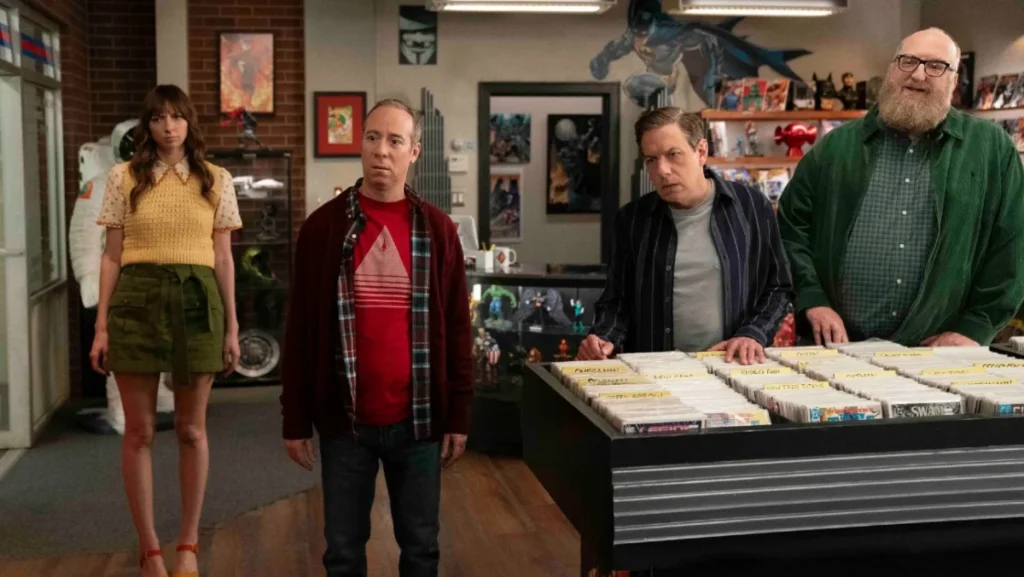
The Comic Con Experience (CCXP) in Mexico City served as the global stage for Warner Bros. Discovery to formally introduce Stuart Fails to Save the Universe. This event, known for its enthusiastic fan base and major industry announcements, provided the perfect backdrop for the cast to tease their upcoming comedy. The energy from the audience was palpable as Sussman, Lapkus, Posehn, and Bowie engaged in a Q&A session, sharing anecdotes and insights into their characters’ evolving journeys. The debut of exclusive images from the series, showcasing the ensemble in various states of bewildered heroism, further ignited excitement among attendees and online followers alike. The strategic choice of CCXP Mexico City underscores Warner Bros. Discovery’s commitment to engaging international audiences and leveraging major fan conventions for high-profile launches.
Plotting a Multiverse Meltdown
At its core, Stuart Fails to Save the Universe centers on Kevin Sussman’s character, Stuart Bloom, the long-suffering proprietor of The Comic Center of Pasadena. Known to fans of The Big Bang Theory as the perpetually struggling but endearing comic book store owner, Stuart is thrust into an unprecedented leadership role. The series’ central conflict arises when Stuart inadvertently damages a sophisticated device originally constructed by Leonard Hofstadter (Johnny Galecki) and Sheldon Cooper (Jim Parsons) – two of the original show’s theoretical physicist protagonists. This accidental breakage triggers a catastrophic chain of events, initiating a "multiverse armageddon." Stuart, an individual hardly renowned for his competence in high-stakes situations, finds himself burdened with the monumental task of restoring reality. As co-star Brian Posehn aptly summarized from the stage, "The fun is watching him fail every week," setting the tone for a series that promises a blend of high-concept sci-fi and signature Big Bang Theory humor rooted in character-driven comedy.
Returning Faces and Evolving Dynamics
The new program sees Stuart Bloom joined in his dimension-hopping quest by a familiar trio of supporting characters from The Big Bang Theory universe, whose relationships and roles are set to deepen. Lauren Lapkus reprises her role as Denise, Stuart’s girlfriend, whose romance with him was just beginning to blossom as The Big Bang Theory concluded its run in 2019. Sussman elaborated on this aspect, stating, "When The Big Bang Theory ended, our relationship was just budding, and now you can see where it goes." This development promises to explore a more mature and perhaps even more stable Stuart, albeit one still navigating profound personal insecurities amidst cosmic crises.
Brian Posehn returns as Bert, the amiable, often socially awkward geologist. Bert, with his scientific background and understated demeanor, is expected to provide a grounded, albeit still comedic, counterpoint to Stuart’s bumbling attempts at heroism. John Ross Bowie completes the ensemble, portraying the irritatingly brilliant quantum physicist Barry Kripke. Kripke, known for his distinctive speech impediment and perpetual one-upmanship, will undoubtedly contribute to the group’s internal friction and comedic relief, likely offering a sardonic commentary on Stuart’s ineptitude while perhaps inadvertently contributing to solutions. The dynamic between this quartet – Stuart’s girlfriend, his science-minded friend, and his academic rival – is poised to be a central comedic engine as they traverse various alternate realities. Their collective journey will involve encounters with alternate-universe versions of beloved characters from the original The Big Bang Theory, a narrative device that promises both nostalgic callbacks and fresh comedic interpretations.
Stuart Bloom: From Comic Book Clerk to Unlikely Leader

Stuart Bloom’s character arc is one of the more understated yet significant developments within The Big Bang Theory. Introduced in the second season as the owner of the local comic book store frequented by Leonard, Sheldon, Howard, and Rajesh, Stuart initially served as a recurring minor character, often portrayed as a lonely, financially struggling, and somewhat pathetic figure. His store was a sanctuary for the gang, but his personal life was consistently depicted as a series of unfortunate events. Over the show’s twelve seasons, Stuart gradually became more integrated into the main friend group. He moved in with Howard and Bernadette for a period, worked for them, and eventually found a stable relationship with Denise. This evolution from a peripheral figure to a more central, albeit still underdog, character makes his transition into a "leadership role" in Stuart Fails to Save the Universe particularly compelling.
As Kevin Sussman noted, "Stuart takes on a leadership role in this," immediately tempering expectations with the caveat, "He’s not very good at it." This self-deprecating humor, inherent to Stuart’s character, will likely be a cornerstone of the spinoff’s comedy. Sussman further elaborated on his character’s predicament: "I do my best, but really, I’m way out of my comfort zone." This sentiment perfectly encapsulates Stuart’s perpetual state of anxiety and his characteristic lack of confidence, even when faced with cosmic responsibility. The humor will undoubtedly stem from the stark contrast between the monumental task at hand – saving the multiverse – and Stuart’s inherent unsuitability for such a grand endeavor. His journey is expected to be a comedic exploration of accidental heroism, proving that even the most unlikely individuals can stumble into greatness, often with hilarious consequences.
The Sonic Signature: Danny Elfman’s Touch
A significant detail revealed at CCXP Mexico City was the involvement of legendary composer Danny Elfman, who will create the original theme song for Stuart Fails to Save the Universe. Elfman’s illustrious career spans decades, marked by his distinctive and often whimsical scores for films such as Batman, The Nightmare Before Christmas, Edward Scissorhands, and Men in Black, as well as iconic television themes like The Simpsons. His signature style, characterized by its quirky melodies, orchestral grandeur, and playful eccentricity, suggests a potentially unique sonic identity for the spinoff.
Elfman’s participation elevates the production value and artistic ambition of the series. A theme song from Elfman is more than just an opening jingle; it’s an auditory branding that can instantly convey tone, genre, and emotional depth. For a show dealing with multiverse travel and comedic chaos, Elfman’s ability to blend fantastical elements with a sense of underlying wonder and humor makes him an ideal choice. His involvement suggests that the series aims for a broader, more cinematic feel than a typical multi-camera sitcom, hinting at a visual and auditory experience that transcends traditional comedic formats, perhaps leaning into the fantastical elements of its premise with a rich, immersive score. This collaboration underscores Warner Bros. Television’s commitment to investing in top-tier talent for their franchise extensions.
The Ever-Expanding Big Bang Universe
Stuart Fails to Save the Universe represents the latest chapter in the expanding television universe born from the phenomenal success of The Big Bang Theory. The original series, which aired on CBS from 2007 to 2019 across 12 seasons, became a cultural phenomenon, celebrated for its witty dialogue, relatable characters, and groundbreaking portrayal of "nerd culture" in mainstream television. It consistently ranked among the most-watched comedies on television, culminating in a highly emotional series finale that drew millions of viewers.
The franchise first branched out with Young Sheldon, a prequel series that premiered in 2017. Focusing on Sheldon Cooper’s childhood in East Texas, Young Sheldon offered a different comedic tone – a single-camera dramedy – and proved to be a critical and commercial success in its own right, concluding its seven-season run in 2024. Building on this success, a second spinoff, Georgie & Mandy’s First Marriage, debuted in 2024, continuing the story of Sheldon’s older brother Georgie and his wife Mandy, exploring their early married life and parenthood. This series is currently airing its second season on CBS.
The continuous expansion of The Big Bang Theory universe with Stuart Fails to Save the Universe on HBO Max signals a clear strategy by Warner Bros. Television to leverage its most successful intellectual properties. By moving a new installment to a streaming platform and adopting a high-concept sci-fi premise, the franchise is demonstrating its adaptability and willingness to explore new narrative avenues while retaining connections to its beloved characters and comedic roots. This approach aims to keep the franchise fresh and relevant for both long-time fans and potentially new audiences drawn to the multiverse concept.
Creators and Creative Vision

The creative minds behind Stuart Fails to Save the Universe are a formidable team, comprising Chuck Lorre, Zak Penn, and Bill Prady, who serve as creators, writers, and executive producers. Chuck Lorre, often dubbed the "King of Sitcoms," is a television titan responsible for an impressive roster of hit comedies including The Big Bang Theory, Two and a Half Men, Mom, and Young Sheldon. His proven track record in crafting broadly appealing, character-driven comedies provides a strong foundation for the new series.
Bill Prady co-created The Big Bang Theory with Lorre, establishing the intricate world and scientific humor that defined the original show. His deep understanding of these characters and their established universe will be crucial in maintaining continuity and authenticity in the spinoff. The addition of Zak Penn, a screenwriter known for his work on major genre films such including Ready Player One, The Avengers, and X2, introduces a significant new dimension. Penn’s expertise in crafting large-scale, intricate genre narratives, particularly those involving multiverses and sci-fi concepts, suggests that Stuart Fails to Save the Universe will blend traditional sitcom elements with ambitious, effects-heavy storytelling. This combination of sitcom veterans and a seasoned genre writer indicates a deliberate effort to expand the scope of The Big Bang Theory universe beyond its initial comedic confines, promising a show that is both familiar in its humor and innovative in its premise. The series hails from Chuck Lorre Productions in association with Warner Bros. Television, ensuring a continuation of the high production standards associated with the franchise.
The Multiverse Craze and Its Appeal
Stuart Fails to Save the Universe strategically taps into a pervasive trend in contemporary popular culture: the multiverse narrative. Over the past decade, the concept of parallel universes and alternate realities has exploded across film and television, from the Marvel Cinematic Universe’s "Multiverse Saga" and DC’s various cinematic and television iterations to critically acclaimed independent films like Everything Everywhere All at Once. This fascination with infinite possibilities and alternate timelines resonates deeply with audiences, offering boundless creative potential for storytelling.
By grounding this high-concept sci-fi trope in the familiar, character-driven world of The Big Bang Theory, the spinoff aims to deliver a unique comedic take on the multiverse. Instead of focusing on grand, heroic figures, the series places a quintessential underdog at the center of cosmic calamity. This comedic juxtaposition – Stuart Bloom, the socially awkward comic book store owner, grappling with reality-shattering consequences – provides fertile ground for humor. The show’s premise allows for both fan service, through encounters with alternate versions of existing characters, and genuine narrative innovation, exploring how even minor choices can ripple across infinite realities. The HBO Max Instagram account’s caption alongside the show’s stills – "If at first you don’t succeed, try in another multiverse" – perfectly encapsulates this blend of self-deprecating humor and cosmic scale, positioning the series as a lighthearted yet adventurous entry into the crowded multiverse landscape.
Strategic Play for HBO Max
The decision to launch Stuart Fails to Save the Universe on HBO Max is a significant strategic move for Warner Bros. Discovery’s streaming platform. In an increasingly competitive streaming market, leveraging established and beloved intellectual properties is crucial for attracting and retaining subscribers. The Big Bang Theory remains one of the most popular syndicated comedies globally, with a massive and dedicated fan base. By developing a direct spinoff featuring a recognizable character and a high-concept premise, HBO Max aims to capitalize on this existing audience while also potentially drawing in new viewers interested in multiverse narratives.
The show’s streaming-only release provides greater creative freedom compared to traditional network television, potentially allowing for more ambitious visual effects to depict the multiverse and a more serialized narrative structure. This move also aligns with HBO Max’s broader strategy of offering a diverse content library that ranges from prestigious dramas to popular genre fare and comedies. Stuart Fails to Save the Universe serves as a strong addition to their comedy lineup, reinforcing the platform’s commitment to expanding its content offerings and delivering fan-favorite characters in fresh, engaging ways. The timing of the July release positions it as a key summer offering, potentially boosting subscriber engagement during a period when audiences seek lighter, escapist entertainment.
Anticipation and Outlook
As the July premiere date approaches, anticipation for Stuart Fails to Save the Universe continues to build. The creative team’s blend of established comedic talent and genre expertise, coupled with the involvement of an iconic composer like Danny Elfman, suggests a show that aims to be more than just a standard sitcom. It promises to be a unique hybrid, offering the comfort of familiar characters alongside the excitement of a sprawling, reality-bending adventure. The series is poised to further cement The Big Bang Theory‘s legacy as a robust and adaptable franchise, capable of expanding its universe in unexpected and entertaining directions. Fans can look forward to seeing Stuart Bloom, in all his endearing ineptitude, embark on a journey far grander than selling comic books, proving that sometimes, failing to save the universe can be the most heroic, and certainly the funniest, thing of all.