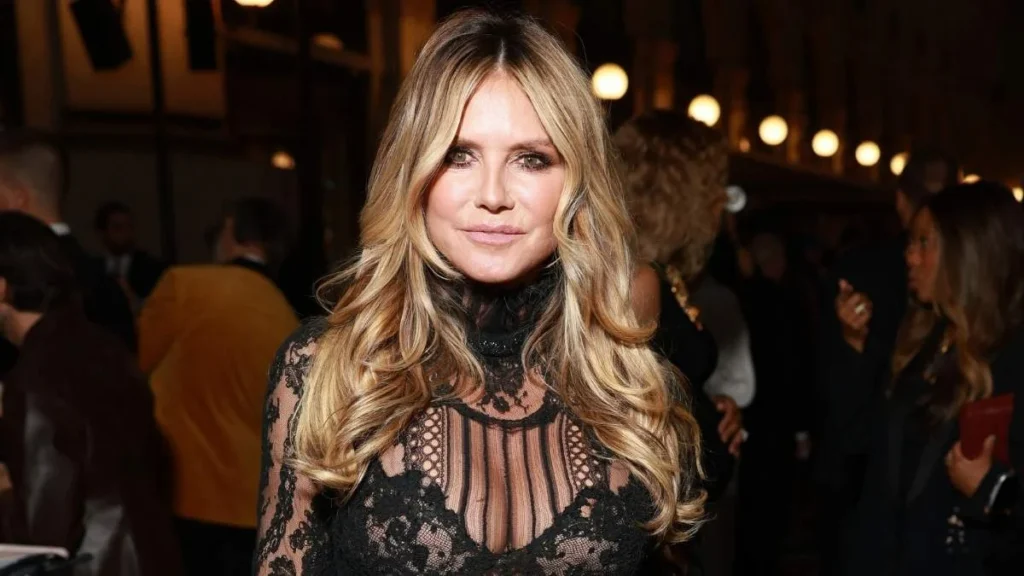

The intersection of high fashion, theatrical performance, and cultural celebration reached a definitive crescendo during the latest iteration of Vogue World in Milan, where supermodel and television icon Heidi Klum delivered one of the most talked-about sartorial statements of the evening. Stepping out against the historic backdrop of the Lombardy capital, Klum commanded global attention by choosing a daring, fully sheer black lace gown designed by acclaimed Greek couturier Celia Kritharioti. The look, sourced directly from the designer’s Fall/Winter Haute Couture collection, instantly dominated fashion editorials, social media algorithms, and front-row conversations alike.
As the fashion industry increasingly embraces transparency, texture, and uncompromising bodily autonomy on the red carpet, Klum’s choice served as a masterclass in modern haute couture styling. Rather than relying on traditional shapewear or restrictive structural foundations, the ensemble offered a fluid, uninhibited celebration of form and craftsmanship. By blending audacious transparency with delicate artisan techniques, Klum once again cemented her status as a perennial fashion risk-taker who understands how to harness the cultural machinery of a major global event.
Chronology of the Evening and Pre-Event Preparations
The timeline of Heidi Klum’s triumphant Vogue World appearance began hours before the official red carpet commenced, offering her millions of digital followers an intimate look at the meticulous orchestration required for a major fashion week moment. Beginning in her Milan hotel suite, Klum documented her comprehensive beauty and styling regimen via Instagram Stories, detailing the collaborative effort between her glam squad and the overarching aesthetic vision of the night.
Her signature blonde locks were styled by professional hair artisans into voluminous, soft waves parted cleanly down the center, framing her face with a timeless, old-Hollywood sensibility. The makeup artistry leaned heavily into dramatic contrasts, utilizing sharp black winged eyeliner paired with luminous shimmering silver eyeshadow. To balance the intensity of the eye makeup, the look was grounded with a warm peach-toned blush and finished with a high-shine, glossy nude-pink lip that added a touch of modern minimalism.
Before transitioning to the main venue, Klum partook in a striking pre-event editorial photo session against the iconic, Gothic spires of the historic Duomo di Milano. During this outdoor sequence, she briefly accessorized the look with sleek black cat-eye sunglasses, infusing the monochromatic ensemble with an aura of cinematic mystery and protection from the lingering afternoon flashbulbs. Once the sun dipped below the Milanese skyline, the sunglasses were discarded, revealing her fully realized red-carpet presentation. She then traveled to the primary Vogue World staging area, where she immediately drew the focus of international photographers and fashion critics upon arrival.
Architectural Breakdown of the Celia Kritharioti Couture Creation
At the heart of the media storm was the garment itself: a bespoke, handcrafted black lace gown created by Celia Kritharioti. Hailing from the designer’s Fall/Winter Haute Couture lineup, the dress represented a triumph of textile engineering and traditional hand-craftsmanship. The gown draped almost weightlessly over Klum’s silhouette, utilizing a sophisticated interplay of sheer mesh, intricate floral lace appliqués, and precise vertical striped detailing.
Because the fabric was entirely transparent, the gown deliberately exposed Klum’s black underwear beneath, constructing an illusion silhouette that played with notions of visibility and exposure. However, the most notable engineering feat of the garment lay in its complete absence of an internal shaping corset or rigid foundational underpinnings. In contemporary red-carpet styling, heavy boning and industrial corsetry are frequently employed to sculpt the body into a prescribed geometric shape. Kritharioti’s creation discarded this convention entirely, allowing the fabric to drape organically and move with fluid, natural dynamism alongside Klum’s body.
In an exclusive pre-event interview with Vogue, Klum elaborated on why this specific structural choice resonated so deeply with her personal philosophy on fashion. She noted that stepping into a dress devoid of restrictive underpinnings allowed her to feel intrinsically like "just Heidi." She emphasized that the absence of external shaping devices meant nothing was dictating a particular artificial silhouette or distracting from her natural form. This effortless construction not only liberated the wearer but also underscored the evening’s overarching dedication to exceptional, unhindered artisanal craftsmanship.
Accessorizing and Monochromatic Styling Choices
To complement a garment as visually commanding as a fully sheer lace couture gown, the accompanying accessories required a delicate balance of understated elegance and high-impact sophistication. Klum and her styling team opted for a cohesive monochromatic palette that allowed the textures of the dress to remain the undisputed focal point of the visual narrative.
For jewelry, the supermodel selected pear-shaped diamond stud earrings that caught the ambient lighting of the Milanese venue, adding a subtle, classic sparkle near her face. Her hands featured a curated collection of several sparkling diamond bands alongside a bold, statement cocktail ring that added architectural interest without competing with the intricate floral patterns of the gown.
Footwear played an equally crucial role in anchoring the look. Klum stepped out in a pair of sleek black patent leather stiletto mules featuring slim, towering heels. The reflective, high-gloss finish of the patent leather contrasted sharply against the matte and sheer textures of the lace dress, adding a layer of visual depth from head to toe. The minimalist shoe design ensured that the elongated lines of her legs remained uninterrupted, preserving the seamless flow of the floor-length silhouette.
Background Context of Vogue World Milano
To fully understand the gravity of Klum’s fashion statement, it is necessary to examine the broader cultural and institutional context of the event itself. Vogue World, established by American Vogue and Conde Nast as a traveling, high-octane celebration of global fashion and performing arts, has quickly become one of the most anticipated fixtures on the international style calendar. Following previous high-profile stagings in New York and London, the Milan edition was designed as a love letter to Italian fashion heritage, seamlessly blending theatrical performance, opera, dance, and contemporary couture.
Milan Fashion Week has historically served as a battleground for heritage luxury houses and avant-garde designers to showcase their most theatrical visions. By choosing to wear a design by Celia Kritharioti—a powerhouse of Greek haute couture who has steadily expanded her footprint across European and American luxury markets—Klum helped bridge traditional Italian craftsmanship with broader Mediterranean design excellence. The event drew an elite guest list of actors, musicians, models, and industry titans, making it the ultimate arena for high-stakes sartorial risk-taking. In an environment where attendees continually strive to out-dress one another for maximum visibility, Klum’s sheer gown emerged as a defining visual narrative of the evening.
Industry Implications and the Evolution of Naked Dressing on the Red Carpet
Heidi Klum’s appearance in the Celia Kritharioti creation contributes to a larger, ongoing conversation within the fashion industry regarding the evolution of the "naked dress" phenomenon. Over the past decade, sheer garments and transparent fabrics have transitioned from fringe performance art and provocative red-carpet experiments into a dominant fixture of mainstream high fashion. Designers have increasingly sought to challenge historical modesty standards by engineering garments that celebrate the human form through transparency, challenging audiences to view the body not as an object of scandal, but as a living canvas for textile art.
However, the discourse surrounding sheer fashion has simultaneously evolved. Early iterations of sheer red-carpet gowns frequently relied on heavy internal engineering, nude illusion linings, or restrictive structural shaping to maintain a specific silhouette while creating the illusion of nudity. Klum’s choice to wear a garment completely devoid of a shaping corset represents a distinct departure toward radical bodily freedom. By allowing the fabric to drape naturally without artificial manipulation, the look champions a more liberated, unforced relationship between the wearer’s body and the couture garment.
Fashion historians and critics often analyze such moments through the lens of empowerment versus exhibitionism. Figures like Klum, who have spent decades navigating the upper echelons of the modeling industry, utilize their platforms to reclaim agency over how their bodies are presented and perceived in the public eye. By leaning into the transparency of the Kritharioti gown with absolute confidence, Klum reframed the sheer dress from a tool of shock value into an expression of mature, uncompromised self-possession.
Public Reception and Digital Footprint
As expected in the modern digital age, the impact of Klum’s ensemble extended far beyond the physical confines of the Milanese venue. Within minutes of her arrival, high-resolution images and video clips of the look flooded social media platforms, with particular traction on Instagram, X (formerly Twitter), and TikTok. Fashion enthusiasts and digital creators dissected every element of the outfit, from the intricate floral lace appliqués to the strategic pairing of black undergarments.
Klum herself capitalized on the digital momentum by sharing professional event photographs directly to her Instagram account. In her caption, she formally credited and tagged the designer (@celiakritharioti), accompanied by a simple heart emoji, acknowledging the collaborative synergy that brought the look to life. The post rapidly accumulated hundreds of thousands of likes and thousands of supportive comments from fans, fellow models, and prominent figures within the global entertainment community.
Furthermore, media outlets worldwide seized upon the appearance, generating an extensive cycle of digital articles and fashion reviews that analyzed the historical and stylistic implications of the gown. By successfully navigating the delicate line between high-fashion daring and timeless elegance, Heidi Klum once again demonstrated an innate understanding of modern celebrity branding. Her appearance at Vogue World Milano not only solidified Celia Kritharioti’s footprint on the global couture stage but also provided a masterclass in how to command the spotlight through fearlessness, authenticity, and uncompromising personal style.