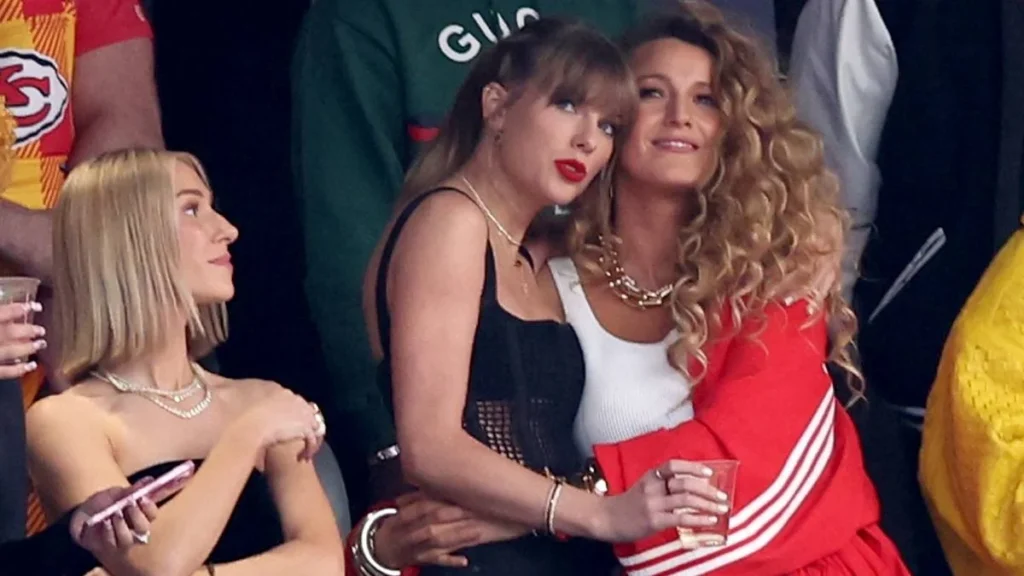

The landscape of celebrity public relations is witnessing a high-stakes maneuver as fashion’s most formidable arbiter, Anna Wintour, reportedly steps in to facilitate a career pivot for actress Blake Lively. Following a turbulent year marked by professional friction and public scrutiny surrounding the film adaptation of Colleen Hoover’s It Ends With Us, insiders suggest that Wintour is quietly leveraging the power of the Condé Nast empire to rehabilitate Lively’s standing. This strategic alliance aims to transition the narrative away from legal disputes and social media backlash toward a focused celebration of Lively’s influence in the realms of high fashion and cinema.
According to reports initially surfaced by RadarOnline, the Editor-in-Chief of Vogue has initiated a meticulously curated "comeback" plan for the actress. This strategy is purportedly centered on a series of high-profile fashion appearances, participation in elite industry gatherings, and a prospective Vogue cover story designed to re-establish Lively as a cornerstone of the American cultural elite. The underlying philosophy, as described by industry insiders, is that fashion serves as a potent tool for narrative redirection. By re-immersing Lively in the "prestige" environment of the fashion world, her team hopes to eclipse the memory of recent controversies with the visual authority of editorial excellence.
The Strategic Alliance of Fashion and Film
The reported involvement of Anna Wintour is not without precedent. Throughout her decades-long tenure at the helm of Vogue, Wintour has frequently acted as a kingmaker, or in some cases, a protector for stars navigating difficult public cycles. Sources close to the situation claim that Wintour views the restoration of a star’s image as a professional challenge she finds particularly rewarding. The logic is rooted in the belief that once a figure is re-embraced by the high-fashion establishment, the broader public perception tends to follow suit, viewing the individual through a lens of exclusivity and institutional endorsement rather than tabloid speculation.
The proposed roadmap for Lively includes strategic cameos at surprise events and a heavy presence at prestige industry functions. The culmination of this effort is expected to be a major Vogue feature, which historically provides celebrities with a platform to address past difficulties within a controlled, sophisticated framework. By focusing on the "power of the image," the strategy seeks to remind the public of Lively’s status as a style icon, a role she has successfully occupied since her breakout in Gossip Girl.
The Catalyst: The It Ends With Us Fallout
To understand the necessity of this reported PR intervention, one must examine the events of late 2024 and early 2025. The promotion of It Ends With Us, a film dealing with the sensitive subject of domestic violence, became a flashpoint for criticism. While the film was a commercial success—grossing over $349 million globally—the behind-the-scenes narrative often overshadowed the project’s message.
Reports of a "creative rift" between Lively, who served as an executive producer, and Justin Baldoni, the film’s director and lead actor, dominated headlines. Observers noted that the two were rarely, if ever, seen together during the press tour. The friction allegedly stemmed from differences in creative vision and post-production control. The situation escalated into a legal battle, with recent court filings further fueling public interest.
The backlash was exacerbated by what some fans perceived as a "tone-deaf" marketing approach. While Baldoni focused his interviews on the gravity of domestic abuse and resources for survivors, Lively’s promotional efforts were often criticized for being overly lighthearted, focusing on her "Betty Buzz" beverage line and encouraging fans to "wear your florals" to screenings. This perceived disconnect between the film’s heavy themes and Lively’s "lifestyle brand" approach led to a significant "mean girl" narrative on social media platforms like TikTok and X (formerly Twitter).
A Chronology of the Dispute and Legal Developments
The timeline of the controversy provides insight into the build-up of the current reputational crisis:
- August 2024: It Ends With Us premieres. Fans quickly notice the lack of joint promotion between Lively and Baldoni. Rumors of a "fractured set" begin to circulate.
- September 2024: Reports emerge that Baldoni has hired veteran crisis PR manager Melissa Nathan. Simultaneously, stories surface regarding Lively’s discomfort with certain aspects of the filming process.
- Late 2024: The dispute transitions from industry gossip to legal maneuvering. Both parties reportedly engage legal counsel to navigate contractual obligations and potential claims related to the film’s production and profit-sharing.
- January 20, 2025: Legal filings are unsealed, revealing deeper layers of the conflict. These documents include references to Lively’s personal struggles during the period, including her efforts to maintain her social standing amidst the growing professional storm.
Among the most discussed elements of the unsealed documents is a text exchange between Lively and her long-time friend, Taylor Swift. The messages suggest that Lively felt isolated during the height of the controversy. In one exchange, Lively reportedly apologized to Swift for being "distant" while dealing with the fallout of the Baldoni dispute. The actress expressed gratitude for Swift’s unwavering support, acknowledging that her focus had been consumed by the legal and personal challenges of the previous months.
The Influence of the Swift-Lively Alliance
The revelation of these private messages underscores the importance of Lively’s social circle in her recovery strategy. Taylor Swift, arguably the most influential figure in global pop culture, has remained a steadfast ally. For Lively, the "Swift connection" is more than a friendship; it is a vital component of her public identity.
PR analysts suggest that being seen in the company of Swift provides a "halo effect" that can help mitigate negative press. The January 20th filings suggest that Lively was acutely aware of the risk of being "canceled" and sought to ensure her closest ties remained intact. Her outreach to Swift, characterized by a desire to "improve as a friend" if she had caused any hurt, portrays a more vulnerable side of the actress, contrasting with the "polished" image often seen in her professional work.
High-Fashion Diplomacy as a PR Tool
The decision to lean into the fashion world, guided by Anna Wintour, is a calculated move that bypasses the traditional "apology tour." In the modern media environment, direct apologies can often prolong a news cycle or invite further scrutiny. In contrast, "fashion diplomacy" allows a celebrity to re-emerge as a visual entity, reclaiming their narrative through aesthetic excellence and institutional association.
Wintour’s support provides Lively with access to the "inner sanctum" of the industry. This includes potential appearances at the Met Gala—where Lively has historically been a standout attendee—and front-row seats at major Fashion Week shows in Paris and Milan. These environments are highly controlled, ensuring that any public interaction is framed by glamour and prestige rather than the lingering questions of a film set dispute.
Broader Impact and Industry Implications
The situation involving Blake Lively and Justin Baldoni highlights a growing trend in Hollywood: the "Producer-Actor" conflict. As more A-list stars take on executive producer roles, the power dynamics on set are shifting. When creative visions clash, the fallout is no longer confined to the studio; it plays out in the court of public opinion.
For the film industry, the It Ends With Us controversy serves as a cautionary tale about the importance of cohesive messaging, especially when dealing with sensitive subject matter. For Lively, the coming months will be a test of the "Vogue Effect." If the Wintour-orchestrated comeback succeeds, it will reaffirm the fashion industry’s role as a powerful auxiliary to the Hollywood machine, capable of laundering reputations and resetting careers.
While neither Lively’s nor Wintour’s representatives have issued official statements regarding this reported collaboration, the shift in Lively’s public appearances suggests a move toward more curated, high-fashion-oriented engagements. The legal battle with Baldoni remains ongoing, but the narrative focus is clearly being steered toward a new chapter.
Conclusion: The Path Forward
As Blake Lively navigates this transition, the success of her "remaking" will depend on her ability to balance her lifestyle brand with a renewed sense of professional gravity. The support of figures like Anna Wintour and Taylor Swift provides a formidable safety net, but the ultimate verdict will rest with the public. In an era where "authenticity" is the most valued currency, Lively’s challenge will be to bridge the gap between the elite world of high fashion and the audience that felt alienated by the It Ends With Us press cycle.
The strategic use of fashion as a shield and a spear is a classic PR move, and with the world’s most powerful editor behind her, Lively is well-positioned to reclaim her spot in the limelight. Whether this will lead to a full restoration of her "girl next door" charm or a evolution into a more distant, "high-fashion" persona remains to be seen. What is clear, however, is that the machinery of celebrity image-making is working at full capacity to ensure that for Blake Lively, the controversy is merely a prologue to a more fashionable second act.