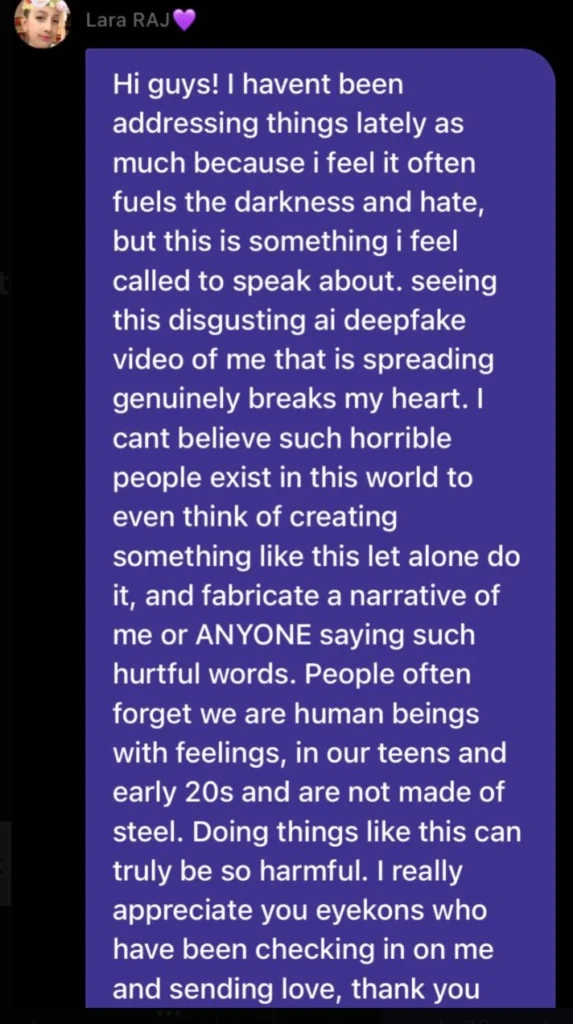

The rapid advancement of generative artificial intelligence has brought unprecedented challenges to the global entertainment industry, and few sectors have felt its darker implications as acutely as the K-pop and international idol landscape. On September 23, 2026, Lara, a member of the multinational girl group KATSEYE, took the unusual step of addressing her fanbase directly via the Weverse platform after discovering a maliciously fabricated deepfake video circulating online. The incident, which involved a synthetic, AI-generated interview depicting the young artist making racist remarks, has ignited a fierce debate regarding digital safety, the weaponization of deepfake technology against public figures, and the psychological toll such harassment takes on rising stars.
The Circulation and Discovery of the Fabricated Content
The controversy began when a digitally manipulated video surfaced across various social media platforms, falsely presenting Lara in a fabricated interview setting. Utilizing sophisticated face-swapping and voice-synthesis technologies, the video portrayed the KATSEYE member uttering offensive and racist statements. Although the content was subsequently deleted following user reports and heavy backlash, the digital footprint left by the clip was large enough to reach the artist herself.
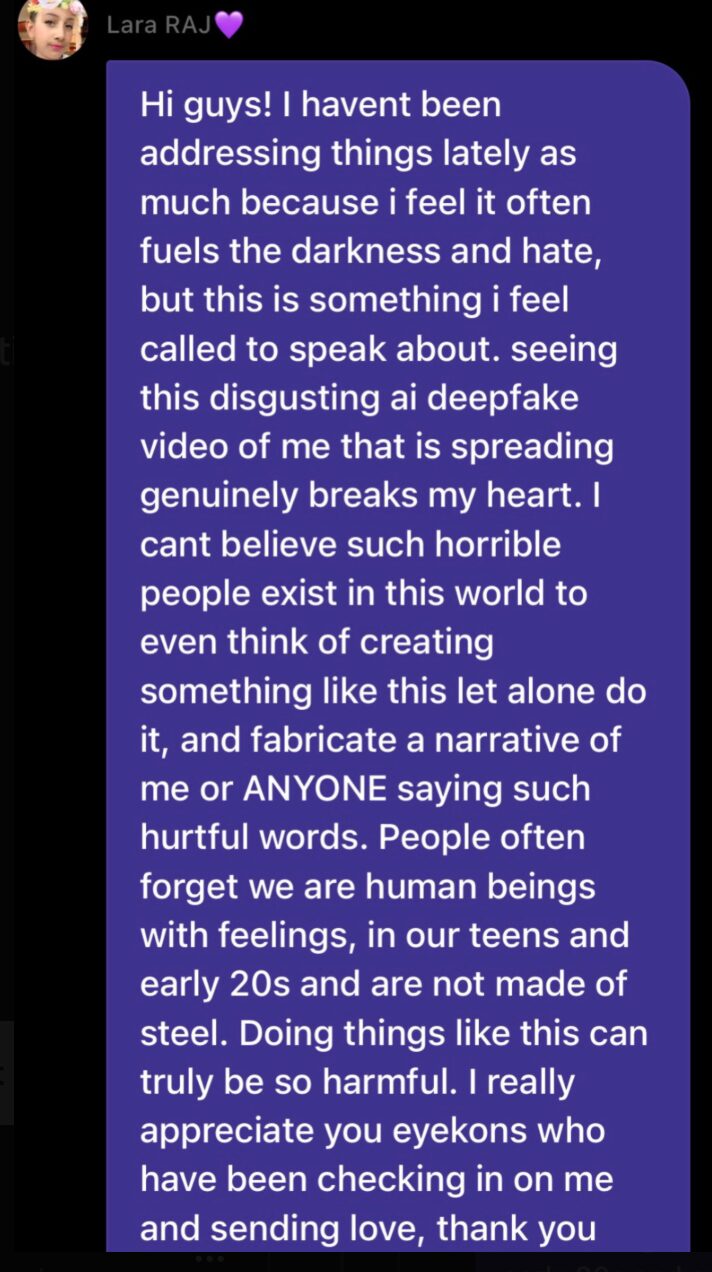
Lara, who typically maintains a strict policy of ignoring malicious online rumors and internet fabrication, felt compelled to break her silence. Through messages shared on Weverse DMs, she addressed the alarming situation directly with her supporters, expressing the distress caused by the malicious fabrication. While idols are frequently subjected to digital scrutiny, the deployment of hyper-realistic generative AI to manufacture entirely false, defamatory scenarios marks an alarming escalation in cyber harassment.

Fan Outrage and Community Mobilization
Upon learning that Lara had not only seen the deepfake video but felt forced to publicly address it, the global KATSEYE fandom—known collectively as Eyekons—swiftly mobilized online. Social media networks, particularly X (formerly Twitter), were flooded with expressions of anger, protective solidarity, and deep concern for the artist’s well-being.
Fans voiced profound frustration that artists are increasingly forced to navigate landscapes contaminated by synthetic media. Prominent fan accounts and community leaders shared messages condemning the creators of the deepfake video, describing the act as inhumane and invasive. The collective sentiment reflected a growing anxiety among fandoms regarding the vulnerability of young performers to targeted digital attacks that can damage reputations in a matter of hours.
The Broader Threat of AI Deepfakes in the Entertainment Industry
The incident involving KATSEYE is far from an isolated occurrence; rather, it highlights a systemic vulnerability within modern media consumption. As generative artificial intelligence tools become more accessible, affordable, and user-friendly, the barrier to creating convincing deepfakes has dropped dramatically. Bad actors can now synthesize realistic audio, video, and imagery of celebrities without requiring advanced technical expertise.

In the entertainment industry, female performers and cross-cultural artists have disproportionately borne the brunt of malicious deepfake manipulation, ranging from non-consensual explicit imagery to fabricated political or social controversies designed to incite backlash. The psychological impact on victims is profound, forcing them to choose between ignoring damaging falsehoods that risk gaining traction or drawing further attention to them by issuing official denials.
Legal, Ethical, and Platform Responsibilities
The rapid spread of the video targeting Lara has renewed calls for stricter regulation, proactive content moderation, and heavier legal penalties for individuals who generate and distribute malicious deepfakes. While major social media platforms have increasingly updated their terms of service to prohibit non-consensual synthetic media, enforcement remains reactive rather than preventive. Content often achieves viral reach before automated moderation systems or human moderators can intervene and remove it.
Legal jurisdictions worldwide are currently grappling with how to adapt existing defamation, privacy, and cyberbullying laws to address the specific challenges posed by generative AI. In South Korea and the United States—two primary markets intersecting with KATSEYE’s global operations—legislative bodies have proposed or enacted tougher penalties for digital sex crimes and deepfake distribution. However, international enforcement remains a complex hurdle when perpetrators operate anonymously across borders.
Implications for KATSEYE and Future Digital Safety Measures
As KATSEYE continues its trajectory as a major global girl group formed through a unique collaboration between Geffen Records and HYBE, management and security protocols must evolve to address the realities of the digital age. The group’s agency faces the ongoing challenge of safeguarding its members not only from traditional physical threats and conventional cyberbullying, but also from sophisticated, AI-driven disinformation campaigns.
For Lara and her fellow members, the incident serves as a stark reminder of the complexities of living in the public eye during a technological revolution. By speaking out, Lara has helped bring mainstream visibility to a pervasive digital threat, empowering fans and industry observers alike to demand greater accountability from tech platforms and stronger legislative safeguards. As generative AI continues to mature, the resilience of artists, the vigilance of communities, and the responsiveness of legal frameworks will determine whether the digital landscape can be made safe for those who inhabit it.