
Pedro Pascal, the acclaimed Chilean-American actor at the helm of Disney’s wildly successful The Mandalorian series, has revealed that he felt "no pressure at all" stepping into the monumental Star Wars universe, attributing his ease to being in "the best hands." His comments came during a UK fan event for the upcoming feature film Star Wars: The Mandalorian And Grogu, which is set to premiere in cinemas across the UK on May 22. Pascal, whose portrayal of the enigmatic Din Djarin has captivated audiences worldwide, articulated a profound appreciation for the franchise and the collaborative environment fostered by its creative lead, Jon Favreau.
Pascal’s Perspective: A Fan’s Journey into the Galaxy Far, Far Away
Speaking to the Press Association at the eagerly anticipated event held at Cineworld Leicester Square in London, the 51-year-old actor delved into the unique experience of joining a franchise that has transcended generations. "I’m a huge fan. I was born in (1975), so my childhood was shaped by going to see Star Wars movies," Pascal stated, highlighting a deep personal connection to George Lucas’s iconic creation. This lifelong affinity, rather than adding to the burden of expectation, seems to have grounded his approach.
Pascal articulated a philosophical stance on the nature of pressure, suggesting it is often an internal construct. "The pressure (of joining the franchise) is something that you can put on yourself, no matter the size of what you’re getting into," he explained. This self-awareness allowed him to approach the role with a clear mind, free from the external anxieties that might accompany such a high-profile undertaking. The critical factor, he emphasized, was the leadership of Jon Favreau, the visionary writer, producer, and director behind The Mandalorian series and its upcoming cinematic adaptation. Pascal lauded Favreau as the "best of the best," adding, "You’re in the best hands, and therefore you don’t feel any pressure at all. You’re just part of a huge team of people that love what they do, love what they’re making, and are all part of this big action adventure." This sentiment underscores a culture of shared passion and mutual respect that appears to permeate the production, allowing creativity to flourish without the weight of legacy stifling innovation.
The Enduring Legacy of Star Wars: A Chronological Overview
The Star Wars franchise, a cultural behemoth, boasts a history spanning nearly five decades, marked by cinematic revolutions, narrative expansions, and a dedicated global fanbase. Its journey began in the 1970s with George Lucas’s groundbreaking vision, forever altering the landscape of science fiction and blockbuster filmmaking.
- The Original Trilogy (1977-1983): The saga commenced with Star Wars: A New Hope in 1977, followed by The Empire Strikes Back (1980) and Return of the Jedi (1983). These films introduced audiences to iconic characters like Luke Skywalker, Princess Leia, Han Solo, Darth Vader, and Yoda, establishing a rich mythology of Jedi Knights, the Force, and a galactic civil war. They were not merely films but cultural touchstones, breaking box office records and influencing generations of filmmakers and storytellers.
- The Prequel Trilogy (1999-2005): After a sixteen-year hiatus, Lucas revisited his universe with Star Wars: Episode I – The Phantom Menace (1999), Attack of the Clones (2002), and Revenge of the Sith (2005). These films explored the backstory of Darth Vader (Anakin Skywalker) and the fall of the Galactic Republic, expanding the lore with new characters, technologies, and political intrigue. While receiving mixed critical reactions upon release, they were commercial successes and deepened the franchise’s narrative tapestry.
- The Disney Acquisition and Revival (2012 onwards): A pivotal moment arrived in 2012 when The Walt Disney Company acquired Lucasfilm for over $4 billion. This acquisition ushered in a new era for Star Wars, promising fresh stories and a renewed cinematic output. Kathleen Kennedy was appointed President of Lucasfilm, overseeing the strategic direction of the franchise.
- The Sequel Trilogy (2015-2019): Disney launched its own trilogy with Star Wars: The Force Awakens (2015), directed by J.J. Abrams, which successfully re-engaged a global audience and introduced a new generation of heroes and villains alongside original cast members. This was followed by Rian Johnson’s The Last Jedi (2017) and Abrams’ The Rise of Skywalker (2019), which collectively garnered over $4 billion worldwide, albeit with some fan division regarding narrative choices.
- Spin-off Films and Expanded Universe: Beyond the main trilogies, Disney also explored standalone stories with Rogue One: A Star Wars Story (2016) and Solo: A Star Wars Story (2018), further enriching the cinematic universe. Simultaneously, animated series like Star Wars: The Clone Wars and Star Wars Rebels continued to expand the lore and deepen character backstories.
The introduction of Disney+ in 2019 marked another significant pivot, creating a dedicated platform for live-action television series, allowing for more expansive and detailed storytelling within the Star Wars galaxy. It was into this constantly evolving, deeply cherished, and meticulously managed universe that Pedro Pascal stepped in 2018.

‘The Mandalorian’: A New Hope for the Franchise on the Small Screen
The Mandalorian premiered in November 2019 as a flagship launch title for Disney+, immediately distinguishing itself with its unique blend of classic Western aesthetics, samurai film influences, and quintessential Star Wars charm. The series, set five years after Return of the Jedi, followed Din Djarin, a lone Mandalorian bounty hunter tasked with retrieving "The Child," Grogu, a Force-sensitive infant of the same species as Jedi Master Yoda.
The show was an immediate critical and commercial success, garnering widespread acclaim for its compelling narrative, stunning visual effects, and strong performances, particularly from Pascal despite his character primarily remaining helmeted. It became a cultural phenomenon, with Grogu, affectionately dubbed "Baby Yoda" by fans, becoming an internet sensation and a merchandising goldmine. Its success was instrumental in driving Disney+ subscriptions, proving the viability of high-budget, cinematic-quality storytelling on a streaming platform. The series holds an impressive aggregate score on Rotten Tomatoes, consistently in the 90% range across its three seasons, and has garnered numerous awards, including multiple Primetime Emmy Awards.
Pascal’s portrayal of Din Djarin presented a unique acting challenge. Communicating emotion and character development while concealed behind a helmet required a nuanced performance, relying heavily on vocal delivery, body language, and the subtle inflections of his character’s interactions with Grogu and other supporting figures. His ability to convey depth and vulnerability through these constraints cemented his status as a formidable talent.
The transition of The Mandalorian from a critically acclaimed streaming series to a theatrical feature film, Star Wars: The Mandalorian And Grogu, signifies a strategic evolution for the franchise. It reflects Disney’s confidence in the property’s widespread appeal and its potential to draw audiences back to cinemas for a story that began on the small screen. This move also serves to bridge the gap between television and film narratives within the Star Wars universe, potentially setting a precedent for future interconnected storytelling across different media. The film is expected to consolidate key plotlines and expand the scope of Din Djarin and Grogu’s adventures, offering a grander, more immersive experience that only the big screen can provide.
The Architects of the New Era: Jon Favreau’s Vision
At the heart of The Mandalorian‘s triumph lies the creative genius of Jon Favreau. An industry veteran with a diverse background as an actor, director, and producer, Favreau has a proven track record of bringing beloved stories to life. His directorial credits include the foundational Marvel Cinematic Universe film Iron Man (2008), the heartwarming holiday classic Elf (2003), and groundbreaking live-action adaptations like The Jungle Book (2016) and The Lion King (2019). This extensive experience, particularly his work in establishing the MCU, provided him with invaluable insights into managing large-scale franchises and fan expectations.
Favreau’s deep understanding of Star Wars lore, combined with his innovative storytelling approach, allowed him to craft a series that felt simultaneously fresh and deeply rooted in the original spirit of the saga. He successfully tapped into the "space Western" genre, a concept that George Lucas himself drew inspiration from for A New Hope, creating a narrative that appealed to both long-time fans and newcomers. Pascal’s praise for Favreau as the "best of the best" is a testament to his collaborative and inspiring leadership style, which fosters an environment where creative teams feel empowered rather than constrained by the weight of a massive franchise. As the primary writer, producer, and director for the upcoming film, Favreau continues to steer the narrative direction of one of Star Wars’ most beloved new sagas, working closely with Lucasfilm President Kathleen Kennedy to ensure its success within the broader Star Wars roadmap.

The UK Fan Event: A Galaxy of Stars in London
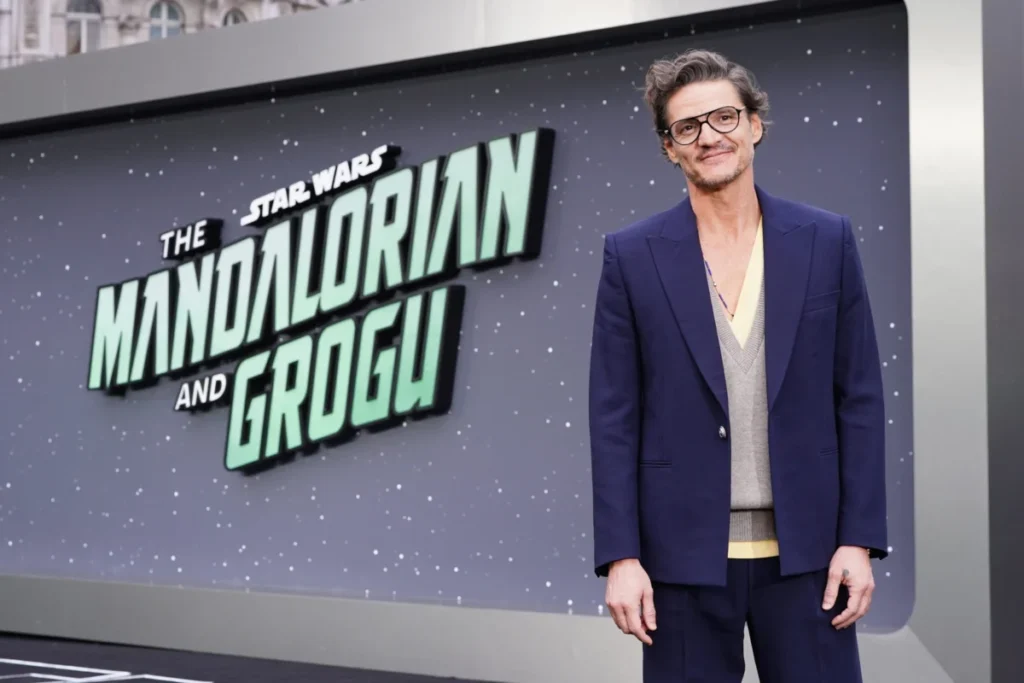
The fan event at Cineworld Leicester Square on Thursday served as a vibrant prelude to the film’s release, bringing a slice of the Star Wars galaxy to the heart of London. The atmosphere was electric, with fans screaming in excitement as Pedro Pascal made his entrance onto the "black carpet." Pascal, known for his charismatic public appearances, opted for a casually sophisticated look, wearing a navy blazer over a grey knit sweater vest, paired with matching navy trousers.
He was flanked by fellow luminaries, including the legendary US actress Sigourney Weaver and the creative force himself, Jon Favreau. Weaver, 76, a titan of the sci-fi genre through her iconic role as Ellen Ripley in the Alien film franchise, commanded attention in a stylish black leather jacket and matching trousers, her dark hair impeccably slicked back. Her presence underscored the event’s significance, connecting The Mandalorian to a broader legacy of genre-defining cinema. Favreau, known for his approachable demeanor, sported a grey T-shirt and blazer, complemented by black jeans and white trainers, embodying a casual yet professional aesthetic. The gathering of such prominent figures at a dedicated fan event highlights Disney’s commitment to engaging directly with its passionate audience, building anticipation and celebrating the community that sustains the Star Wars phenomenon.
Broader Implications and Future of Star Wars
The release of Star Wars: The Mandalorian And Grogu as a theatrical film carries significant implications for Disney’s broader strategy for the Star Wars franchise. It represents a crucial move to balance the expansive streaming content on Disney+ with the traditional theatrical experience, which remains a cornerstone of the blockbuster film industry. By bringing The Mandalorian to cinemas, Disney aims to capitalize on the series’ immense popularity to generate substantial box office revenue while simultaneously validating the quality and cinematic scope of its streaming productions.
The Mandalorian has undeniably revitalized elements of the Star Wars franchise, demonstrating that new stories and characters can capture the global imagination with the same fervor as the original saga. Its success has cemented Pascal’s star power, propelling him to even greater heights with leading roles in other critically acclaimed projects like The Last of Us. His ability to connect with audiences, even when his face is obscured, speaks volumes about his acting prowess and charismatic presence.
Looking ahead, the future of Star Wars is bustling with activity. Beyond The Mandalorian And Grogu, Lucasfilm has several other feature films in various stages of development, including projects directed by Sharmeen Obaid-Chinoy (focusing on Rey’s new Jedi Order), James Mangold (exploring the origins of the Jedi), and Dave Filoni (culminating the "Mandoverse" storylines). On the television front, Disney+ continues to expand its live-action offerings with series like Ahsoka, Andor, and upcoming projects, ensuring a steady stream of content for fans. This multi-platform approach underscores Disney’s commitment to keeping the Star Wars universe vibrant, diverse, and continuously engaging for its massive global fanbase. The upcoming film is poised not just as a continuation of a beloved story, but as a testament to the enduring power and adaptability of the Star Wars saga in an ever-evolving entertainment landscape.
As Star Wars: The Mandalorian And Grogu prepares for its UK cinematic debut on May 22, Pedro Pascal’s calm confidence, rooted in his respect for Jon Favreau and the collaborative spirit of the team, serves as a beacon for the franchise’s continued journey. It’s a testament to the idea that even within the most iconic and pressure-laden universes, genuine passion and expert leadership can create a space where creativity thrives, and new legends are born.