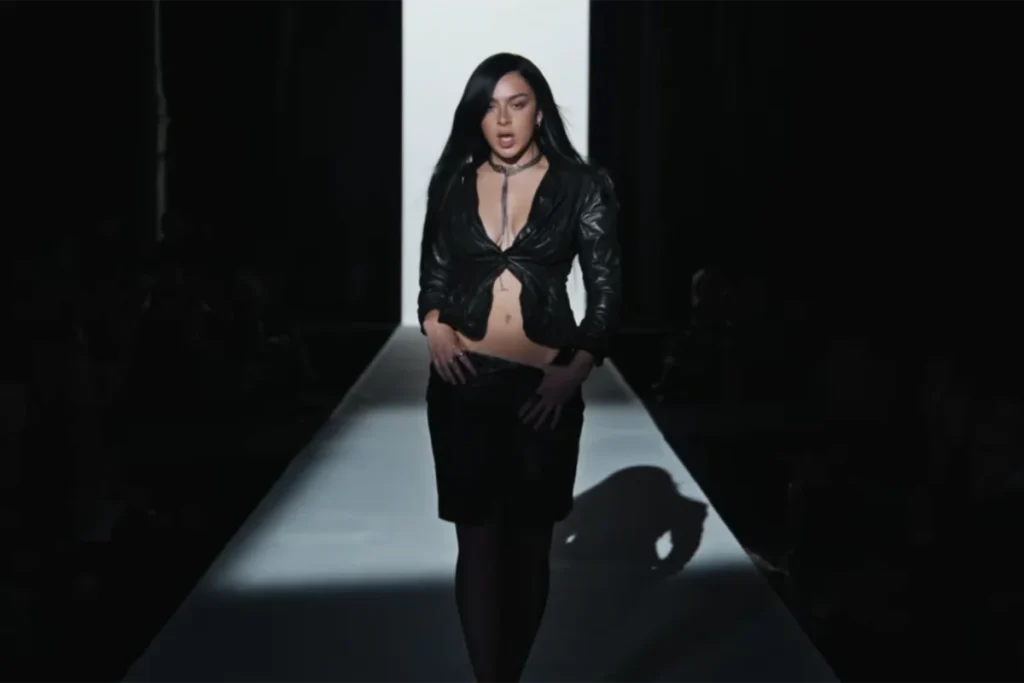

Charli XCX plunges into a dystopian fashion landscape with the release of her latest single and music video, "SS26," which premiered Thursday night, May 21. Directed by the acclaimed duo Torso, with a concept co-developed by Charli herself, the visual spectacle sees the boundary-pushing artist striding through Parisian runways that are anything but glamorous. The song and video offer a stark commentary on the ephemeral nature of style, the weight of substance, and a darkly humorous take on contemporary cultural anxieties.
H2: A Descent Through High Fashion and Existential Dread
The "SS26" music video presents Charli XCX as a figure navigating a world teetering on the brink. The narrative unfolds on a series of increasingly disheveled and apocalyptic runways, a stark visual metaphor for societal decay. Her lyrical delivery, juxtaposed against the opulent yet decaying haute couture backdrops, emphasizes the song’s central themes. The opening lines, "Spring Summer ’26 / When the world is gonna end, no hope for any of it / Yeah, we’re walking on a runway that goes straight to hell / Nothing’s gonna save us, not music, fashion, or film," immediately establish a tone of fatalistic resignation. This imagery evokes a sense of grandeur overshadowed by an impending collapse, a common undercurrent in contemporary artistic expressions grappling with environmental and social concerns.
The fashion choices within the video are integral to its message. Charli XCX is showcased in a series of avant-garde and striking ensembles, each meticulously curated to align with the high-fashion aesthetic of Paris, a city synonymous with sartorial innovation. However, the context within which these garments are presented—on a runway that appears to be disintegrating or leading to an abyss—forces a re-evaluation of their purpose. This deliberate contrast between the superficial allure of fashion and the bleakness of the lyrical content serves to question the value and impact of material culture in the face of existential threats. The video prompts viewers to consider whether fashion, often perceived as a form of escapism or self-expression, can offer solace or meaning when confronted with profound societal challenges.
H2: Satire and the Specter of Cancel Culture
Beyond its broader existential commentary, "SS26" also deftly tackles the pervasive influence of online discourse and the often-sensationalized news cycle. The second verse introduces a sharp, satirical edge as Charli XCX addresses the phenomenon of online backlashes and the increasingly performative nature of apologies in the digital age. Her lyrics, "I was hacked, it got taken out of context, obviously / But I didn’t do it, even if I did, wrote a really good notes app apology," humorously encapsulate the absurdity of modern public relations and the erosion of accountability. This segment resonates deeply in an era where public figures frequently find themselves under intense scrutiny, their words and actions dissected and often weaponized across social media platforms.
The inclusion of this lyrical content highlights Charli XCX’s keen observation of contemporary culture. The "notes app apology" has become a recognizable meme, a symbol of insincere contrition or a strategic damage-control maneuver. By incorporating this into her song, Charli XCX not only injects a dose of relatable humor but also critiques the mechanisms through which public narratives are shaped and manipulated. This element of the song suggests that even in the face of potential societal collapse, the trivialities of online drama and the manufactured nature of public apologies continue to command attention.
H3: A Shift in Sonic and Thematic Direction

The release of "SS26" follows closely on the heels of "Rock Music," the lead single from Charli XCX’s forthcoming seventh studio album, which is yet to be officially titled or given a release date. This stylistic departure from her previous critically acclaimed 2024 album, Brat, signals a deliberate pivot in her artistic trajectory. In "Rock Music," Charli XCX explicitly declared a move away from the dance-centric sound that has characterized much of her recent work, stating, "I think the dance floor is dead / So now we’re making rock music." This declaration, seemingly a challenge to the prevailing trends in electronic music, garnered significant attention, even catching the eye of pop icon Madonna.
Madonna’s response, shared via an Instagram post, directly addressed Charli XCX’s sentiment, suggesting, "If your Dance floor feels dead, maybe you’re playing the wrong music." This exchange highlights the ongoing dialogue within the music industry about genre evolution and the enduring power of dance music. While Charli XCX’s embrace of a rock-infused sound for her new material marks a significant shift, the inclusion of "SS26" suggests that her exploration of sonic landscapes remains multifaceted. Both "Rock Music" and "SS26" are slated to be featured on the upcoming album, indicating that the project will likely explore a diverse range of sounds and thematic concerns, moving beyond a singular genre classification.
H2: Context and the Broader Artistic Landscape
Charli XCX’s career has been marked by a consistent ability to innovate and challenge conventional pop music norms. Her discography, which includes seminal works like True Romance (2013), Sucker (2014), Number 1 Angel (2017), and Pop 2 (2017), has cemented her status as a significant figure in hyperpop and experimental pop. Her 2024 album, Brat, was met with widespread critical acclaim, lauded for its cohesive embrace of club-driven anthems and its unapologetic embrace of hedonism. The album’s success, both commercially and critically, provided a strong platform for her to explore new artistic directions.
The thematic concerns in "SS26" are not isolated within Charli XCX’s work but also reflect broader trends in contemporary art and culture. The anxieties surrounding climate change, political instability, and the overwhelming influx of digital information have become fertile ground for artists across disciplines. The music video’s visual metaphor of a runway leading to destruction aligns with a growing cultural preoccupation with dystopia and the search for meaning in a seemingly chaotic world. Furthermore, the song’s commentary on cancel culture and online discourse taps into a pervasive societal conversation about authenticity, accountability, and the construction of public personas in the digital age.
H3: Anticipation for the Unveiling of a New Era
The release of "SS26" and "Rock Music" serves as a potent preview of Charli XCX’s next artistic chapter. While the absence of a formal title and release date for the upcoming album leaves fans in suspense, these singles suggest a more introspective and perhaps more critical engagement with the world around her. The juxtaposition of high fashion with apocalyptic imagery, and the sharp wit directed at online culture, indicates an album that will likely be rich in both sonic experimentation and thematic depth.
The artistic direction indicated by these singles hints at a potential evolution in Charli XCX’s approach to pop music. Moving beyond the immediate euphoria of club anthems, she appears poised to explore more complex and perhaps unsettling aspects of the human experience. This willingness to push boundaries, both sonically and lyrically, has always been a hallmark of her career and is a key reason for her enduring appeal among a dedicated fanbase and critical circles alike. As the music world awaits further details about her seventh studio album, "SS26" stands as a compelling testament to Charli XCX’s continued artistic vitality and her ability to provoke thought through captivating visual and sonic narratives. The "runway that goes straight to hell" may be a grim image, but for Charli XCX, it is clearly a potent and fertile ground for creative exploration.