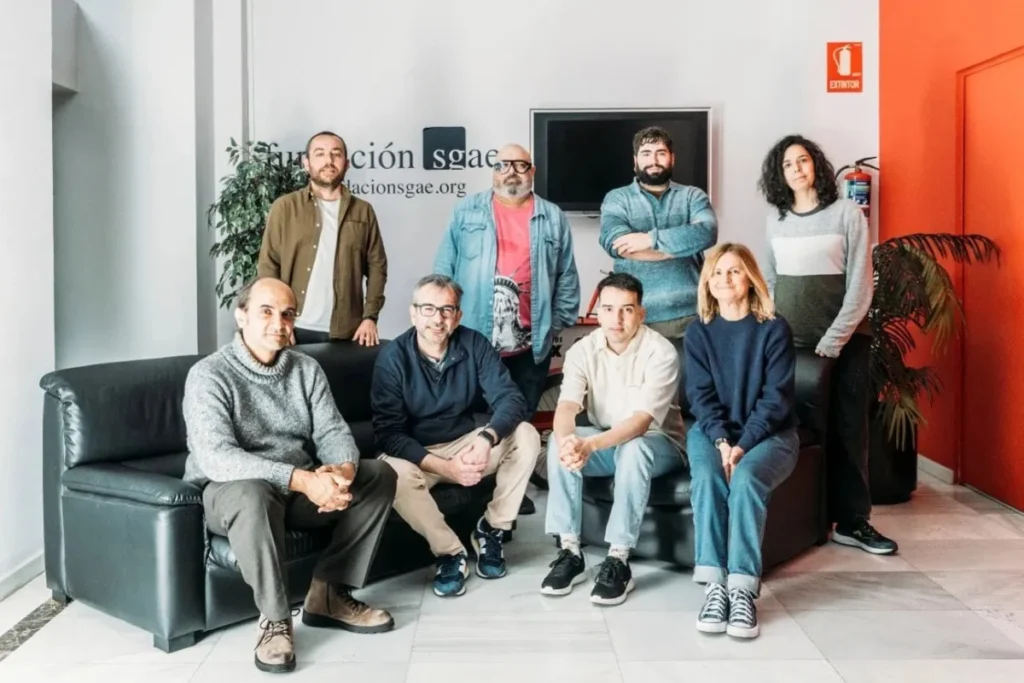

The sixth annual edition of Iberseries & Platino Industria has officially commenced in Madrid, serving as a premier international hub for audiovisual content, co-production deals, and industry networking across the Spanish- and Portuguese-speaking markets. As part of this week’s expansive programming, the marquee event will host a high-profile presentation on Thursday, October 1, showcasing six distinct television series projects. These works have been meticulously developed by seven accomplished screenwriters through a strategic creative collaboration with the Fundación SGAE, Spain’s primary collective management organization for intellectual property rights.
The specialized showcase is structured as an exclusive pitching session designed to connect visionary creators directly with an influential audience of international producers, network buyers, financial investors, and key decision-makers within the global audiovisual sector. By bridging the gap between raw creative talent and commercial execution, the initiative aims to accelerate the production, secure vital financing, and expand the cross-border reach of emerging fiction projects.
Event organizers have repeatedly emphasized that fostering these direct connections is central to the core mission of Iberseries & Platino Industria. The platform continues to solidify its reputation as an indispensable catalyst for Ibero-American content, ensuring that local narratives gain the institutional backing and commercial visibility required to compete on the global stage.
Background and Evolution of Iberseries & Platino Industria
Established to bolster the economic and cultural footprint of the Ibero-American audiovisual industry, Iberseries & Platino Industria has grown exponentially over its six-year history. The summit brings together thousands of professionals—ranging from studio executives and platform programmers to independent producers and regulatory bodies—to discuss industry trends, technological disruptions, and financing models in an increasingly competitive streaming landscape.
The partnership with Fundación SGAE represents a vital pillar of this ecosystem. As the entity responsible for safeguarding and managing the intellectual property and copyright interests of Spanish authors and creators, Fundación SGAE plays a foundational role in nurturing homegrown talent. Through targeted residencies, writing labs, and collaborative development programs, the organization equips screenwriters with the structural support necessary to transform raw concepts into robust, market-ready television bibles.
The selection of the six projects featured in Madrid this week is the culmination of a rigorous evaluation process. Out of numerous submissions, these specific works were chosen for their distinct narrative voices, genre diversity, and potential to resonate with audiences both domestically and abroad.
In-Depth Look at the Madrid Pitching Slate
The six projects span a wide array of genres, ranging from historical satire and supernatural mystery to social realism and dystopian science fiction. Below is a detailed examination of the series being presented to industry professionals in the Spanish capital.
La Librera
Developed by the creative duo Virginia Burgos, based in Seville, and Juan Sánchez, hailing from Madrid, La librera transports viewers back to the early 1990s. The narrative centers on a pioneering woman who establishes the first LGBT bookstore in the country. Over the course of several decades, the establishment evolves from a simple retail space into a vital cultural sanctuary and a covert political backroom for a marginalized community.
However, the dramatic turning point arrives when the very neighborhood she helped build and revitalize eventually turns its back on her. This sudden displacement forces the protagonist to confront a profound and harrowing question: What happens when an individual realizes they are no longer needed by the society they fought to protect? Industry analysts note that the series taps into universal themes of gentrification, community endurance, and the personal cost of historic activism.
Avión
Hailing from Vigo, screenwriter Miguel Cavadas presents Avión, a socially charged drama rooted in the unique socioeconomic realities of rural Galicia. The project explores the titular village, which serves as a living embodiment of the paradoxes surrounding Galician emigration: the historical narrative of leaving poverty behind and returning with wealth.
During the harsh winter months, Avión mirrors the broader crisis of rural precarity, depopulation, and an aging demographic. Yet, in the summer, the municipality undergoes a dramatic transformation into a vibrant display of affluence, complete with transatlantic celebrations, ranchera music, and Mexican flags. The population quadruples as expatriates return to showcase their financial success. This creates a fascinating cultural and economic microcosm where two irreconcilable worlds collide: communal tradition versus modern individualism, past heritage versus present wealth, and the lowest pensions of rural Spain clashing with the immense fortunes generated abroad.
El Capricho
Moving into the realm of historical satire, Alberto Grondona’s El capricho offers a witty, female-led political comedy set within the corridors of the 18th-century Spanish court. The plot tracks a high-stakes power struggle among three formidable women: Queen María Luisa of Parma, the charismatic Duchess of Alba, and the enlightened Duchess of Osuna.
As these influential figures vie for political dominance, social image, and personal desire against the backdrop of an empire on the brink of structural collapse, their maneuvers are observed through the sharp, ironic lens of painter Francisco de Goya. Serving as an uneasy witness to the decadence of the crown, Goya’s perspective transforms palace intrigue into a surprisingly contemporary mirror reflecting modern political machinations. Observers have likened the tonal ambition of the project to a historical, character-driven drama infused with distinct Spanish sensibilities.
Teléfonos Fijos
Angel Mirou introduces a high-concept supernatural thriller with Teléfonos Fijos. Set in the modest Recalde neighborhood of Bilbao, the premise begins in the dead of night when antiquated landline phones begin to ring, disturbing residents who have maintained traditional landline connections.
Upon answering, the startled individuals hear the voices of deceased relatives, friends, and acquaintances. The callers share only one chilling common denominator: they are all dead. The narrative pivots on an existential and investigative dilemma: are these transmissions genuine evidence of an afterlife, or are they the product of an elaborate, malicious fraud executed via cutting-edge technological manipulation? Regardless of the truth, the psychological equilibrium of those involved is shattered irreversibly, offering a timely exploration of grief, technological distrust, and digital paranoia.
La Edad Menor
Dystopian speculative fiction takes center stage in Roberto Osa’s La edad menor, which posits a startling societal inversion set in a futuristic Madrid. In this unsettling reality, children are legally mandated to become the legal guardians of their aging parents.
The story follows María, a protagonist who decides to challenge the bureaucratic apparatus when her mother is subjected to "La edad menor"—a state-sanctioned, irreversible process of forced infantilization. Complicating her resistance is her brother, who finds himself deeply conflicted between familial loyalty and the allure of systemic power. As the narrative unfolds, a devastating family secret emerges, suggesting that neither personal sacrifice nor active resistance may be sufficient to prevent state-mandated oblivion.
Trueque
Rounding out the slate is Trueque, created by Pedro Pablo Picazo. The project shifts the focus to domestic comedy and contemporary family dynamics, following three closely knit families who independently grapple with the universal challenges of raising rebellious teenagers.
When each family becomes convinced they hold the ideal parenting strategies for managing the others’ children, they arrive at an unconventional proposition: swapping their adolescents. The premise sets the stage for a chaotic domestic experiment that explores suburban friction, parental hubris, and the unpredictable nature of youth.
Industry Implications and Future Outlook
The presentation of these six projects at Iberseries & Platino Industria underscores a broader strategic shift within the Ibero-American television sector. As global streaming platforms increasingly look beyond traditional domestic markets for original content, regional creators are placing greater emphasis on high-concept premises, diverse genre execution, and culturally specific storytelling with universal themes.
Executives attending this week’s pitch sessions in Madrid are expected to closely evaluate how these works align with current commissioning trends. The involvement of Fundación SGAE provides an additional layer of institutional validation, assuring potential co-producers that the projects have undergone rigorous script development and adhere to standard European intellectual property frameworks.
As the week’s events unfold, industry stakeholders will monitor whether these presentations translate into formal development deals, co-production agreements, and eventual distribution partnerships across international territories. The success of initiatives like the Fundación SGAE showcase will ultimately serve as a bellwether for the continued commercial viability and creative maturation of the Ibero-American content pipeline on the global stage.