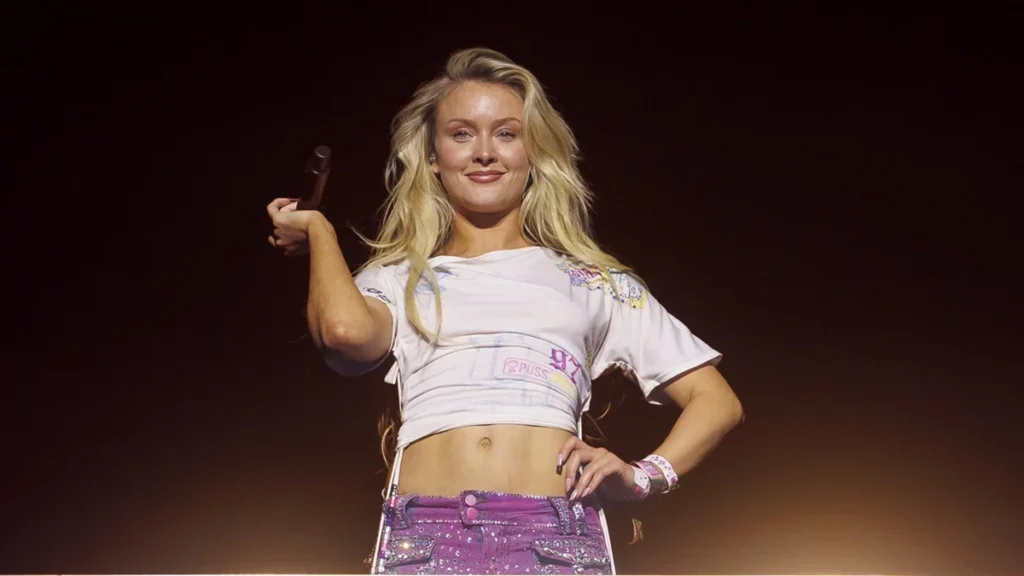

The Coachella Valley Music and Arts Festival has long served as more than a mere musical gathering; it is a global stage where the intersection of sound, celebrity, and sartorial innovation defines the cultural zeitgeist for the coming year. In the latest iteration of this desert spectacle, Swedish pop sensation Zara Larsson emerged as a focal point of both fashion discourse and social media engagement. Larsson, known for her powerful vocals and chart-topping hits such as "Lush Life" and "WOW," utilized the high-profile environment of Indio, California, to debut a look that critics and fans alike have characterized as the epitome of the "modern diva" aesthetic. Captured in a series of viral photographs and shared extensively by the fan-led news account @updateslarsson on X, the singer was seen navigating the festival grounds and enjoying the festivities alongside Brazilian pop icon Luísa Sonza, signaling a cross-continental meeting of musical powerhouses.
The ensemble worn by Larsson represented a sophisticated exercise in contrast, balancing the minimalist requirements of the desert heat with the maximalist expectations of a headline-adjacent appearance. The centerpiece of the outfit was a stark white top that featured a deceptive simplicity from the front, only to reveal an intricate, daring construction at the back. Held together by a series of delicate, crisscrossing strings, the garment utilized side cutouts to create an edgy, contemporary silhouette. This piece was paired with low-rise pink trousers that functioned as the outfit’s primary statement. Embellished with an array of rhinestones that caught the shifting desert light, the pants bridged the gap between early 2000s nostalgia—often referred to as "Y2K fashion"—and the high-glamour requirements of a contemporary pop star.
Technical Analysis of the Festival Wardrobe
From a stylistic perspective, Larsson’s choice of attire reflects broader shifts within the luxury and fast-fashion industries. The "modern diva" vibe identified by observers is rooted in a specific blend of athletic functionality and red-carpet extravagance. The white top’s string-based architecture is a nod to the "coquette" and "balletcore" trends that have dominated social media platforms like TikTok and Instagram over the last eighteen months. By integrating these elements with the bold, rhinestone-heavy aesthetic of the pink pants, Larsson effectively synthesized multiple trending subcultures into a singular, cohesive brand image.
The low-rise cut of the trousers further reinforces the industry’s ongoing obsession with the late 1990s and early 2000s. Fashion historians and market analysts note that this "Y2K revival" is driven largely by Gen Z’s desire for tactile, expressive clothing that translates well into digital formats. The use of rhinestones adds a layer of "party-ready" glamor that distinguishes the look from standard festival "boho-chic," a style that has seen a decline in favor of more structured, "edgy" presentations. Larsson’s ability to navigate these trends while maintaining a sense of individual identity is a testament to her evolving role as a fashion influencer within the music industry.
Chronology of Appearances and Social Context
The timeline of Larsson’s Coachella presence began with her arrival during the festival’s first weekend, a period typically reserved for high-impact celebrity sightings and brand activations. On the afternoon of the sightings, Larsson was documented transitioning from private hospitality suites to the main festival stages. It was during this period that her interaction with Luísa Sonza took place. Sonza, who has seen a meteoric rise in the Latin American market and is increasingly making inroads into the global pop scene, provided a significant cultural counterpoint to Larsson’s European pop sensibilities.
The duo was observed at several high-profile sets, with their camaraderie sparking immediate speculation among fans regarding a potential musical collaboration. While no official announcement has been made, the optics of two major international stars sharing the Coachella experience are often precursors to strategic professional alignments. By late evening, images of the two singers had garnered tens of thousands of engagements on X and Instagram, highlighting the speed at which festival fashion and celebrity sightings are processed by the digital economy.
Supporting Data: The Economic and Cultural Impact of Coachella Fashion
The significance of Larsson’s outfit choice extends beyond mere aesthetics; it is deeply rooted in the economics of the "Coachella Effect." According to retail data from platforms like Lyst and Business of Fashion, search queries for specific items seen at Coachella can spike by as much as 400% in the forty-eight hours following a celebrity appearance. Larsson, who boasts over 8 million followers on Instagram and a significant presence on streaming platforms, serves as a powerful conduit for brand visibility.
Market analysis suggests that the "pink rhinestone" aesthetic and "string-back" tops are likely to see a surge in manufacturing and consumer demand as a direct result of these appearances. Furthermore, the collaboration between music and fashion at Coachella serves as a vital marketing tool for artists. For Larsson, who is currently in a phase of career maturation—moving from the "teen pop" label of her early years to a more sophisticated, "diva-centric" persona—these public appearances are calculated steps in brand repositioning. The data indicates that artists who successfully align themselves with high-fashion trends during festival cycles see a correlated increase in social media following and "lifestyle" brand partnerships.
Global Synergy: The Larsson-Sonza Connection
The presence of Luísa Sonza alongside Zara Larsson highlights the increasing globalization of the pop music industry. Sonza, representing the vibrant and rapidly expanding Brazilian market, and Larsson, representing the polished Swedish pop machine, exemplify the "borderless" nature of modern stardom. Industry insiders suggest that such interactions are rarely accidental. In an era where streaming algorithms favor cross-market collaborations, a public friendship between a European star and a South American star is a potent asset.
The reaction from the Brazilian fanbase was particularly pronounced, with "Zara e Luísa" trending in several South American territories. This cross-pollination of fanbases provides a quantifiable boost to both artists’ digital footprints. For Larsson, engaging with the Brazilian market—one of the most active and loyal music consumer bases in the world—is a strategic move that complements her established dominance in European and North American markets.
Professional Reactions and Industry Implications
Fashion critics have largely praised Larsson’s Coachella wardrobe for its "intentionality." Unlike the haphazard "bohemian" looks of previous decades, Larsson’s 2024/2026 aesthetic is characterized by precision. Professional stylists note that the "minimal-glam" approach allows the artist to remain mobile and comfortable in a harsh desert environment while remaining "camera-ready" at every angle.
The implications of this shift are significant for the future of celebrity branding. We are seeing a move away from the "costume" nature of festival wear toward "elevated street style." This makes the looks more accessible to the average consumer, thereby increasing the artist’s relatability and commercial viability. Representatives for various fashion houses have noted that the "Larsson Look" at Coachella provides a blueprint for how brands can integrate luxury elements into casual, youth-oriented settings.
Broader Impact on the Pop Music Landscape
Zara Larsson’s evolution into a "modern diva" is not merely a change in wardrobe but a reflection of her artistic trajectory. Following the release of her recent projects, including the album Venus, Larsson has leaned into a more assertive, high-glamour persona. This Coachella appearance serves as a visual manifestation of that musical shift. By choosing outfits that are "bold," "daring," and "glamorous," she reinforces the themes of empowerment and self-assuredness present in her latest discography.
As the festival season continues, the industry will undoubtedly look to Larsson as a trendsetter. Her ability to command attention through a blend of high-energy performance and strategic fashion choices ensures her continued relevance in a crowded marketplace. The "WOW" singer has once again demonstrated that in the modern entertainment landscape, the visual component of an artist’s brand is just as critical as the auditory one.
In conclusion, Zara Larsson’s presence at Coachella, defined by her striking white and pink ensemble and her high-profile social interactions, represents a masterclass in contemporary celebrity branding. By navigating the complexities of festival culture with a professional, fashion-forward approach, she has solidified her status as a global pop icon capable of influencing both the charts and the runways. As the digital records of her Coachella weekend continue to circulate, the impact of her "modern diva" aesthetic will likely be felt throughout the fashion and music industries for the remainder of the year.