
A significant security breach unfolded on Saturday night during the annual White House Correspondents’ Association (WHCA) dinner, as a California man was identified and apprehended following an attempted shooting incident. The event, a cornerstone of Washington D.C.’s social and political calendar, was abruptly halted and subsequently canceled, prompting an immediate and extensive investigation into presidential security protocols and the motives behind the audacious attack.
Immediate Aftermath and Apprehension
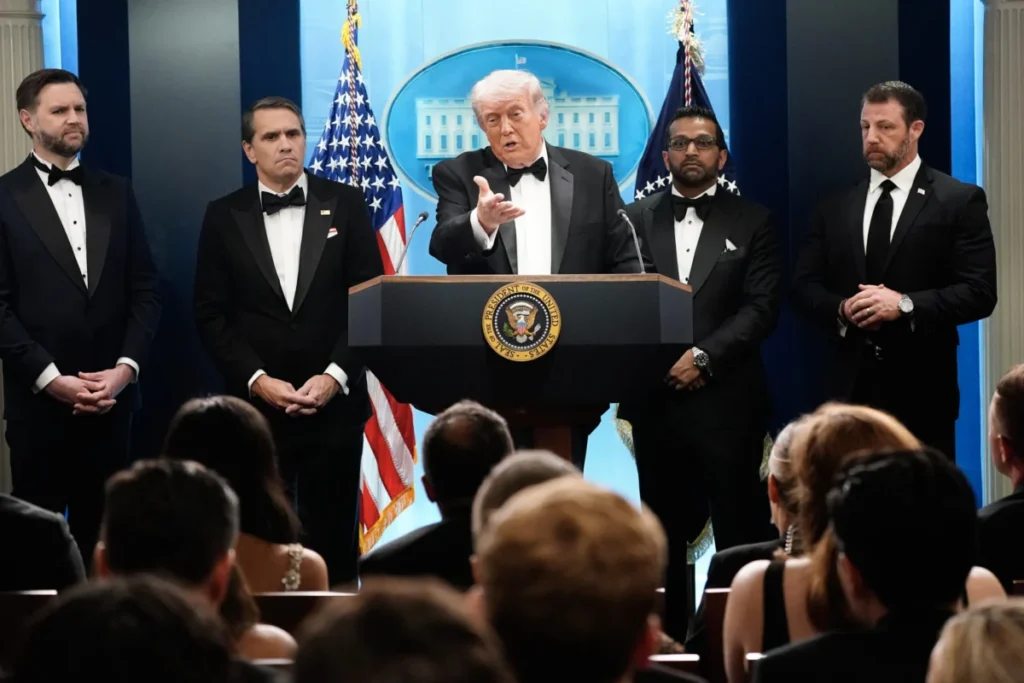
The tranquility of the Washington Hilton ballroom, usually a scene of camaraderie and lighthearted political humor, was shattered by the sound of gunfire and the swift, decisive action of security personnel. Identified by the Associated Press as 31-year-old Cole Tomas Allen, the suspect was apprehended after attempting to breach a security checkpoint and firing shots. President Donald Trump, who along with First Lady Melania Trump was evacuated from the stage, later confirmed the suspect was "armed with multiple weapons."
The incident resulted in one officer being shot, though President Trump noted the officer was "saved by the fact that he was wearing a obviously very good bulletproof vest." The Metropolitan Police Department (MPD) interim police chief, Jeffery W. Carroll, later confirmed the officer was being evaluated for injuries. Carroll also stated that Allen, reportedly a guest at the Washington Hilton, was not struck in the shooting incident and was also undergoing evaluation.
President Trump lauded the rapid response of the Secret Service agents, remarking, "They drew those guns so fast, they looked like Matt Dillon," a comment that initially sparked confusion online before being widely understood as a reference to the iconic U.S. Marshal Matt Dillon from the long-running Western television series Gunsmoke. The president’s quick briefing to the press underscored the gravity of the situation, even as the details were still unfolding.
A Detailed Chronology of the Incident
The events of Saturday night unfolded rapidly, transforming a prestigious social gathering into a scene of high-stakes security intervention:
- Pre-Event Security: As is customary for any event attended by the President of the United States, the Washington Hilton would have been under stringent, multi-layered security protocols for hours, if not days, leading up to the dinner. This would have included Secret Service sweeps, credential checks, metal detectors, and a visible presence of uniformed and plainclothes officers.
- Suspect’s Arrival and Initial Breach: Cole Tomas Allen, reportedly a guest at the hotel, somehow managed to approach a critical security checkpoint. While the exact method of his initial entry into the hotel premises is under investigation, his subsequent attempt to charge through a designated security barrier was captured on video, later shared by President Trump.
- Shots Fired and Officer Down: As Allen attempted to bypass the checkpoint, shots were fired. It was at this moment that a federal officer sustained a bullet wound, though fortunately protected by body armor. The precise sequence – whether shots were fired by the suspect first, or if a warning shot preceded the officer being hit – will be a key element of the ongoing investigation.
- Secret Service Response and Apprehension: Immediately following the gunfire, Secret Service agents and other law enforcement personnel reacted with exceptional speed and precision. Their training for such high-threat scenarios was evident as they converged on the suspect, apprehending him before he could advance further into the main ballroom area where the President and hundreds of dignitaries, journalists, and celebrities were seated. President Trump’s "Matt Dillon" comment specifically highlighted this rapid response.
- Presidential Evacuation: Concurrently with the apprehension, Secret Service agents initiated the standard operating procedure for presidential protection during a threat. President Trump and First Lady Melania Trump were swiftly rushed off the stage and evacuated from the premises. Trump later acknowledged that while he "fought like hell to stay," protocol dictated their immediate removal.
- Dinner Cancellation and Aftermath: With the immediate threat neutralized and the President safely evacuated, the White House Correspondents’ Association, in conjunction with the White House, made the decision to cancel the remainder of the dinner. An announcement was made to the attendees, many of whom were still processing the shock and confusion of the events. Both the WHCA and President Trump expressed intentions to reschedule the event within 30 days, underscoring its perceived importance despite the disruption.
- Press Briefings: In the hours following the incident, a series of press briefings were held. President Trump addressed the media, confirming details about the suspect and the injured officer. U.S. Attorney Jeanine Shapiro later provided updates on the charges being filed, and MPD interim chief Carroll offered details on the injured parties.
The Suspect and Emerging Legal Ramifications
U.S. Attorney Jeanine Shapiro confirmed that Cole Tomas Allen is facing serious federal charges, including using a firearm and assaulting a federal officer with a dangerous weapon. Shapiro indicated that "many more charges" are likely to follow as the investigation progresses. While the investigation is ongoing, authorities currently believe the suspect acted alone, alleviating immediate concerns of a broader coordinated attack.
The charges filed against Allen carry severe penalties under federal law. Assaulting a federal officer, especially with a dangerous weapon and involving a firearm, can result in lengthy prison sentences, underscoring the gravity with which the justice system views attacks on those sworn to protect public officials and the public. The investigation will delve into Allen’s background, his possible motivations, how he obtained his weapons, and any potential indicators of intent that might have been overlooked prior to the incident. Authorities will likely examine his digital footprint, financial records, and any known associations to build a comprehensive profile and understand the full scope of his actions.
The White House Correspondents’ Association Dinner: A Tradition Under Threat
The White House Correspondents’ Association Dinner is far more than just a social gathering; it is a century-old tradition deeply embedded in the fabric of American political journalism. Established in 1914, the WHCA is an organization of journalists who cover the White House and the President of the United States. Its annual dinner serves several key purposes:
- Fundraising: The event raises money for scholarships for aspiring journalists and supports the WHCA’s advocacy for press freedom and access.
- Presidential Engagement: Traditionally, the sitting President attends and delivers a speech, often a humorous roast of themselves, their administration, and the press. This provides a unique, lighter moment in the often-contentious relationship between the presidency and the media.
- Journalism Recognition: The dinner also features awards recognizing excellence in White House coverage.
- Symbolic Importance: It represents a moment of unity, however fragile, between the executive branch and the Fourth Estate, emphasizing the importance of a free and vibrant press in a democracy.
Over the years, the dinner has seen countless memorable moments, from President Calvin Coolidge’s first attendance in 1924 to Stephen Colbert’s controversial performance in 2006 and President Barack Obama’s comedic jabs at his opponents and the press. The event has, however, also faced criticism for its perceived coziness between journalists and politicians, and for its increasingly celebrity-driven nature. Despite these criticisms, its cancellation due to an attempted shooting marks an unprecedented and somber chapter in its history, raising questions about the future format and security requirements for such high-profile gatherings.
Presidential Security: A Multi-Layered Defense
The attempted shooting underscored the critical and often perilous work of the United States Secret Service. Tasked primarily with protecting the President, Vice President, their families, and other high-ranking officials, the Secret Service employs a sophisticated, multi-layered security strategy that was clearly activated and effective during Saturday’s incident.
- Perimeter Security: This involves establishing secure zones around the event venue, often extending several blocks, with checkpoints controlling access.
- Physical Barriers: Concrete barricades, metal detectors, and other physical impediments are used to slow or deter potential threats.
- Personnel: A highly trained contingent of Secret Service agents, including both the Uniformed Division and special agents, works in concert with local law enforcement (like the MPD) and other federal agencies. These officers are experts in threat assessment, close-quarters protection, and rapid response.
- Intelligence Gathering: Ahead of any presidential appearance, the Secret Service conducts extensive intelligence gathering to identify potential threats or individuals of concern.
- Evacuation Protocols: Detailed plans are in place for the immediate evacuation of protectees in the event of an attack, as demonstrated by the swift removal of President and Mrs. Trump.
The effectiveness of these protocols was evident in the rapid apprehension of Allen and the protection afforded to the injured officer by his body armor. However, any breach, even a contained one, prompts an exhaustive review by security agencies to identify vulnerabilities and refine procedures. The fact that the suspect was reportedly a guest at the hotel will undoubtedly lead to scrutiny of guest screening processes for events involving presidential attendance.
Broader Implications and Future Considerations
The attempted shooting at the WHCA dinner carries significant implications, both for presidential security and the broader political landscape:
- Heightened Security Measures: This incident will almost certainly lead to a re-evaluation and likely enhancement of security measures at all high-profile events involving the President and other senior government officials. This could include stricter credentialing, more extensive background checks for attendees, expanded perimeter security, and advanced technological surveillance.
- Impact on Public Events: The incident may lead to increased public anxiety regarding security at large gatherings, particularly those with political significance. Organizers of major events may face new pressures and costs associated with ensuring adequate protection.
- The Future of the WHCA Dinner: While President Trump and the WHCA expressed a desire to reschedule, the event’s format and location might be subject to change. There could be discussions about moving it to a more secure, controlled environment, or altering its structure to mitigate risks. The tradition of a President attending such a public, often less formal, gathering may come under renewed scrutiny.
- Political Discourse and Polarization: Incidents of violence or attempted violence at politically charged events can unfortunately exacerbate existing political tensions. While investigations focus on individual motives, the broader context of a polarized political environment often fuels public discussion around such events.
- Stress on Law Enforcement: The event highlights the constant vigilance and inherent dangers faced by law enforcement officers, particularly those involved in dignitary protection. The injured officer’s survival due to a bulletproof vest serves as a stark reminder of the risks they undertake daily.
As the investigation into Cole Tomas Allen continues, authorities will seek to piece together a full understanding of his motivations and actions. The incident at the White House Correspondents’ Association Dinner serves as a potent reminder of the persistent threats to high-ranking officials and the tireless efforts of security forces dedicated to their protection, even at events designed for collegiality and shared humor. The resilience of American institutions, including the free press, will be tested as the nation navigates the aftermath of this troubling event. Further details are expected to emerge as the investigation unfolds.