

The Catalyst: A Profile Update and Brand Synergy
The sequence of events began when Jungkook updated his personal Instagram profile picture to an image featuring characters from the critically acclaimed Netflix animation series Cyberpunk: Edgerunners. This move, while seemingly minor, immediately triggered a massive wave of engagement from his millions of followers. Jungkook’s influence on consumer trends and media visibility, often referred to as the "Jungkook Effect," was almost instantaneous.
Recognizing the immense marketing potential and the organic endorsement of their content, Netflix Brazil responded within hours. The official Netflix Brazil account updated its header image to a scene from Cyberpunk: Edgerunners and revised its account biography to read: “Jungkook watched ‘Cyberpunk: Edgerunners.’” This interaction underscores the symbiotic relationship between global superstars and major streaming platforms, where a single social media update from an artist of Jungkook’s stature can serve as a more effective promotional tool than traditional advertising campaigns.
The Confrontation: Challenging the Narrative of the "Novice"
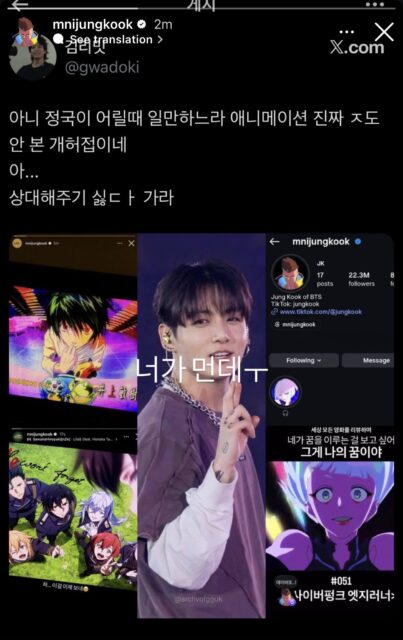
The positive momentum of the anime recommendation was soon met with friction. Shortly after the Netflix interaction, a post began circulating on social media platforms that questioned Jungkook’s authenticity as a fan of the medium. The post, which Jungkook eventually screenshotted and shared to his own Instagram Stories, contained a dismissive critique of his past and his interests.
The message read: “Man, Jungkook worked so much when he was young, he was a novice who didn’t watch a da*n thing about anime… I don’t want to deal with him… go away.” This comment appeared to reference Jungkook’s early debut at the age of 15 and the rigorous training schedule he maintained throughout his adolescence, suggesting that his busy career precluded him from developing "genuine" interests in subcultures like anime.
In an unprecedented move for a member of BTS, who typically maintain a diplomatic and curated online presence, Jungkook responded directly. Overlaying the screenshot on his Instagram Story, he added a succinct but firm retort: “Who do you think you are (to say that)?”

This direct "clap back" was met with overwhelming support from the BTS fanbase, known as ARMY. Netizens and fans expressed relief and pride that the artist was standing up for himself against gatekeeping and personal attacks. The response was interpreted not just as a defense of his taste in television, but as a rejection of the restrictive narrative that K-pop idols are one-dimensional figures who lack personal lives or interests outside of their professional obligations.
Chronology of the Interaction
To understand the impact of this event, it is essential to look at the timeline of the 24-hour period during which these interactions took place:
- June 20, Early Morning: Jungkook changes his Instagram profile picture to Cyberpunk: Edgerunners characters.
- June 20, Midday: Netflix Brazil notices the change and pivots its social media branding to align with Jungkook’s update, confirming his influence on the platform’s visibility.
- June 21, Afternoon: Negative commentary begins to surface on X (formerly Twitter) and other forums, attempting to "gatekeep" anime culture from the singer.
- June 23, Morning: Jungkook captures a screenshot of a specific derogatory post and shares it on his Instagram Story with his direct response.
- June 23, Immediate Aftermath: The phrase "Who do you think you are" and "Jungkook" trend globally on X, with fans praising his assertiveness.
Context: The Arirang World Tour and Post-Military Era
This incident occurs during a pivotal moment in BTS’s career. The group is currently in the midst of their highly anticipated Arirang world tour. This tour represents a landmark event in the music industry, as it is the group’s first full-scale global trek since all seven members completed their mandatory South Korean military service.
The Arirang tour has been characterized by a more mature and autonomous image for the members. Having transitioned from the "idol" phase of their youth into established global artists in their late 20s and early 30s, the members of BTS have shown an increasing willingness to speak their minds. Industry analysts suggest that the post-military era of BTS is defined by a "second chapter" where the members exercise greater control over their narratives, moving away from the highly managed communication styles typical of the K-pop industry’s earlier years.
Supporting Data: The Impact of the "Jungkook Effect"
The data following the Instagram update provides a clear picture of Jungkook’s digital footprint. According to social media analytics tools, mentions of Cyberpunk: Edgerunners saw a 450% spike in the 24 hours following Jungkook’s profile picture change. Furthermore, Netflix Brazil’s engagement rates on the day of their bio change were reported to be their highest for the quarter, demonstrating how a single mention from a BTS member can drive significant traffic to specific IP (Intellectual Property).
Jungkook’s Instagram account, which boasts tens of millions of followers, serves as one of the most powerful marketing engines in the world. His decision to use this platform to address a "hater" directly signifies a shift in the power dynamic between celebrities and anonymous online critics. By calling out the post, Jungkook effectively dismantled the anonymity that often emboldens online harassment.

Official Responses and Implicit Implications
While HYBE (formerly Big Hit Entertainment) has not issued a formal press release regarding this specific Instagram Story, the agency has historically been vocal about protecting its artists from defamation and malicious comments. In recent years, HYBE has regularly updated fans on legal proceedings against individuals who spread false information or engage in personal attacks against BTS.
However, Jungkook’s personal intervention suggests a new strategy of "social self-defense." This approach allows the artist to set immediate boundaries without waiting for corporate intervention. It also signals to the public that the members are active participants in online discourse, rather than passive observers.
Fan reactions on X also highlighted a secondary discovery: Jungkook appears to be "lurking" or actively monitoring discussions about himself on various platforms. One fan post, which gained significant traction, noted: "I KNEW HE HAD AN ACCOUNT & WAS LURKING HERE ON X!! He knows too much tbh." This realization has led to a mix of excitement and caution among fans, who are now more aware than ever that their public posts are within the artist’s line of sight.
Analysis: The Evolution of Idol-Fan Dynamics
The "Who do you think you are?" response is a case study in the evolution of idol-fan dynamics. Traditionally, K-pop idols were expected to remain silent in the face of criticism, maintaining a "perfect" and untouchable image. However, as the industry has globalized, the influence of Western celebrity culture—where direct engagement and "authenticity" are valued—has begun to permeate the K-pop sphere.
Jungkook’s response challenges two specific tropes:
- The Gatekeeping of Subcultures: The idea that a "mainstream" pop star cannot be a "real" fan of niche or specialized content like certain anime series.
- The Professional Sacrifice Narrative: The assumption that because Jungkook worked hard from a young age, he is somehow "lesser" in his cultural knowledge or personal development.
By questioning the authority of the critic, Jungkook reclaimed his right to a personal identity that exists outside of his "Golden Maknae" persona. This is particularly resonant for a generation of fans who value mental health and the right of individuals to defend their personal boundaries.
Broader Impact on the K-pop Industry
Jungkook’s actions may set a precedent for other artists within the industry. As K-pop continues to dominate the global music market, the pressure on idols to remain silent under the weight of "anti-fans" is becoming increasingly unsustainable. Direct rebuttals, when handled with the firm but professional tone exhibited by Jungkook, can serve as a deterrent for future harassment.
Furthermore, the interaction with Netflix Brazil demonstrates the continued viability of "unplanned" celebrity endorsements. Brands are likely to continue monitoring the personal interests of BTS members as they navigate the Arirang tour, looking for opportunities to align their products with the members’ organic preferences.
In conclusion, BTS’s Jungkook has once again proven that his influence extends far beyond music. By choosing to "clap back" at a hater on Instagram, he has asserted his autonomy, defended his personal interests, and signaled a new era of transparency and directness for BTS. As the Arirang tour continues to break records worldwide, the members are making it clear that they are no longer just the faces of a global movement—they are the vocal, assertive leaders of their own narratives. The message to critics is now louder than ever: the artists are watching, they are listening, and they are no longer afraid to ask, "Who do you think you are?"