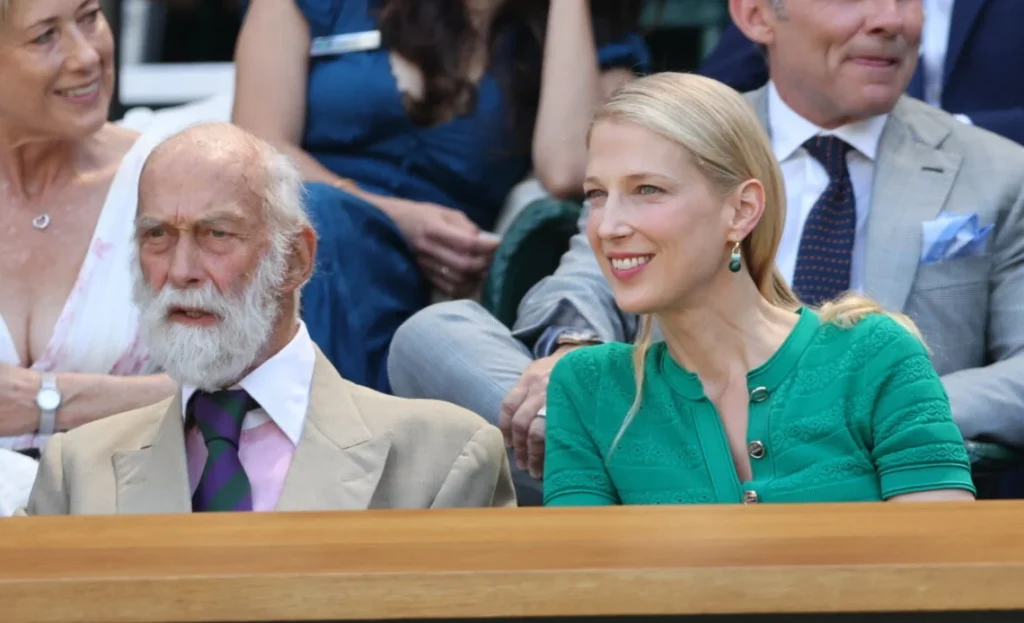

The hallowed grounds of the All England Club at Wimbledon once again became a focal point of British society and international sporting attention as the prestigious tournament culminated with its Men’s Singles Final. Amidst the electric atmosphere and the roar of the crowd, members of the Royal Family were in attendance, showcasing their enduring connection to the sport and offering a glimpse into their public engagements. This year’s final day saw a notable presence from the family of Prince Michael of Kent, alongside the Prince and Princess of Wales and their children, Prince George and Princess Charlotte, underscoring Wimbledon’s status as a quintessential British summer event.
A Family Affair at the Royal Box
The day’s proceedings began with the arrival of Prince Michael of Kent, accompanied by his son, Lord Frederick Windsor, and daughter, Lady Gabriella Kingston. Prince Michael, who is approaching his 84th birthday, was observed receiving assistance as he navigated his way to his seat in the coveted Royal Box. Lord Frederick Windsor was instrumental in guiding his father, who utilized a walking stick to aid his mobility, to his designated chair. Lady Gabriella Kingston also provided support, at one point steadying her father’s arm as he settled in. The family’s presence highlighted a touching display of familial care and togetherness within the public sphere.
Joining them in the Royal Box was Lord Frederick Windsor’s wife, Sophie Winkleman, who took her seat at the end of the row, completing the family’s ensemble for the day. This familial gathering in one of the most prominent seating areas at Wimbledon underscored the Windsor family’s long-standing appreciation for the sport.
The Prince and Princess of Wales Arrive with Young Royals
Later in the day, the Prince and Princess of Wales made their grand entrance, accompanied by their elder children, Prince George and Princess Charlotte. Their arrival added a significant layer of royal visibility to the event, particularly as the Princess of Wales, a known patron of the All England Club, was scheduled to present the prestigious Gentlemen’s Singles trophy to the eventual champion.
Prince George and Princess Charlotte, both evidently excited to be at Wimbledon, appeared to be absorbing the vibrant atmosphere of the tournament’s climax. However, Prince George, who is just days away from his 13th birthday, appeared to be battling fatigue, with observations suggesting he was attempting to stifle yawns. This subtle display of youthful weariness offered a relatable moment amidst the grandeur of the occasion.
A Royal Nod to Football Success
The article also makes a connection to Prince William’s engagement with international football, specifically England’s participation in the World Cup. Prince William, a keen football enthusiast, had taken to social media to congratulate the England team on reaching the semi-finals for the fourth time in the tournament’s history. His post, which described the team’s hard-fought 2-1 victory as "never in doubt," despite the controversial nature of the win, showcased his passionate support. It was also noted that Prince William had expressed an intention to travel to the United States should England reach the World Cup final, though a trip for their upcoming semi-final match against Argentina was deemed unlikely. This parallel between royal engagement in sports of different natures adds a broader dimension to their public activities.
Prince Michael’s Public Appearances and Family Health
The article touches upon Prince Michael of Kent’s reduced public visibility in recent times, attributed to his diminished mobility. This context provides a more nuanced understanding of his presence at Wimbledon, emphasizing the significance of his attendance. Furthermore, it is mentioned that his wife, Princess Michael of Kent, is understood to be recuperating from a period of significant ill health, which has included a stroke. This personal health update offers a brief, yet poignant, insight into the private lives of the senior royals.
A Royal Wedding Anniversary Amidst Historical Context
A historical note is also included regarding Prince and Princess Michael of Kent’s recent 48th wedding anniversary. Their marriage, which took place in Vienna on June 30, 1978, was at the time subject to controversy due to Princess Michael of Kent’s Catholic faith and her previous divorce. This historical detail adds a layer of background to the couple’s enduring union and their place within the broader narrative of the British Royal Family.
Wimbledon: A Tradition of Royal Patronage and Spectacle
Wimbledon, as the oldest tennis tournament in the world, holds a special place in the British sporting calendar and has a rich history of royal patronage. The All England Club, established in 1877, has consistently attracted members of the Royal Family to its prestigious grounds. This tradition extends beyond mere attendance; it signifies the Royal Family’s endorsement of British sport and their role as cultural ambassadors.
The Royal Box itself is a symbol of this esteemed association. Its occupants are carefully selected, often including members of the Royal Family, dignitaries, and individuals who have made significant contributions to tennis and public life. The presence of senior royals like Prince Michael of Kent, and more prominently, the Prince and Princess of Wales with their children, reinforces Wimbledon’s status as a premier event on the global stage.
The Significance of Royal Presence at Sporting Events
The attendance of the Royal Family at major sporting events like Wimbledon serves multiple purposes. Firstly, it provides invaluable publicity and prestige for the event, drawing international attention and underscoring its importance. Secondly, it demonstrates the Royal Family’s connection to the nation’s cultural fabric, showcasing their engagement with popular pastimes and traditions. For many, seeing the Royals at Wimbledon is as much a part of the experience as the tennis itself.
The inclusion of young royals like Prince George and Princess Charlotte also signifies a forward-looking aspect. It allows them to be introduced to public life and traditional royal duties from an early age, preparing them for their future roles. Their excited reactions, even amidst a hint of childhood fatigue, offer a glimpse into their development and their engagement with national events.
Supporting Data and Broader Implications
Wimbledon’s global appeal is undeniable. The tournament consistently draws millions of viewers worldwide, with the Men’s Singles Final being a particular highlight. The economic impact of the event is also substantial, generating significant revenue through tourism, hospitality, and media rights. The Royal Family’s presence undoubtedly contributes to this global fascination, enhancing the event’s allure.
The choice of the Princess of Wales to present the trophy is also significant. As President of the All England Lawn Tennis and Croquet Club, her role is symbolic and deeply ingrained in the tournament’s traditions. Her presentation of the trophy to the men’s singles champion is a moment of considerable national and international focus, highlighting her commitment to the sport.
The subtle personal details, such as Prince Michael’s need for assistance and Princess Michael’s recovery, offer a humanizing element to the public portrayal of the Royal Family. In an era where transparency and relatability are increasingly valued, these glimpses into their personal lives can foster greater public connection.
Looking Ahead: Royal Family and Future Engagements
The Royal Family’s continued engagement with Wimbledon and other significant national events suggests a strategic approach to maintaining their relevance and public connection. By participating in popular cultural and sporting activities, they reinforce their role as integral figures in British society. The presence of the younger generation, as seen with Prince George and Princess Charlotte, indicates a continuity of this tradition, ensuring that royal involvement in national pastimes will persist for future generations.
The article, while focusing on a specific day at Wimbledon, encapsulates a broader narrative of the Royal Family’s enduring connection to British traditions, their support for national sporting endeavors, and the subtle ways in which their personal lives intersect with their public duties. The iconic backdrop of Wimbledon serves as a fitting stage for these multifaceted royal engagements, weaving together the threads of sport, family, and tradition.