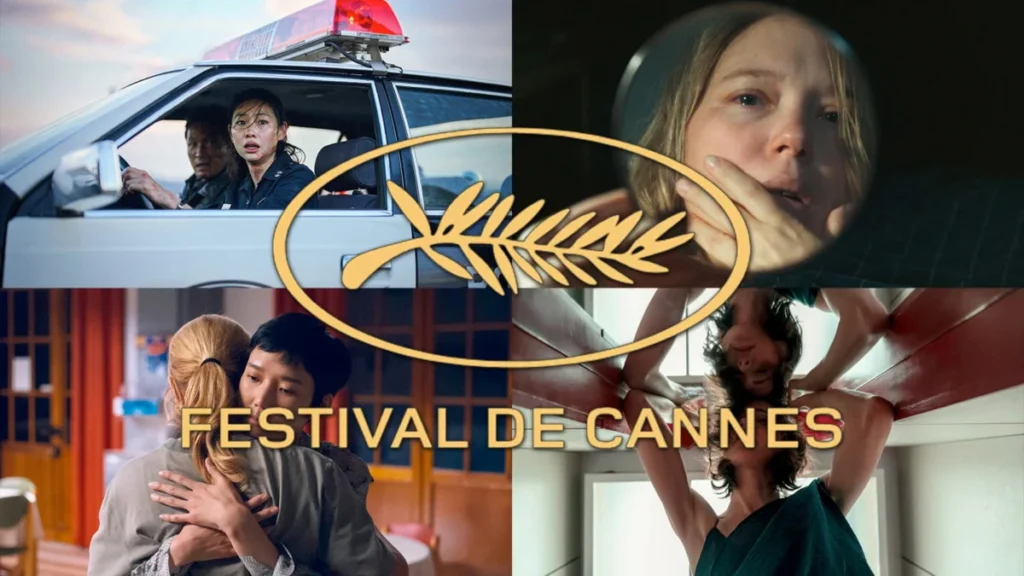

The 79th Festival du Film de Cannes has officially commenced, transforming the sun-drenched French Riviera into a global epicenter for cinematic excellence. From May 12th to May 23rd, 2026, the picturesque coastal town will host an unparalleled congregation of filmmakers, critics, industry professionals, and cinephiles from across the globe. This year marks a significant milestone for Alex Billington, marking his 16th consecutive year attending and covering the prestigious festival. While the traditional buzz surrounding major Hollywood blockbusters is somewhat muted in the 2026 lineup, the festival’s enduring spirit of discovery remains undimmed. Billington, like many dedicated attendees, prioritizes the unveiling of exceptional cinematic narratives, irrespective of their origin, budget, or studio affiliation, emphasizing the universal appeal of groundbreaking storytelling.

The Cannes Film Festival, established in 1946, has evolved into one of the world’s most influential and esteemed cinematic events. Originally conceived as a cultural response to the political machinations that influenced the Venice Film Festival, Cannes has consistently championed artistic freedom and fostered international dialogue through film. Its iconic Palme d’Or award remains one of the highest accolades in the film industry, attracting both established auteurs and emerging talents eager to showcase their latest works on a global stage. The festival’s rigorous selection process ensures a curated program that reflects the diverse and dynamic landscape of contemporary cinema, making it a crucial barometer for cinematic trends and a launching pad for future classics.
This year’s festival, as in previous iterations, offers a rich tapestry of films, with a particular emphasis on international cinema and independent productions. While the specific lineup for 2026 is still unfolding, anticipation is high for a slate that promises to challenge, inspire, and provoke. The absence of a dominant Hollywood presence in certain sections allows for a greater spotlight on filmmakers from regions often underrepresented in mainstream Western media. This commitment to inclusivity and the celebration of diverse cinematic voices is a cornerstone of the Cannes experience, fostering a more nuanced and comprehensive understanding of global filmmaking.

Beyond the highly anticipated selections, the festival’s program is replete with other films generating considerable excitement. Among them are Valeska Grisebach’s "The Dreamed Adventure," Quentin Dupieux’s "Full Phil," and Cristian Mungiu’s "Fjord," which features a notable cast including Sebastian Stan and Renate Reinsve. Pawel Pawlikowski’s "Fatherland," starring Sandra Hüller, is already being cited as a strong contender for the Palme d’Or. Ira Sachs’ "The Man I Love," with Rami Malek and Rebecca Hall, and Jane Schoenbrun’s "Teenage Sex and Death at Camp Miasma" are also generating buzz. James Gray’s "Paper Tiger" and Yukiko Sode’s "All the Lovers in the Night," an adaptation of Mieko Kawakami’s novel, further underscore the festival’s commitment to literary adaptations and auteur-driven narratives.
The animation sector at Cannes 2026 is also poised for a significant presence, with a diverse array of films showcasing the breadth of talent in this medium. Leah Nelson’s "Tangles," Marco Nguyen and Nicolas Athane’s "Jim Queen and the Quest for Chloroqueer," Oliver Clert’s "Lucy Lost," Phuong Mai Nguyen’s "In Waves," Kohei Kadowaki’s "We Are Aliens," Louis Clichy’s "Iron Boy," Sébastien Laudenbach’s "Viva Carmen!," and Quentin Dupieux’s distinctively titled animated work, "Vertiginous" (or "Le Vertige" in French), are all on the radar. This robust animation slate highlights the growing recognition of animated films as a vital and artistic form of storytelling, capable of engaging audiences of all ages with complex themes and innovative visual styles.

Six Highly Anticipated Films at Cannes 2026
As the festival unfolds, several films stand out for their compelling directors, intriguing premises, and potential to spark significant discussion. The following six films represent a curated selection of the most anticipated cinematic experiences at the 79th Festival du Film de Cannes:
"Hope" – Directed by Na Hong-jin
Korean director Na Hong-jin, a celebrated figure in the thriller and horror genres, makes a significant departure with his latest offering, "Hope." Having previously captivated audiences with "The Chaser," "The Yellow Sea," and "The Wailing," Hong-jin ventures into the realm of science fiction with a project shrouded in mystery. The film’s enigmatic premise, set in the remote village of Hope Harbor near the heavily fortified Demilitarized Zone (DMZ) in Korea, centers on a suspected tiger sighting that plunges the community into chaos. However, this initial local emergency quickly escalates into a profound and terrifying mystery, compelling residents to confront the unknown. The film boasts an international cast, including Alicia Vikander, Michael Fassbender, and Taylor Russell, alongside prominent Korean actors Hwang Jung-min, Zo In-sung, and Jung Ho-yeon. The deliberate lack of detailed information prior to its premiere heightens anticipation, promising a unique and potentially genre-bending experience. The casting of established Hollywood talent alongside acclaimed Korean performers suggests a film with broad appeal, while the thematic exploration of fear, community, and the unknown in a politically charged landscape offers fertile ground for critical analysis.

"All of a Sudden" – Directed by Ryusuke Hamaguchi
Ryusuke Hamaguchi, already recognized as one of Japan’s preeminent contemporary filmmakers, returns to Cannes with "All of a Sudden" (original French "Soudain"). This ambitious 3-hour and 16-minute film, shot and set in Paris, explores themes of chance, risk, mortality, and the profound connections that can form between individuals. The narrative follows two scholars who engage in an exchange of letters, which evolve into intimate discussions on life and death as one of them falls ill. Co-written by Hamaguchi and Léa Le Dimna, the film draws loose inspiration from Makiko Miyano and Maho Isono’s book, "You and I – The Illness Suddenly Get Worse." The presence of acclaimed actresses Virginie Efira and Tao Okamoto in the lead roles, combined with Hamaguchi’s signature contemplative and character-driven approach, suggests a deeply resonant and emotionally rich cinematic experience. Hamaguchi’s previous works, including the Oscar-winning "Drive My Car" and "Evil Does Not Exist," have solidified his reputation for nuanced storytelling and profound human observation. The extended runtime, rather than deterring audiences, signals a commitment to immersive storytelling and in-depth character exploration, a hallmark of Hamaguchi’s directorial style.
"The Unknown" – Directed by Arthur Harari
Arthur Harari, co-writer of the Oscar-winning screenplay for "Anatomy of a Fall," presents his third feature film, "The Unknown," which promises to be a thought-provoking and potentially provocative exploration of identity and consciousness. The film centers on David Zimmerman, a reclusive photographer played by Niels Schneider, who, after a one-night stand, awakens to find himself inhabiting the body of the woman he met. This body-switching premise, reminiscent of the celebrated anime "Your Name," is further amplified by a compelling statement from actress Léa Seydoux, who plays a man trapped within her own body. Seydoux describes the role as an "exhilarating" opportunity for deep invention, highlighting the unique challenges and artistic possibilities presented by the narrative. Harari’s involvement, coupled with Seydoux’s enthusiastic participation, positions "The Unknown" as a film likely to ignite robust debate and critical engagement regarding gender, perception, and the fluidity of self. The film’s inclusion in the festival program signals a commitment to challenging narratives that push the boundaries of conventional storytelling.

"Coward" – Directed by Lukas Dhont
Belgian filmmaker Lukas Dhont, known for his visually stunning and emotionally resonant work, including the critically acclaimed "Close," returns with "Coward." While Dhont’s previous films have often delved into somber themes, "Coward" is anticipated to be an entirely unexpected narrative. Set against the backdrop of World War I, the film follows Pierre, a new soldier eager to prove himself, who encounters Francis behind the lines. Francis endeavors to lift his comrades’ spirits through a theatrical production, offering a temporary respite from the brutal realities of war. As violence rages on, both characters seek solace and escape, even if fleetingly. The film features a cast of unknown young actors, emphasizing a focus on raw performance and authentic portrayal. The score, once again by composer Valentin Hadjadj, who previously collaborated with Dhont on "Close," is expected to be a significant element of the film’s emotional impact. The return of this creative partnership, combined with Dhont’s distinctive cinematic vision, suggests "Coward" will be a powerful and moving examination of the human spirit amidst conflict. Its inclusion in the Main Competition underscores its perceived artistic merit and potential to resonate with a global audience.
"The End Of It" – Directed by Maria Martínez Bayona
In a near-future world where aging can be cured and death is an optional choice, Maria Martínez Bayona’s "The End Of It" offers a compelling science fiction premise that is sure to captivate audiences. The film centers on Claire, a provocative artist approaching her 250th birthday, who decides she has had enough and wishes to die. This decision sparks conflict with her family and an AI assistant, exposing the humorous complexities of their relationships. As Claire uses her impending mortality to reclaim her artistic identity, she confronts fundamental questions about life, death, and the absurdity of existence. Directed and written by Spanish filmmaker Maria Martinez Bayona, marking her feature directorial debut after an award-winning short film, the project boasts an impressive cast including Rebecca Hall as Claire, Noomi Rapace, Gael García Bernal, and Beanie Feldstein. While not part of the Main Competition, its inclusion in the Cannes Premiere section highlights its strong artistic pedigree and anticipated impact. The film’s exploration of existential themes through a science fiction lens, combined with a stellar cast, positions it as a significant discovery within the festival’s diverse offerings.

"Flesh and Fuel" – Directed by Pierre Le Gall
Playing in the prestigious Semaine de la Critique (Critics’ Week) sidebar, Pierre Le Gall’s "Flesh and Fuel" (original French "Du Fioul dans les artères," translating to "Fuel Oil in the Arteries") is poised to be a significant discovery. This sidebar is renowned for showcasing emerging talents and independent gems, and "Flesh and Fuel" promises a poignant and romantic narrative. The film follows the burgeoning love story between two middle-aged gay truck drivers on the road. Bartosz, a jovial Polish driver portrayed by Julian Świeżewski, and Étienne, a shy and quiet French driver played by Alexis Manenti, form the heart of the story, with Étienne as the central protagonist. Given Cannes’ history of celebrating outstanding LGBTQ+ cinema, including past acclaimed films like "Portrait of the Lady on Fire" and "Joyland," "Flesh and Fuel" is anticipated to be a significant contribution to this legacy. Le Gall’s debut feature, with its focus on an underrepresented demographic and its evocative title, suggests a film that is both intimate and expansive in its emotional scope, offering a refreshing perspective on love and connection.
The Cannes Film Festival continues to serve as an indispensable platform for global cinema, fostering dialogue, celebrating artistic innovation, and providing a vital space for the exchange of ideas. The 2026 edition, with its diverse and compelling lineup, promises to uphold this rich tradition, offering audiences and critics alike a wealth of cinematic experiences to discover, discuss, and debate. The festival’s enduring appeal lies not only in its glamour and prestige but in its unwavering commitment to the art of filmmaking and its power to connect us through shared stories.