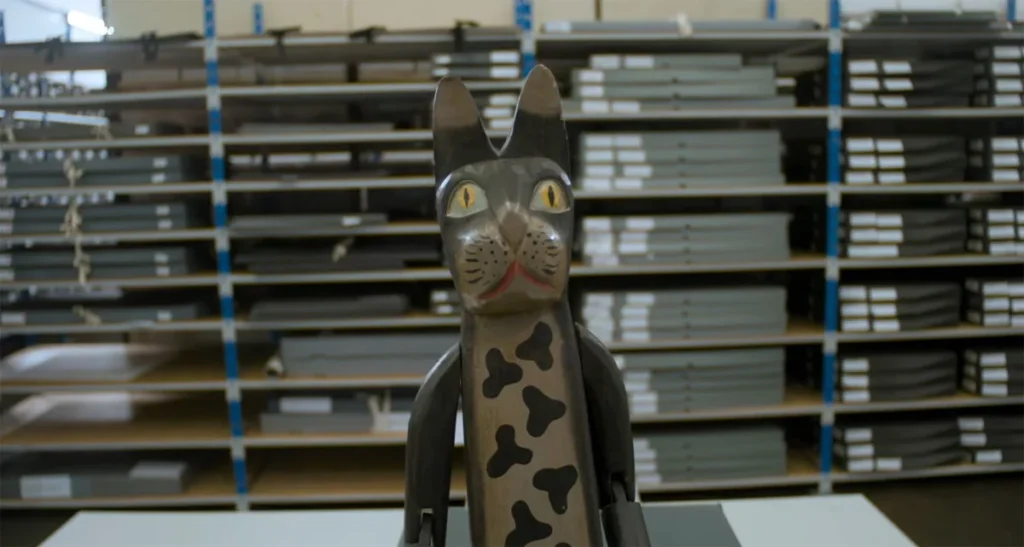

The Cannes Film Festival, a venerable institution synonymous with cinematic excellence and artistic discovery, is set to host the world premiere of Brecht Debackere’s highly anticipated documentary, Nostalgia for the Future. The film, slated for its debut in the prestigious Cannes Classics section on May 10, 2026, delves into the enigmatic life and prolific work of the legendary French filmmaker Chris Marker, a figure who masterfully cultivated an aura of mystery throughout his career. The first official trailer, released by Visual Antics and garnering significant attention across film enthusiast circles, offers a tantalizing glimpse into Debackere’s unique approach to chronicling a filmmaker renowned for his "best-known unknown films."
Unraveling the Enigma of Chris Marker
Chris Marker, born Christian-François Bouche-Villeneuve, remains one of cinema’s most intriguing and elusive figures. His seminal work, La Jetée, a 1962 science fiction film composed almost entirely of still photographs, is a cornerstone of experimental filmmaking and a testament to his innovative spirit. Yet, despite his profound impact on the art form, Marker deliberately obscured his personal life, employing pseudonyms and a penchant for feline imagery in his public persona. This deliberate veil of anonymity has transformed him into a subject of enduring fascination, prompting filmmakers and critics alike to attempt to penetrate the layers of his constructed identity.
Nostalgia for the Future emerges from this desire to understand the man behind the myth. Directed by Brussels-based visual artist Brecht Debackere, the documentary promises a deep dive into the labyrinthine world of Marker’s oeuvre. Guided by the compelling narration of acclaimed actress Charlotte Rampling, the film endeavors to reconstruct Marker’s identity not through conventional biographical interviews, but by meticulously examining the vast archives of his artifacts and collections. Debackere’s directorial philosophy, as articulated in a statement, eschews a traditional ledger of dates and locations, opting instead to follow the "associative logic of the work itself." This approach seeks to transform the archive into a "landscape of living memory," where the material traces left behind by Marker become "time machines," offering profound insights into his thought processes, artistic choices, and philosophical underpinnings.
Debackere’s Vision: An Archive as a Living System

Brecht Debackere, an artist and filmmaker with a background in experimental cinema and a faculty position at the Royal Institute for Theatre, Cinema & Sound (RITCS) in Brussels, brings a distinct perspective to the subject. His previous works, including the film Exprmntl, demonstrate a commitment to pushing the boundaries of cinematic language. For Nostalgia for the Future, Debackere has articulated a vision that resonates with Marker’s own experimental spirit.
"I never intended to make a conventional documentary," Debackere stated. "How do you introduce an audience to a figure who exists almost entirely without biographical data? In the absence of traditional interviews, I chose to follow the associative logic of the work itself: the invisible threads connecting history, philosophy, and folklore. In doing so, I found myself confronted with the archive not as a graveyard, but as a living system of memory. This film isn’t a ledger of dates and locations; it is a portrait in the abstract. It is an attempt to capture a state of mind that combined lyrical imagination with ethical depth. One eye scanning the past, the other on the future, and both feet planted firmly in the present. In a world of slick, shrink-wrapped media, I am drawn to Marker’s stubborn insistence on the fragment, the tangent, and the human complexity of the image."
This directorial statement underscores a profound engagement with Marker’s artistic ethos. Debackere’s focus on the "fragment" and "tangent" mirrors Marker’s own fragmented, essayistic filmmaking style, often characterized by its digressions and associative leaps. By treating Marker’s collected materials as a living archive, Debackere aims to create a dialogue between the past and the present, allowing the viewer to experience Marker’s world not as a static historical record, but as a dynamic and evolving entity.
Cannes Classics: A Platform for Cinematic Heritage
The selection of Nostalgia for the Future for the Cannes Classics section is particularly significant. This curated program celebrates restored cinematic masterpieces and deeply admired films that contribute to the rich tapestry of film history. Premiering within this esteemed section at the 2026 Cannes Film Festival signifies a recognition of both Chris Marker’s enduring legacy and Brecht Debackere’s compelling artistic contribution. The Cannes Classics lineup typically draws attention from cinephiles, scholars, and industry professionals worldwide, providing an ideal platform for a film that engages with such a pivotal figure in cinema.
The Cannes Film Festival itself, established in 1946, has long been a global benchmark for cinematic achievement. Its annual gathering in the French Riviera brings together filmmakers, actors, producers, and critics to celebrate new cinematic works and engage in vital discussions about the future of the art form. The Cannes Classics section, in particular, serves as a vital bridge between cinematic history and contemporary filmmaking, ensuring that the contributions of groundbreaking artists like Chris Marker are continually revisited and recontextualized for new generations.

Thematic Depth: Memory, Identity, and the Power of Images
At its core, Nostalgia for the Future is presented as a meditation on memory, identity, and the profound influence of past imagery on our imagined futures. This thematic resonance is particularly relevant in an era increasingly saturated with digital media and ephemeral content. Chris Marker’s deliberate use of photography, his exploration of time and memory in works like La Jetée, and his engagement with historical and political events through a personal, often melancholic lens, all contribute to a body of work that grapples with the very essence of human experience and perception.
The documentary’s exploration of how an archivist attempts to decode a life through material traces speaks to a broader human impulse to understand ourselves and others through the remnants we leave behind. In an age where personal narratives are often curated and presented online, the tangible artifacts of a life – photographs, letters, objects – can offer a more raw and unvarnished glimpse into an individual’s psyche. Debackere’s film, by repurposing and recontextualizing Marker’s own visual and textual output, invites viewers to consider the power of images not just as representations of reality, but as active agents in shaping our understanding of time, self, and the world around us.
Supporting Data and Chronology
- May 10, 2026: World premiere of Nostalgia for the Future at the 2026 Cannes Film Festival in the Cannes Classics section.
- May 2026: Release of the first official trailer for Nostalgia for the Future.
- 2026: Brecht Debackere’s Nostalgia for the Future is selected for the Cannes Classics program.
- 2025-2026: Production and post-production phases for Nostalgia for the Future, culminating in its festival premiere.
- Ongoing: Brecht Debackere’s tenure as an educator at RITCS, Brussels, influencing his pedagogical and artistic approach.
- 1980s-2000s: Chris Marker’s later period of filmmaking and public engagement, characterized by continued innovation and elusive presence.
- 1962: Release of Chris Marker’s landmark film La Jetée, solidifying his place in cinematic history.
- 1921: Birth of Christian-François Bouche-Villeneuve (Chris Marker).
Official Statements and Reactions
While direct statements from parties beyond the director and the festival are not yet available, the anticipation surrounding Nostalgia for the Future within cinematic circles suggests a strong interest from critics and scholars who have long admired Chris Marker’s work. The involvement of Charlotte Rampling, a celebrated actress known for her nuanced performances and discerning artistic choices, further amplifies the film’s prestige. Her narration suggests a thoughtful and evocative engagement with Marker’s complex persona.

The Cannes Film Festival’s official synopsis highlights the film’s "descent into the labyrinthine world of Chris Marker," emphasizing the director’s role as the "best-known author of unknown films." The synopsis also notes the film’s method of moving "through a constellation of personal documents and film fragments, an archivist attempts to decode the man through the material traces he left behind." This description aligns perfectly with Debackere’s stated intentions and reinforces the film’s unique, archival-driven approach.
Broader Impact and Implications
The premiere of Nostalgia for the Future at Cannes is likely to reignite academic and public interest in Chris Marker’s extensive body of work. In an era where digital archives are increasingly commonplace, Debackere’s film offers a compelling case study in how to engage with and interpret the remnants of a creative life. The documentary’s exploration of memory and identity also resonates with contemporary discussions surrounding legacy, authorship, and the construction of self in the digital age.
Furthermore, the film’s focus on an artist who actively resisted easy categorization serves as a reminder of the enduring value of artistic enigma and intellectual depth. In a media landscape often driven by transparency and constant self-exposure, Marker’s deliberate elusiveness offers a counterpoint, suggesting that sometimes, the most profound insights can be found not in direct revelation, but in the careful deciphering of what is left unsaid, unseen, or deliberately obscured. Nostalgia for the Future promises to be a significant contribution to the ongoing conversation about Chris Marker’s legacy and the very nature of cinematic biography. The film’s official website, nostalgiaforthefuture.com, is expected to provide further updates on its festival run and potential future distribution.