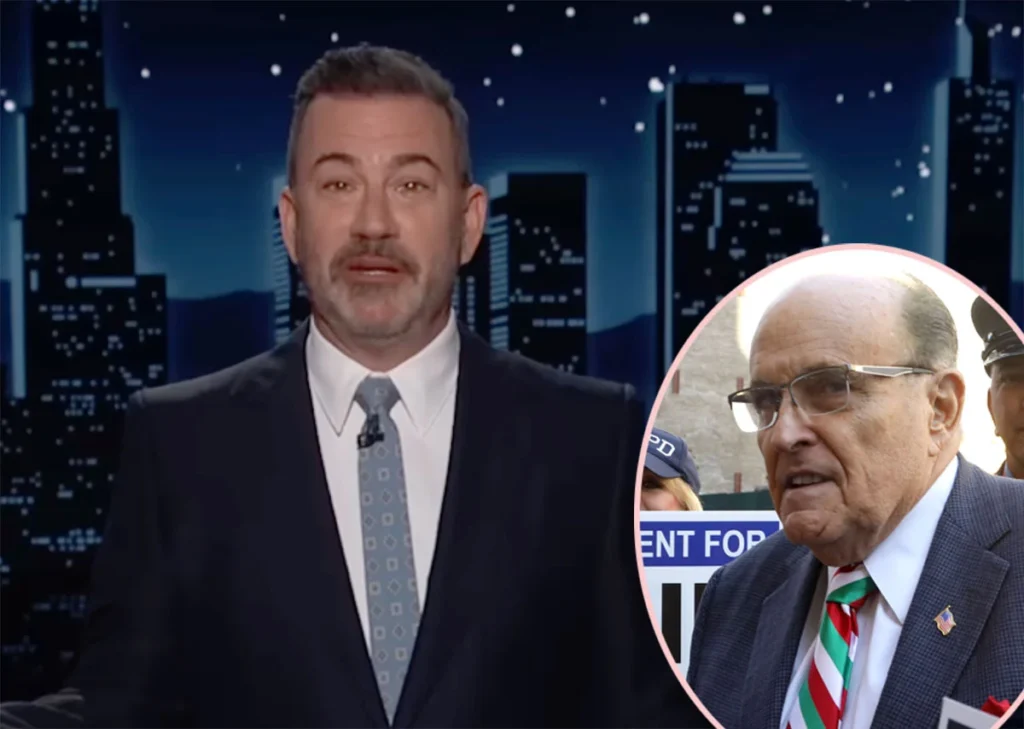

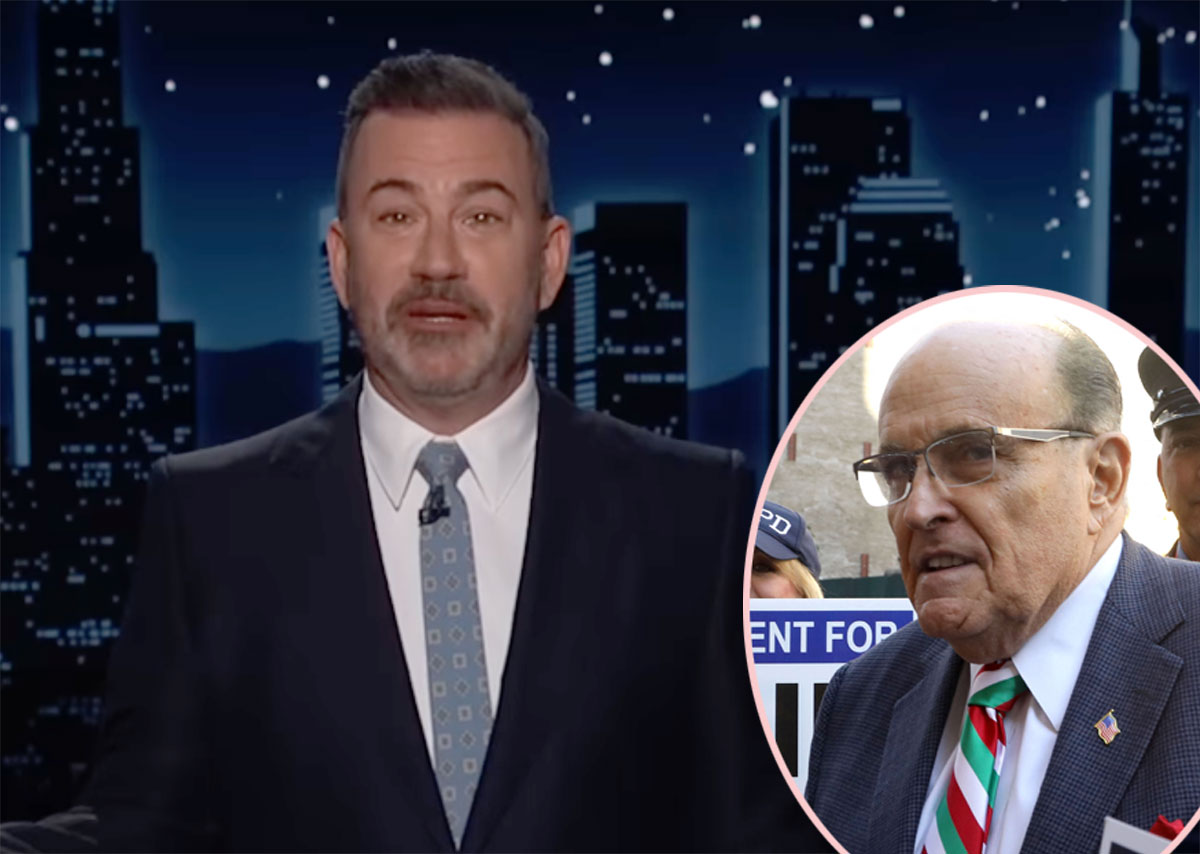
In an extraordinary and unsettling confluence of events, late-night host Jimmy Kimmel’s recent comedic remark about former New York City Mayor Rudy Giuliani "rising from the grave" eerily preceded news of Giuliani’s hospitalization in "critical but stable condition" just days later. This marks the second such "unfortunate coincidence" for the comedian in recent memory, prompting widespread discussion about the unpredictable nature of real-world events intersecting with public commentary and the delicate balance of political satire. The incident, unfolding in early May 2026, has drawn attention to the health challenges faced by prominent public figures, the enduring impact of historical events like 9/11 on long-term health, and the inherent risks comedians navigate in their pursuit of topical humor.
The Uncanny Coincidence: A Detailed Account
On Tuesday, April 29, 2026, during his regular monologue on Jimmy Kimmel Live!, the popular late-night host delivered a satirical jab at Rudy Giuliani, referencing him as having "risen from the grave." The specific context of the joke, embedded within Kimmel’s usual political commentary, was not immediately detailed, but it aligned with his long-standing practice of incorporating current events and public figures into his comedic routines. At the time of the broadcast, there was no public indication or knowledge of Giuliani’s impending health crisis. The remark was widely perceived as typical late-night political humor, often aimed at figures who frequently find themselves in the public eye due to their actions, statements, or political affiliations.
However, the lighthearted nature of the joke took a somber turn when, by Monday, May 5, 2026, reports emerged that the 81-year-old Giuliani had been hospitalized. His spokesperson, Ted Goodman, confirmed the former mayor’s condition to NBC News, stating that Giuliani was "recovering from pneumonia and is being monitored as a precautionary measure." Goodman further elaborated on the severity of Giuliani’s condition, revealing that he had been diagnosed with restrictive airway disease following the September 11, 2001, terrorist attacks. This pre-existing condition, a lasting legacy of his exposure to the toxic dust and debris at Ground Zero, significantly complicates any respiratory illness. In this particular instance, Giuliani required "mechanical ventilation to maintain adequate oxygen and stabilize his condition," underscoring the critical nature of his hospitalization. Thankfully, Goodman provided an update, noting that Giuliani was "now breathing on his own, with his family and primary medical provider at his side," indicating a positive step toward recovery.
The temporal proximity between Kimmel’s "rising from the grave" jest and Giuliani’s serious hospitalization immediately drew parallels to a similar incident involving Kimmel earlier in the year. Just weeks prior, before the White House Correspondents’ Dinner events, Kimmel had made a controversial joke about former First Lady Melania Trump being an "expectant widow." That remark had also sparked outrage, particularly from former President Donald Trump, who publicly demanded Kimmel’s firing. The recurrence of such "unfortunate coincidences," where a comedic quip about a public figure’s demise or severe misfortune is closely followed by a real-world health scare or tragic event involving that same individual, has become a notable, albeit accidental, pattern for the comedian.
Rudy Giuliani: A Public Figure’s Journey and Health Challenges
Rudy Giuliani’s life has been a tapestry of public service, legal prominence, and political controversy. He rose to national and international fame as the Mayor of New York City during the harrowing aftermath of the September 11, 2001, attacks, earning him the moniker "America’s Mayor" for his leadership and composure during a time of immense crisis. His career prior to 9/11 included serving as the U.S. Attorney for the Southern District of New York, where he gained a reputation for prosecuting organized crime and public corruption.
However, in later years, Giuliani’s public image underwent significant transformation. He became a key figure in the administration of President Donald Trump, serving as his personal attorney and playing a prominent role in various legal challenges and controversies, particularly following the 2020 presidential election. These later roles often made him a frequent subject of political satire and criticism across media platforms, including late-night comedy shows.
Beyond the political arena, Giuliani’s health has become a point of public concern, particularly in light of the recently reported hospitalization. At 81 years old, individuals are inherently more susceptible to severe illnesses, and respiratory infections like pneumonia can be particularly dangerous for the elderly. According to the Centers for Disease Control and Prevention (CDC), adults aged 65 and older account for a significant percentage of pneumonia-related hospitalizations and deaths annually.
Crucially, Giuliani’s medical history includes the aforementioned restrictive airway disease, a condition directly linked to his exposure to the toxic environment at Ground Zero after 9/11. The dust and debris from the collapsed World Trade Center towers contained a hazardous mix of pulverized building materials, asbestos, lead, and other carcinogens, leading to a range of respiratory and other health issues for first responders, recovery workers, and residents in the vicinity. Thousands of individuals have been diagnosed with various 9/11-related illnesses, including asthma, chronic bronchitis, and interstitial lung diseases. Restrictive airway disease, characterized by the reduced ability of the lungs to expand, makes individuals highly vulnerable to respiratory infections and can exacerbate conditions like pneumonia, making recovery more challenging and requiring intensive medical intervention, such as mechanical ventilation, as seen in Giuliani’s case. His hospitalization serves as a stark reminder of the long-term health consequences faced by those who served and lived through the 9/11 tragedy.
The Landscape of Late-Night Comedy and Political Satire
Late-night television shows like Jimmy Kimmel Live! occupy a unique space in the media landscape, blending entertainment with topical commentary and political satire. These programs often serve as a cultural barometer, reflecting and shaping public discourse through humor. Their monologues, skits, and interviews frequently draw upon the day’s headlines, political developments, and the actions of public figures, offering a comedic lens through which audiences can process complex or contentious issues.
The very nature of political satire involves pushing boundaries and, at times, treading a fine line between humor and offense. Comedians often aim to be provocative, using hyperbole and exaggeration to make their points. In a fast-paced news cycle, jokes are crafted with immediacy, often without the benefit of foresight regarding future events. The intention behind such jokes is typically to entertain, critique, or lighten the mood around serious topics, not to predict or cause harm.
However, the intersection of rapid-fire comedy and the unpredictable realities of life can sometimes lead to unforeseen and uncomfortable juxtapositions, as evidenced by Kimmel’s recent experiences. When a joke about a public figure’s demise or severe illness is followed by a real-world health crisis involving that individual, it inevitably triggers a range of public reactions. Some may find the coincidence eerie or even insensitive, regardless of intent. Others might view it as simply a statistical anomaly, a testament to the sheer volume of commentary produced daily and the inherent unpredictability of human events. The recurring nature of these incidents for Kimmel, however, has added a layer of intrigue and, for some, a sense of foreboding, even if purely superstitious.
Official Responses and Broader Implications
Following the news of Rudy Giuliani’s hospitalization, the primary official communication came from his spokesperson, Ted Goodman. His statements have focused on providing factual updates on Giuliani’s condition, emphasizing his ongoing recovery from pneumonia, the precautionary measures being taken, and the critical role of his pre-existing 9/11-related restrictive airway disease in complicating his illness. The spokesperson’s consistent messaging aims to reassure the public about Giuliani’s stable condition while acknowledging the seriousness of his medical event.
As of the latest reports, Jimmy Kimmel has not publicly addressed the specific coincidence between his joke and Giuliani’s hospitalization. This is consistent with how such situations are often handled in the entertainment industry, where direct commentary on accidental unfortunate timings can inadvertently draw more attention or be misconstrued. However, the previous instance involving Melania Trump led to a strong reaction from Donald Trump, highlighting the political sensitivity and the potential for public figures to interpret such humor as personal attacks or disrespect, especially when it touches upon health or mortality.
The broader media landscape has, predictably, picked up on the "eerie coincidence," with many outlets remarking on the unusual timing. This narrative often explores themes of fate, irony, and the sometimes-dark humor of the universe. Beyond the sensational aspect, the incident also prompts more substantive discussions:
- Ethical Considerations in Comedy: It reignites the debate on the ethical boundaries of humor, particularly when it targets individuals who are elderly or have known health vulnerabilities. While intent is paramount, the public perception of a joke can shift dramatically when real-world tragedy or illness intervenes.
- Public Awareness of Health Issues: The detailed reporting on Giuliani’s pneumonia and his 9/11-related restrictive airway disease has inadvertently raised public awareness about the long-term health impacts of the terrorist attacks and the increased health risks faced by an aging population.
- The Unpredictability of Life: Ultimately, these incidents serve as a powerful reminder of life’s inherent unpredictability. No comedian, no matter how prescient their humor might seem in retrospect, can genuinely foresee future health crises or tragic events. The "coincidences" are, by all rational accounts, statistical anomalies rather than intentional or causal links.
Conclusion
The convergence of Jimmy Kimmel’s "rising from the grave" joke and Rudy Giuliani’s subsequent hospitalization represents a remarkable and thought-provoking instance where the worlds of entertainment, politics, and personal well-being collided in an unexpectedly poignant manner. While unequivocally a coincidence, it underscores the delicate balance inherent in late-night political satire and the fine line comedians walk when commenting on public figures, especially when health and mortality become unexpected factors.
As Rudy Giuliani continues his recovery from pneumonia, supported by his family and medical team, the incident stands as a peculiar footnote in both Kimmel’s comedic career and Giuliani’s eventful public life. It invites reflection not only on the nature of humor and its reception but also on the shared human experience of vulnerability, the enduring legacy of historical trauma, and the unpredictable tapestry of events that shape our daily headlines. The fascination with these uncanny timings will likely persist, reminding us that sometimes, reality can be stranger, and certainly more somber, than fiction or satire.