

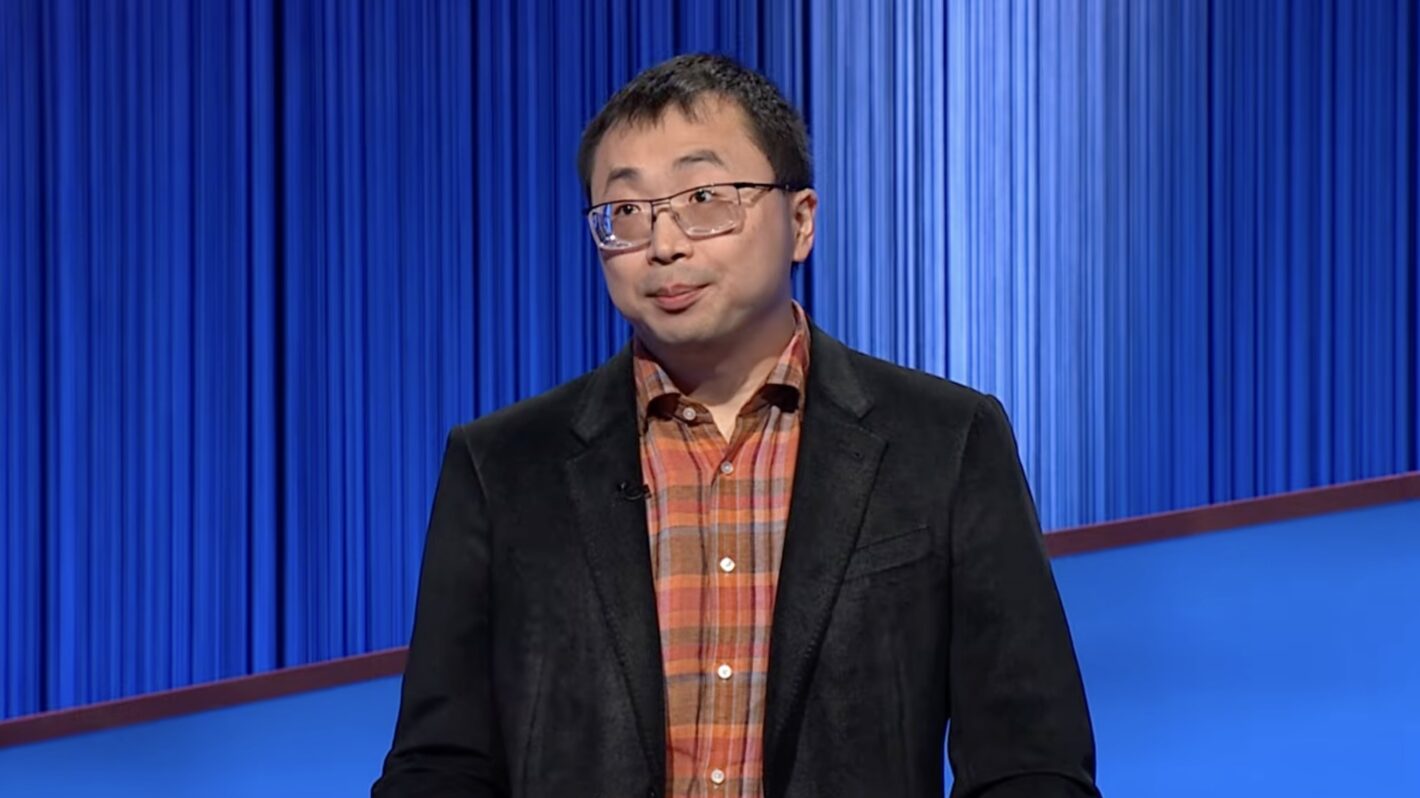
Jamie Ding, the esteemed super champion of the iconic quiz show Jeopardy!, has shared his reflections on his impressive 31-game winning streak, which concluded on Monday, April 27th. While acknowledging a sense of sadness at his departure from the program, Ding expressed a profound sense of satisfaction with the journey, particularly cherishing the opportunity to leave a personal farewell message during his final appearance. His remarkable run, which saw him amass $882,605 in prize money, ended at the hands of Greg Shahade, a chess player hailing from Philadelphia, Pennsylvania.
Ding’s 31-game winning streak placed him among the show’s most dominant champions. The law student from Lawrenceville, New Jersey, was just one victory shy of tying the legendary James Holzhauer’s 32-game streak from 2019. This near-tie with a celebrated figure in Jeopardy! history underscores the magnitude of Ding’s accomplishment. His consistent performance and intellectual prowess captivated audiences nationwide, solidifying his place in the show’s rich tapestry of memorable contestants.
The Final Contest: A Runaway Victory and a Fond Farewell
The conclusion of Ding’s streak was marked by an unusual turn of events. In the episode that aired on April 27th, Greg Shahade secured a decisive victory, referred to by Ding as a "runaway." This meant that Shahade had amassed a commanding lead, rendering the outcome of Final Jeopardy! a formality for Ding. This specific scenario allowed Ding the unique opportunity to inscribe a personal message in his final response.
In an exclusive interview with People, Ding elaborated on the significance of this moment. "I think my last game is unusual, because I was a super champ, but I also lost in a runaway, which I feel like is the first time that ever happened," he stated. "It almost makes me feel better about the thing because there wasn’t really one clue or whatever that everything hinged on." This sentiment suggests that the manner of his loss, rather than a single incorrect answer, provided a sense of closure and allowed him to depart on his own terms.
Instead of wagering on the Final Jeopardy! question, Ding opted to write "TTFN" – an acronym for "ta-ta for now." This playful and informal sign-off served as his personal goodbye to the show and its viewers. "It being a runaway means that I got to write a goodbye message instead of nothing at all," he explained. "I wouldn’t have done that if there had even been a chance of me coming out with the victory." This choice highlights Ding’s appreciation for the show and his desire to end his tenure with a memorable, personal touch.
Reflections on a Storied Streak: Pride, Disappointment, and Gratitude
While the prospect of tying or even surpassing James Holzhauer’s streak was a tantalizing one, Ding maintained a balanced perspective on his journey. "It would’ve been nice to go for more games," he admitted, acknowledging the allure of breaking records. However, he also recognized the inherent unpredictability of the game and the strong competition he faced. "But on the other hand, it could have ended much earlier than it did," he mused. "There were several people who were really strong and played well, and had a couple of things broken differently, I would have been done for weeks ago. So I’m both upset and pleased. Don’t cry because it’s over, smile because it happened kind of thing.” This philosophical outlook reflects a mature acceptance of both the triumphs and the inevitable conclusion of his impressive run.
Ding’s time on Jeopardy! transcended mere competition; it became a platform for connection and representation. He shared how his appearances seemed to foster a sense of unity among viewers. "I kept hearing how it was bringing people together, and I love that very much," he said. "I’ve heard people say, ‘It’s nice to have something positive on TV!’” In an era often characterized by division, Ding’s success on a widely watched program provided a rare moment of shared national enjoyment.
Furthermore, Ding spoke with profound pride about his role as an immigrant and a person of color contributing to the history of an American institution. He drew a poignant parallel between the show’s enduring legacy and the nation’s own historical narrative. "I hope that immigrants can be seen in a positive light too," he expressed, alluding to contemporary discussions surrounding immigration. His presence on Jeopardy! served as a powerful reminder of the diverse tapestry that enriches American society and culture.
Background and Context: The Evolution of Jeopardy! Champions
Jeopardy!, which premiered in its current syndicated form in 1984, has cultivated a legacy of intellectual prowess and engaging gameplay. The show’s format, featuring a distinct question-and-answer structure and a focus on general knowledge across a vast array of categories, has made it a staple of television for decades. Over the years, Jeopardy! has seen a succession of remarkable champions who have captured the public’s imagination.
The concept of "super champions" – contestants who achieve extended winning streaks – has become a significant element of the show’s narrative. These individuals often become household names, their performances meticulously followed by dedicated viewers. Ken Jennings, with his record-breaking 74-game winning streak in 2004, set an unparalleled benchmark. Following Jennings, other formidable champions like David Madden, Matt Amodio, and Amy Schneider have continued to push the boundaries of sustained success on the program.
James Holzhauer’s 2019 run, characterized by his aggressive wagering strategy and deep knowledge base, revitalized public interest in Jeopardy! and demonstrated a modern approach to game theory within the quiz show format. Ding’s 31-game streak, falling just short of Holzhauer’s 32, places him firmly in this elite echelon of Jeopardy! legends. His ability to consistently perform under pressure and adapt to various categories speaks volumes about his intellect and preparation.
The show’s producers and hosts have often acknowledged the impact of these champions. Former host Alex Trebek, who presided over the show for 37 seasons, frequently expressed his admiration for the contestants’ knowledge and dedication. Current hosts Ken Jennings and Mayim Bialik have continued this tradition, celebrating the achievements of players like Ding. The continuity of these champions not only provides compelling television but also reinforces Jeopardy!’s reputation as a true test of knowledge and intellect.
Data and Analysis: The Economic and Cultural Impact of a Jeopardy! Streak
Jamie Ding’s 31-game winning streak generated a substantial sum of $882,605 in prize money. This figure represents not only a personal windfall for Ding but also contributes to the broader economic impact of the show. Jeopardy! contestants, particularly those with long winning streaks, often become cultural touchstones, their success sparking conversations about education, trivia, and intellectual achievement.
The $882,605 earned by Ding places him among the top earners in Jeopardy! history for regular-season play. While tournament winnings can sometimes exceed this amount, Ding’s performance solidifies his position as one of the most financially successful contestants in the show’s regular format. This financial success is a testament to his consistent accuracy and strategic play.
Beyond the monetary aspect, the cultural impact of a Jeopardy! champion is considerable. Ding’s appearances likely spurred increased viewership for the show, as audiences tuned in to witness his progress. His story, particularly his reflections on representation and unity, resonated with a diverse audience, demonstrating the show’s ability to connect with viewers on multiple levels. The positive feedback he received about the show bringing people together highlights its enduring role as a shared cultural experience.
The fact that Ding, an immigrant and a person of color, achieved such a prominent position on an American television institution carries significant symbolic weight. In a time of heightened political and social discourse, his success offers a narrative of inclusion and achievement. His hope that immigrants can be seen in a positive light underscores the broader societal implications of his visibility on a national platform.
Official Responses and Industry Reactions
While specific official statements from Jeopardy! concerning Jamie Ding’s departure beyond standard congratulatory remarks are not detailed in the provided content, the show’s general practice is to acknowledge and celebrate the accomplishments of its champions. The producers typically offer congratulations to contestants upon their departure, whether through on-air mentions or social media. The inclusion of links to Ding’s profile and past episodes on the Jeopardy! website further indicates the show’s recognition of his significant contribution.
The broader television industry and quiz show enthusiasts widely acknowledge the rarity and difficulty of achieving extended winning streaks on Jeopardy!. The show’s rigorous selection process and the demanding nature of the game mean that only a select few contestants manage to maintain a consistent level of high performance over multiple episodes. Ding’s 31-game run undoubtedly garnered praise from fellow competitors, trivia buffs, and television critics alike, solidifying his status as a player of exceptional caliber.
Broader Impact and Implications: Jeopardy! as a Cultural Mirror
Jamie Ding’s journey on Jeopardy! serves as a microcosm of the show’s enduring appeal and its capacity to reflect broader societal values. Jeopardy! has long been more than just a game; it is a cultural touchstone that celebrates intelligence, curiosity, and the pursuit of knowledge. Ding’s success, particularly his thoughtful reflections on his identity and his hope for positive representation, highlights the show’s evolving role in a diverse America.
The fact that Ding’s final answer was a lighthearted farewell, made possible by the runaway nature of his final game, underscores a fundamental aspect of Jeopardy!: while the stakes are high, the spirit of the game often involves a degree of camaraderie and good sportsmanship. His ability to find humor and grace in his departure is a testament to his character and his appreciation for the experience.
As the United States approaches its 250th anniversary, Ding’s commentary on immigration and national identity resonates with contemporary discussions. His presence as a successful contestant offers a positive narrative that counters division and promotes a more inclusive understanding of what it means to be American. Jeopardy!, through contestants like Jamie Ding, continues to demonstrate its ability to entertain, educate, and, at times, inspire.
Jeopardy! airs weekdays. Check local listings for broadcast times. Episodes are available to stream the next day on Hulu and Peacock.