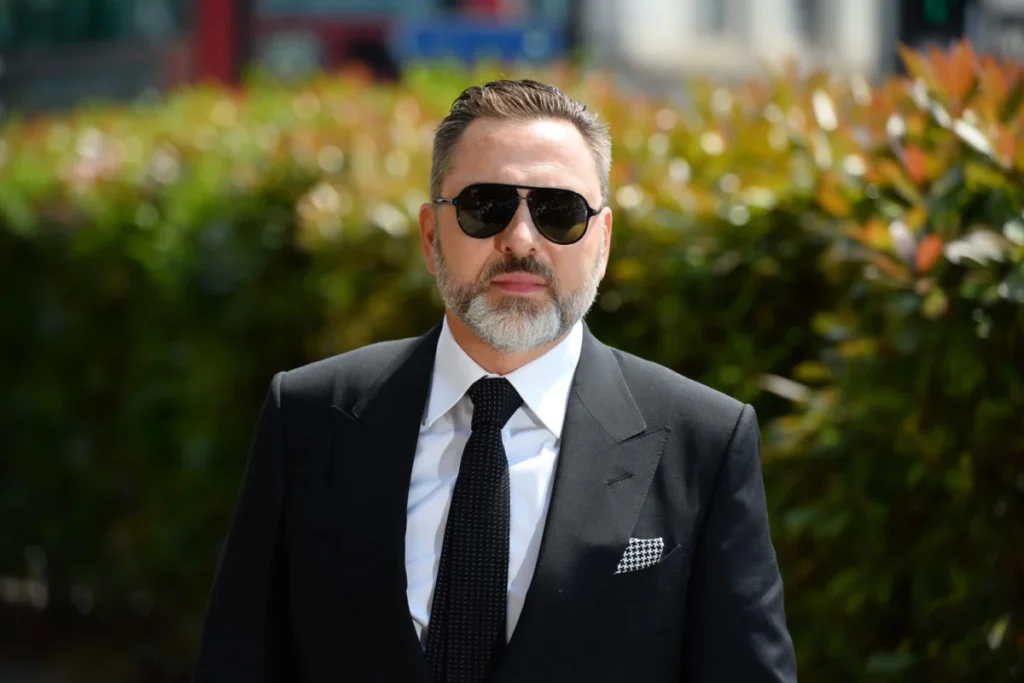

The UK government is signaling a decisive shift in its approach to legal mechanisms used by powerful figures to suppress public scrutiny, with Women and Equalities Minister Bridget Phillipson confirming that officials are actively exploring a ban on the misuse of non-disclosure agreements (NDAs). This policy pivot follows a high-profile investigative report by The Guardian and ITV News that named best-selling author and former television personality David Walliams as the subject of significant allegations, including claims of sexual assault and predatory behavior.
The allegations, which have sent shockwaves through the British media and publishing industries, center on encounters that reportedly took place over the last two decades. While Walliams, 55, has consistently denied any wrongdoing, the revelations have prompted a swift decoupling by major commercial partners, including Sky and his own literary representation, while triggering a national debate regarding the "weaponization" of the legal system.
The Allegations and Immediate Professional Fallout
The investigative findings, published this past Tuesday, detailed accounts from multiple women who alleged that Walliams engaged in behavior they characterized as grooming when they were teenagers. One woman specifically described an encounter with the performer when she was 15 as a sexual assault. These allegations emerged only after Walliams attempted to secure a legal injunction to prevent their publication—a move that ultimately failed but served as the catalyst for the current governmental scrutiny of such privacy-protecting legal instruments.
The professional consequences for Walliams have been immediate and severe. On Wednesday, Sky announced it would abandon its plans to distribute a film adaptation of his book Fing, which had been slated for an early 2027 release. This decision follows the BBC’s confirmation that it is in the process of removing his programs, including the seminal comedy series Little Britain, from its platforms. Additionally, Walliams has been dropped by his literary agency, effectively isolating him from the primary commercial structures that sustained his career.
A History of Concern: The Industry Perspective
The public nature of these allegations has been mirrored by private concerns that reportedly circulated within the publishing and entertainment sectors for years. Author Chloe Combi, in an interview with BBC News, revealed that she had been cautioned as early as 2015 regarding Walliams’s conduct. According to Combi, a senior figure in the publishing industry explicitly warned her that Walliams was "not an appropriate booking" for schools due to persistent rumors concerning his behavior around young female staff.

"I had already heard quite a lot of rumors because those worlds are quite small and contained," Combi stated. "One of the things she said was that there had been real concerns about his behavior around young female staff." While Combi noted she never had direct contact with the star, her account underscores a growing narrative that the allegations were not entirely unknown to those operating within his professional orbit, raising questions about industry-wide accountability.
Government Response: Reforming the Use of NDAs
In the wake of the report, the UK government is under mounting pressure to reform the legal frameworks that allow individuals to utilize NDAs to silence victims of harassment or abuse. Bridget Phillipson’s comments on Sky News suggest that the Ministry of Justice is treating the matter as a priority.
"We do need to look to go further," Phillipson said, explicitly addressing whether the government would consider an outright ban on certain types of NDAs. "I think there is scope to go further on this to make sure that we do not see the legal system basically abused in order to silence women."
Phillipson’s position is bolstered by fellow minister Satvir Kaur, who confirmed in the House of Commons that the government is currently consulting on stricter limitations for the use of these agreements. The government’s intent appears to be a targeted effort to prevent the "silencing" of individuals who possess information about systemic or criminal behavior. Phillipson noted that the government believes the current application of injunctions is frequently misused by powerful men to hide inappropriate behavior, and she emphasized that such legal tools should not be available to shield individuals from accountability for acts of violence or abuse.
Fact-Based Context: The Evolution of NDAs
Non-disclosure agreements were originally intended for the protection of legitimate trade secrets and commercial intellectual property. However, in recent years, they have faced intense scrutiny for their evolution into "hush money" contracts. According to data from the Equality and Human Rights Commission (EHRC), NDAs have become a common feature in settlement agreements following allegations of workplace harassment.
While the government has already taken steps to ensure that NDAs cannot prevent individuals from reporting crimes to the police or disclosing information to regulators, the current legislative debate is focused on closing the loophole that allows these agreements to be used as a pre-emptive strike against public interest journalism. The case of Walliams—who utilized the threat of an injunction to halt reporting—serves as a primary example of how the current system can be leveraged to delay or prevent the flow of information to the public.
Chronology of the Controversy
- 2015: Reports emerge from within the publishing industry expressing concern regarding Walliams’s interactions with young female staff.
- Recent Months (2026): David Walliams sends a letter to investigative journalists at The Guardian and ITV News, admitting to "thoughtless" behavior in past relationships but denying he is a "sexual predator" or that he has broken the law.
- Tuesday, November 10, 2026: The Guardian and ITV News publish a joint investigation detailing allegations of sexual assault and grooming. It is revealed that Walliams attempted to obtain an injunction to block the report.
- Wednesday, November 11, 2026: Sky drops the Fing film project; the BBC initiates the removal of Walliams’s library of shows; government ministers, including Bridget Phillipson, call for an urgent review of NDA laws.
Implications for Legal Practice and Media Ethics
The potential for a government-led overhaul of injunctions and NDAs carries significant implications for the legal sector. High-profile solicitors specializing in reputation management often rely on these instruments to protect their clients from damaging publicity. A legislative ban or severe restriction would force a major recalibration of how media law is practiced in the UK.
Simultaneously, the case highlights the role of the media in maintaining public accountability. By successfully challenging the injunction attempt, the outlets involved demonstrated that the public interest—particularly regarding allegations of predatory behavior involving minors—often outweighs the privacy rights of high-profile individuals.
As the government moves forward with its consultation process, the broader implications are clear: the era of using the legal system to "buy" silence in cases of serious misconduct is facing an existential threat. Whether through the complete banning of NDAs in cases involving sexual misconduct or more rigorous judicial oversight of injunction applications, the outcome will likely mark a watershed moment for victim rights and journalistic freedom in Britain.
Walliams’s Defense
In his correspondence to the investigative team prior to the publication of the allegations, Walliams sought to frame his past conduct as a personal failing rather than a criminal one. "Looking back, I realize that at times I behaved thoughtlessly towards other people I had casual sexual relationships with," he wrote. He further emphasized, "Whilst a power imbalance is inevitable when one party is famous, abusing that power is something else entirely and it is something that I never did."
Despite these protestations, the public and corporate reaction suggests a definitive shift in the threshold for what is considered acceptable behavior for public figures. As the government prepares to draft new legislation, the Walliams case remains a focal point for a society increasingly unwilling to tolerate the use of wealth and legal maneuvering to suppress the truth. The coming months of parliamentary debate will determine exactly how far the state is willing to go to ensure that the legal system acts as a shield for justice, rather than a weapon for the powerful.