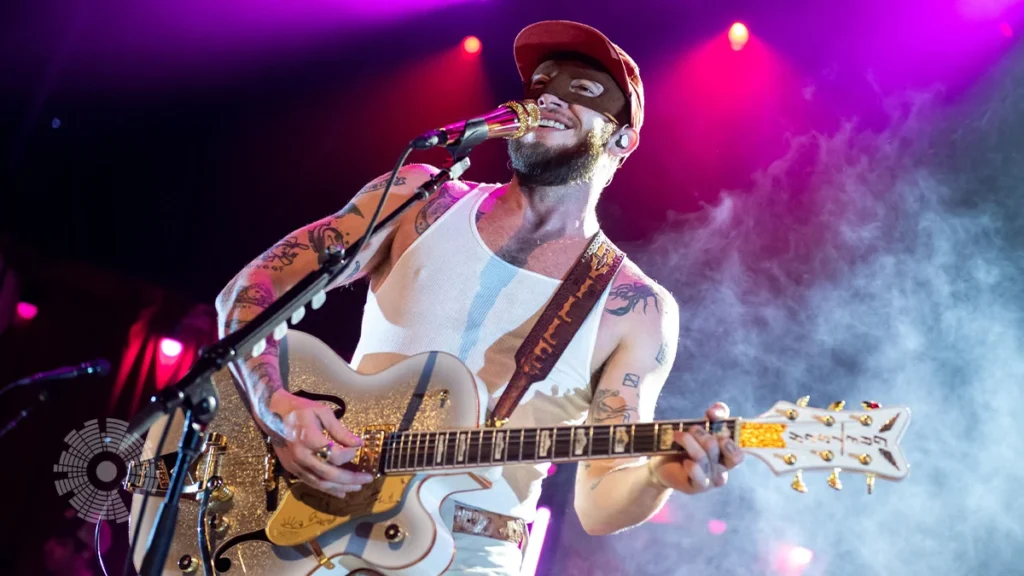

The Brooklyn Paramount, a historic venue recently restored to its former glory, played host to a transformation of atmosphere on Tuesday night as masked country crooner Orville Peck brought his Man Turned Mule Tour to the stage. The event, marking the second of a two-night residency in New York City, served as a cornerstone performance for the artist’s current promotional cycle supporting his latest studio album, Mule. By blending the architectural grandeur of the Paramount with the grit and nostalgia of a classic honky tonk, the performance highlighted the evolution of modern country music and its ability to bridge the gap between traditional storytelling and contemporary stage production.
A Journey Through the Catalog
The concert functioned as a comprehensive retrospective of Peck’s discography, balanced carefully with new material from Mule. The setlist design demonstrated a calculated narrative arc, beginning with tracks that established his signature outlaw-country aesthetic before transitioning into the more experimental, bluegrass-infused arrangements that define his current musical chapter.
The stage setup itself served as a visual anchor for this transition. Rather than a standard rock-and-roll production, the venue was outfitted with a makeshift bar and a rotating ensemble of bluegrass musicians, providing an acoustic texture that deepened the resonance of the evening. This structural choice allowed for a more intimate engagement with the audience, effectively shrinking the vastness of the Brooklyn Paramount into a space that felt like a localized, smoke-filled roadhouse.
Chronological Breakdown of the Evening
The performance unfolded in a deliberate sequence, beginning with "Big Ol’ House" and progressing through fan favorites like "The Curse of the Blackened Eye" and "Rehab Blues." The middle section of the set was notable for its collaborative spirit. A highlight for many attendees was the performance of "Legends Never Die," typically a duet featuring Shania Twain. In her absence, Peck invited bandmate Emily Rose to the stage, whose vocal contribution provided a seamless and structurally sound interpretation that maintained the integrity of the original recording.
The most significant deviation from the anticipated setlist occurred during the latter half of the show, when comedian and television personality Ziwe Fumudoh made an unannounced appearance. Together, Peck and Fumudoh delivered a rendition of Bob Dylan’s classic "It Ain’t Me, Babe." The inclusion of an artist outside the traditional country sphere underscored the Man Turned Mule Tour’s overarching theme: the deconstruction of genre boundaries.
The main set concluded with a high-energy performance of "Bronco," followed by a two-song encore consisting of "Dead of Night" and "Turn to Hate," the latter of which served as a cathartic finale that brought the evening to a close.
Contextualizing the Man Turned Mule Tour
The Mule album, released in late 2026, has been widely cited by music critics as a pivotal project for Peck. It represents a departure from the more polished pop-country sensibilities of his earlier work, favoring a raw, stripped-back sound that prioritizes lyricism and atmospheric production. The tour is not merely a promotional vehicle for the album but an extension of the album’s thematic preoccupation with identity, landscape, and the shifting definition of the American West.
The Brooklyn Paramount residency holds significance due to the venue’s history. Originally opened in 1928, the theater was a centerpiece of the borough’s cultural life before being repurposed for university use for decades. Its reopening in 2024 as a premier concert destination has provided a platform for artists looking to curate specific, immersive atmospheres. For Peck, whose brand is heavily predicated on the visual language of the 1950s and 60s, the Art Deco interior of the Paramount provided an ideal backdrop for his specific brand of melancholic western theater.
Data and Performance Metrics
The tour’s economic performance reflects the rising demand for mid-tier arena-level country acts that offer high-concept production. Data from secondary ticketing markets, such as Vivid Seats, indicate that the Man Turned Mule Tour has maintained a high sell-through rate across its major metropolitan stops. The secondary market demand for the Brooklyn shows, in particular, remained high through the date of the performance, suggesting that Peck’s transition from smaller clubs to large-scale theaters has been met with both critical and commercial success.
Furthermore, the integration of bluegrass instrumentation into the tour’s live arrangements represents a strategic shift in the artist’s soundscape. By utilizing a live band that emphasizes acoustic string instruments, the tour has successfully appealed to both the traditional country demographic and the indie-folk audience, a rare duality that has contributed to the longevity of the current tour cycle.
Implications for the Modern Country Landscape
The success of the Brooklyn Paramount shows provides a useful case study for the current state of country music. As the genre continues to fragment into various sub-genres, artists like Orville Peck are increasingly using live performances as a laboratory for genre-blending. By incorporating cover songs—such as the Ned Sublette-penned "Cowboys Are Frequently, Secretly Fond of Each Other" and the Dylan classic—Peck situates himself within a lineage of songwriters who prioritize the reclamation of historical narratives.
The inclusion of guest performers like Ziwe also suggests a growing trend of "cross-pollination" between the worlds of high-concept comedy, pop culture, and roots music. This creates a more fluid experience for the audience, shifting the focus from the rigid expectations of genre to the broader cultural relevance of the performance.
Analysis of Artistic Direction
From a production standpoint, the tour demonstrates a move away from the pyrotechnics and massive LED displays that characterize much of today’s arena touring. Instead, the focus remains on the "honky tonk" aesthetic. The reliance on a physical set—the bar, the dim lighting, the specific costuming—reinforces a commitment to the "Orville Peck" persona as an ongoing, evolving performance art piece.
The consistency of the setlist across the tour indicates a high level of discipline, but the inclusion of guest performers keeps the narrative fresh. This balance is essential for maintaining engagement over a multi-month tour schedule. The Man Turned Mule tour is, at its heart, an argument for the relevance of the "outlaw" archetype in the 21st century. By choosing venues that possess historical weight and by filling those spaces with music that draws from the deepest wells of the American songbook, Peck is successfully positioning his work as a bridge between the past and the future of the genre.
Future Outlook
As the tour continues toward its final dates, the industry will be watching to see if the success of these intimate, atmospheric setups can be scaled to larger festival stages. The current trajectory of the tour suggests that Peck has successfully transitioned into a headlining artist capable of commanding diverse audiences. With Mule having received critical acclaim during the September 2026 release cycle, the momentum behind this tour appears likely to carry through to the early months of 2027.
For fans who were unable to secure tickets for the Brooklyn residency, the remaining dates on the Man Turned Mule tour offer a final opportunity to witness this particular iteration of the show. As the tour winds down, the legacy of these performances will likely be defined by their contribution to the ongoing revitalization of the country-western aesthetic in modern live music. The integration of high-level production values with the raw, emotional core of the songwriting has proven to be a successful formula, one that sets a benchmark for other artists operating within the Americana and outlaw-country spaces.