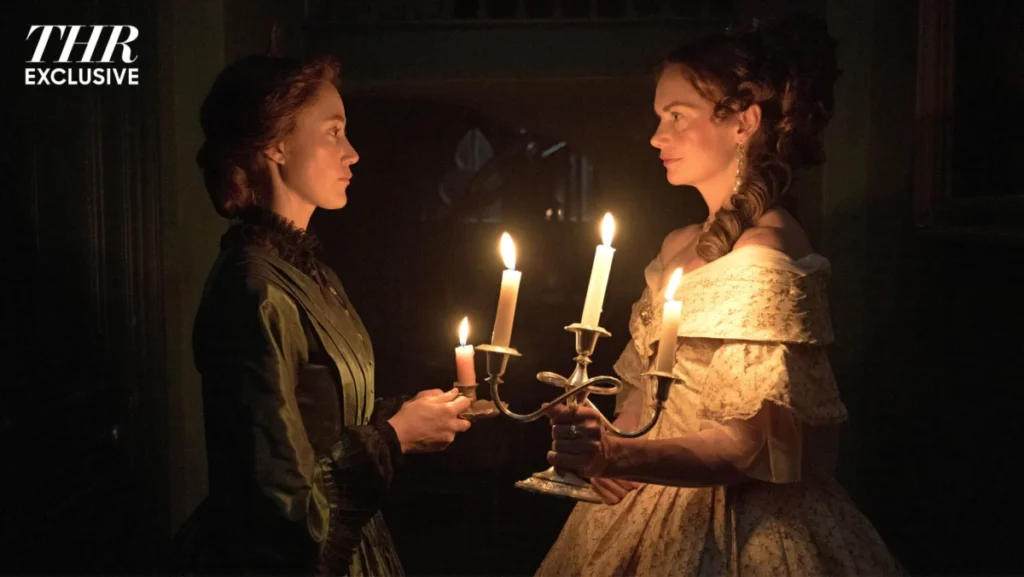

Maika Monroe, a name synonymous with a distinct brand of modern horror, has carved a formidable niche in the genre over the past decade. From her chilling breakout performance in David Robert Mitchell’s atmospheric masterpiece It Follows (2014) to the recent box-office sensation Longlegs (2024), Monroe has consistently delivered captivating portrayals of characters facing unimaginable dread. Her filmography includes other critically acclaimed entries such as The Guest (2014) and Watcher (2022), solidifying her reputation as a contemporary "scream queen" – a title she wears with a nuanced intensity that transcends mere genre tropes. However, even with such an impressive and diverse resume of horror roles, Monroe asserts that no prior experience could have fully prepared her for the visceral and psychological demands of Victorian Psycho, Zachary Wigon’s upcoming gothic thriller set to premiere at the Cannes Film Festival in May 2026.
The Genesis of a "Demented" Vision: Adapting Feito’s Gothic Novel
Monroe describes her latest endeavor as profoundly unsettling. "It terrified me. I knew that it would be the hardest role that I have ever done — and so incredibly different from anything I’ve ever done," the Santa Barbara native revealed in a recent interview. Her previous roles, while often challenging, typically allowed her to anchor the character in some aspect of her own personal experience. Victorian Psycho, however, demanded a complete departure. "There’s always a little part of me in roles that I do, something that I can ground it with or connect it with within my own personal life — but this role was really a departure from that. It was working from the ground up, creating this character where I couldn’t rely on my own self. It really, in the most magical way, took a toll on me. I felt it every day."
The film, adapted by Virginia Feito from her own acclaimed novel, plunges audiences into the grim year of 1858. Monroe stars as Winifred Notty, an enigmatic young woman who arrives unannounced at the sprawling, imposing gothic manor of the wealthy Pounds family. She claims to be the household’s new governess, eager to please and to integrate herself into their rigid domestic sphere. However, her arrival is met with a palpable reluctance from the family’s stern matriarch (portrayed by the compelling Ruth Wilson, known for her work in The Affair and His Dark Materials) and the discomfiting patriarch (played by the versatile Jason Isaacs, a veteran of the Harry Potter franchise and The White Lotus). Winifred is tasked with the education and supervision of their children, a role she embraces with a plucky determination despite the palpable tension. She finds a rare moment of connection with Ms. Lamb, a kindly fellow employee of the house, brought to life by the talented Thomasin McKenzie (Jojo Rabbit, Last Night in Soho).
Director Zachary Wigon, whose previous work includes the critically lauded Sanctuary, provides insight into the core psychological conflict driving the narrative. "It’s fascinating to see an outsider who desperately wants to be an insider, and it’s simply impossible," Wigon observes. "It’s a very, very deep paradox. She will never belong — and she will never stop wanting to belong." This irreconcilable truth forms the volatile bedrock upon which the film’s horrifying events unfold.
The Descent into Madness: Blood, Disappearance, and a Contemporary Style
As Winifred attempts to navigate the labyrinthine social dynamics of the Pounds household, things begin to spiral irrevocably out of control. People vanish without a trace, and alarming splotches of blood begin to appear, staining the pristine gardens, the grand hallway, and the immaculate kitchen. This is no mere tale of an eccentric employee slowly losing her grip on her professional duties; it is a descent into something far more sinister. "I remember reading the manuscript of the novel, and it’s like, ‘What is this woman going to do?’" Wigon recalls, reflecting on the escalating dread. "There was an interesting visual language to be had in depicting this woman’s losing of her grip… What was animating about it from an aesthetic perspective was to do something set in 1858, but with a contemporary style." This promise of a period piece infused with modern cinematic sensibilities suggests a fresh take on gothic horror, eschewing traditional trappings for a more immediate and unsettling experience.
The project’s journey to the screen was a testament to the often-unpredictable nature of independent filmmaking. Wigon had initially been collaborating with Feito on an entirely different script when she shared news of her impending novel. The compelling nature of Victorian Psycho prompted them to pivot, fast-tracking a screen adaptation. The rights were swiftly acquired by the acclaimed independent studio A24, with Margaret Qualley initially attached to star. However, as is common in the volatile landscape of indie productions, this initial setup eventually dissolved. "It changed distributors, it comes with the territory of the volatile nature of independent filmmaking," Wigon explains when discussing the film’s evolution from its A24 incarnation to its current package, now headlined by Monroe and distributed by Bleecker Street. Despite the shifts, Wigon expresses profound satisfaction with the current partnership: "We’re enormously pleased with all the support that Bleecker has given me to bring the film into the world."
Casting the Complex Protagonist: Monroe’s Magnetic Intensity
Wigon’s decision to cast Maika Monroe in the pivotal role of Winifred Notty was deliberate and deeply considered. "She has this very, very intense internal quality, where you can tell that the gears are whirring and there’s a lot going on in the character’s head," Wigon elaborates. This innate ability to convey complex inner turmoil, he believed, was precisely what the character demanded. "I thought it would be perfect for a serial killer because we’re always wondering what’s going on in their head — that’s why this whole industry of nonfiction TV shows and whatnot exists about trying to understand the phenomenon." This statement from Wigon confirms the darkly captivating nature of Winifred, positioning her not merely as a governess but as a figure of profound psychological intrigue, a serial killer whose motivations and inner world are central to the film’s horror.
Monroe’s selection comes at a time of significant career momentum. Following her commercial success in the recently released Reminders of Him (likely a placeholder or early title, given the context of 2026 premiere), Victorian Psycho is poised to further elevate her standing as an actress capable of tackling exceptionally demanding roles. Her previous work has often showcased a quiet strength masking deeper vulnerabilities or fierce resilience, qualities that Wigon clearly saw as essential for Winifred’s deceptive exterior.
A Deep Dive into Character: Monroe’s Rigorous Transformation
To embody a 19th-century serial killer, Monroe embarked on an intensive preparation regimen. This included extensive rehearsals, with weekly Zoom sessions with Wigon dedicated to meticulously nailing down specific blocking and character movements. Mastering the English accent was a crucial element, requiring diligent vocal coaching and practice to ensure authenticity to the period and setting. Beyond speech, Monroe focused on adjusting her mannerisms and body language to reflect the societal norms and constrained expressions of 1858, while simultaneously hinting at the burgeoning madness within Winifred. One particularly striking detail Monroe herself suggested was the use of painfully visible prosthetic teeth, a choice that promises to add a layer of unsettling peculiarity to her portrayal.
The physical demands of the role were equally rigorous. Monroe recounted one memorable sequence that required her to be covered in fake blood, enduring the cold early morning hours – specifically 4:30 AM – for an elaborate technocrane shot. Such experiences underscore the commitment and physical endurance required to bring Wigon’s "demented" vision to life. "I had every scene memorized because you’re running the script so many times — it was so ingrained in my head, and I could still recite probably for years to come," Monroe states, highlighting the profound immersion she achieved. This level of dedication has forged a deep connection between actress and character, leading Monroe to muse, "This character might be the character that I miss the most."
The dynamic on set was further enriched by her principal costars, who, according to Monroe, consistently kept her "off balance," contributing to the unpredictable nature of the narrative. Jason Isaacs’ portrayal of Mr. Pounds is described by Wigon as "slithery," exhibiting a "discomfiting interest in Winifred." Wigon praises Isaacs’ magnetic presence: "Your eyes are just absolutely glued to him, and he’s totally unpredictable, and his choices are always unusual as his wife." Ruth Wilson, as the matriarch, complements Isaacs’ performance by playing his wife as a "kind of desperate shit-stirrer." Monroe herself was captivated by Wilson’s work: "Some of my favorite scenes that I’ve ever filmed in my entire career were with Ruth. Sometimes in the scenes, I would just be watching her blown away by what she was doing — and I find her role actually incredibly challenging."
A unique facet of Winifred’s characterization emerges in her burgeoning friendship with Ms. Lamb, portrayed by Thomasin McKenzie. This connection represents a rare instance of Winifred experiencing genuine camaraderie. "Most times with people, they look at her with a bit of disgust and don’t understand her," Monroe explains. "And for the first time, she feels this bit of connection with a person." These interactions complicate the audience’s perception of Winifred, revealing her as not merely an unhinged murderer but a character driven by a relatably human desire for connection and belonging. This dynamic raises the central tension: what are the consequences if she achieves what she desperately seeks, and what if she ultimately fails?
The Art of Visual Storytelling: Wigon’s Meticulous Pre-Visualization
The film’s distinctive arch-horror-comic tone was a deliberate evolution that solidified after the initial script stages. Wigon describes the early phase of filmmaking as a methodical, almost engineering-like process. "It’s a little bit more like engineering in the beginning," he explains. "It’s more about the structural math of, ‘How are we going to fit this narrative and how are these scenes going to be arranged?’" This meticulous planning allowed for the later injection of the film’s unique stylistic flavor, which Monroe succinctly defines with one word: "Demented." Wigon confirms this assessment, stating, "When I talked to people about it in the beginning, I said, ‘This is a kind of manic madness.’"
Monroe’s presence was instrumental in bringing this "manic madness" to life. Wigon lauds her unwavering commitment: "Every single time that we got into a setup, it was like Maika had the character in a vice grip. She never really left. You were always right there. It was like a magnet. It was just amazing to watch."
Wigon’s meticulous approach extended to post-production, which he found remarkably straightforward due to his extensive pre-visualization. He had access to the castle location for prep, allowing for detailed planning. "We had almost everything in the shot list pre-visualized before we started shooting, so in a situation like that, there’s almost zero coverage," he reveals. "You don’t really shoot coverage in these situations because you want to max out what you can get stylistically. If you have a more sophisticated or complicated visual idea that’s going to come at the cost of coverage, that’s fine because you’ve visualized it." This commitment to a highly stylized and pre-planned visual language suggests a film with a distinct aesthetic identity, where every frame is carefully composed to serve the narrative and tone.
Monroe herself witnessed the efficacy of this approach in the final edit. "Zach had such specific visuals and certain shots, and you’re filming it like, ‘That looks cool, hope that works out, seems cool’ — and then seeing it all put together, it really blew me away," she recounts. This experience was particularly validating for her as an actress, allowing her to appreciate the film from a more objective distance. "As with most actors, it’s always a bit odd watching yourself, but what was really nice about this project is that it was very different for me — that little part of me was able to take myself out of it." This ability to detach herself from the performance underscores the profound transformation she underwent for the role, creating a character far removed from her own self.
Victorian Setting: A Canvas for Repressed Terror and Social Anxieties
The choice of 1858 as the setting for Victorian Psycho is not merely a stylistic flourish but a foundational element contributing to its thematic depth and horror. The Victorian era, a period of immense social change, rigid class structures, and deeply ingrained moral codes, provides a fertile ground for exploring psychological torment and hidden monstrosities. Beneath the veneer of propriety and order, Victorian society was rife with repression, anxiety, and stark inequalities. Gothic literature, which flourished during this period, often leveraged these societal tensions to create tales of psychological horror, haunted houses, and characters grappling with their darker impulses.
Winifred Notty’s struggle as an "outsider desperately wanting to be an insider" perfectly encapsulates the class anxieties of the era. Governesses, while educated, occupied a precarious social position, straddling the line between servant and family member, often alienated from both. This inherent isolation, combined with the Pounds family’s unwelcoming demeanor, amplifies Winifred’s psychological fragility and could serve as a catalyst for her descent into violence. The gothic manor itself, a classic trope, becomes more than just a setting; it is a character in itself, mirroring the internal decay and secrets within its inhabitants. The "contemporary style" that Wigon brings to this historical backdrop promises to make the repressed terrors of the Victorian age feel unsettlingly modern and relevant, perhaps drawing parallels between past societal pressures and present-day psychological strains.
Cannes Premiere and Broader Implications
The premiere of Victorian Psycho on May 21 at the prestigious Cannes Film Festival marks a significant moment for the film and its creators. Cannes is renowned as one of the world’s most influential film festivals, a crucial platform for independent and arthouse cinema. A premiere here not only grants the film immense international visibility but also serves as a critical endorsement, often paving the way for wider distribution, critical acclaim, and awards season consideration. For Bleecker Street, a distributor known for its discerning taste in independent films, a successful Cannes launch for Victorian Psycho would further solidify its reputation for backing compelling and artistically ambitious projects.
For Maika Monroe, the Cannes premiere reinforces her status as an actress consistently challenging herself with complex roles. It signals her continued evolution beyond her established "scream queen" persona, showcasing her dramatic range and willingness to delve into deeply disturbing psychological territory. This performance, marked by its intense preparation and profound emotional toll, could be a career-defining moment, drawing new audiences and critical attention to her formidable talent.
Zachary Wigon, having navigated the turbulent waters of independent film production, stands to gain significant recognition for his meticulous directorial vision and his ability to coax such a transformative performance from his lead. His "engineering" approach to filmmaking, combined with his unique blend of period setting and contemporary style, could establish him as a distinctive voice in modern cinema.
Ultimately, Victorian Psycho promises to be a chilling and thought-provoking addition to the horror genre, a film that leverages its historical setting to explore timeless themes of identity, belonging, and the darkness that can lurk beneath the most polished exteriors. Monroe may have terrified audiences before, but with Winifred Notty and her "demented" world, the actress is poised to unleash a brand of cinematic terror unlike anything she – or her audience – has ever experienced.