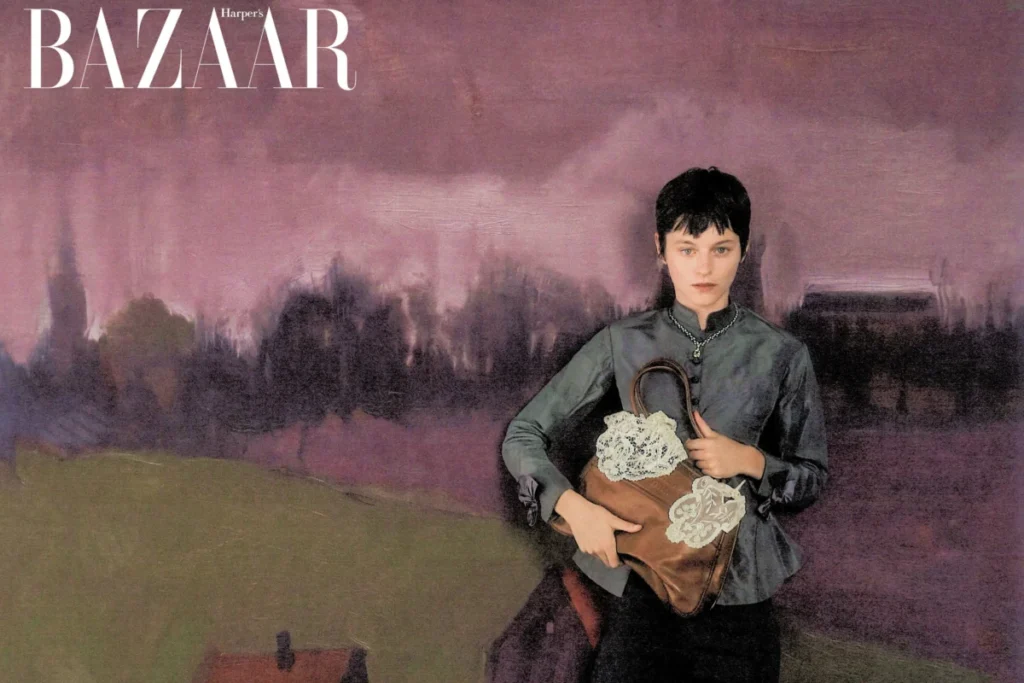

Actor Emma Corrin, who rose to international prominence for their transformative portrayal of Lady Diana Spencer in Netflix’s The Crown, has opened up about the complexities of living as a non-binary public figure. In a candid interview featured in the November issue of Harper’s Bazaar UK, the 30-year-old performer reflected on the pressures of fame, the weight of public expectation, and the evolution of their identity since officially coming out in 2021.
A Career Defined by Evolution
Corrin’s ascent in the entertainment industry has been characterized by high-profile roles and a willingness to challenge traditional gender norms both on and off-screen. Following their Golden Globe and Critics Choice Award-winning performance in The Crown, Corrin used their platform to advocate for greater visibility regarding gender identity.
Since their public transition, Corrin has been a vocal participant in the broader cultural conversation surrounding gender fluidity. However, this visibility has come at a cost. The actor has previously described the online vitriol they encountered following their 2021 announcement as a "reality check," noting that the intensity of the public’s reaction exceeded their initial expectations.

The Psychology of Public Scrutiny
In their latest interview, Corrin provided a psychological assessment of why their identity has sparked such intense public debate. "I think people always want answers because they feel there is security in certainty," Corrin observed. "So they want to put you in a box. But I think we all do that to some extent."
This desire for categorization—a hallmark of modern celebrity culture—often forces public figures to adhere to rigid binaries. Sociologists note that when a public figure rejects these binaries, it can trigger a defensive response from segments of the public who rely on traditional social structures for personal comfort. By refusing to occupy a static position, Corrin has inadvertently challenged these social norms, leading to the scrutiny they describe.
Chronology of Public Advocacy and Identity
- November 2020: Corrin gains global acclaim for their role in the fourth season of The Crown.
- July 2021: Corrin officially comes out as non-binary on social media, updating their pronouns to they/them.
- 2022–2023: The actor continues to push for gender-neutral categories at major award shows, advocating for inclusive practices in the arts.
- July 2024: Corrin appears in the blockbuster Deadpool & Wolverine, further cementing their status as a versatile, mainstream talent.
- December 2025: Corrin reaches the milestone of their 30th birthday, marking a shift toward greater introspection and a more guarded approach to public life.
- October 2026: Reflections on their journey and upcoming professional projects are published in Harper’s Bazaar UK.
Navigating Life in the Public Eye
As Corrin enters their thirties, they have adopted a more tempered approach to their public persona. The actor noted that they have become "more guarded" and "more introverted," a strategic move often employed by long-term stars to preserve their mental health. "If you talk about it, people have a right to ask questions," Corrin acknowledged, recognizing the inherent trade-off between sharing personal truths and maintaining professional boundaries.
This pivot in their public life coincides with a period of personal maturation. Reflecting on their twenties, Corrin described that decade as a time of "charging through and making mistakes," fueled by the chaos of a rapidly rising career. Now, in their thirties, the actor reports a deeper sense of stability. "I feel much more certain about who I want to be, who I am," they said, while adding that they still value the process of constant self-questioning as a positive, evolving state of being.

Artistic Endeavors: Pride and Prejudice
The discussion of identity and social constraints bleeds into Corrin’s upcoming professional work. Later this year, they are set to star as Elizabeth Bennet in a new television adaptation of Jane Austen’s Pride and Prejudice, with Jack Lowden portraying Mr. Darcy.
Corrin’s interpretation of the Regency-era classic is informed by their own experiences with societal expectations. They noted that the era’s extreme limitations on women—where marriage was effectively a survival mechanism—provide a lens through which to view modern-day pressures. "If you don’t marry, you lose everything. It’s a question of life or death," Corrin explained.
They also offered a fresh perspective on the character of Mrs. Bennet, whom they label the "real heroine" of the story. By framing Mrs. Bennet as a woman fighting against the rigid, restrictive systems of her time, Corrin highlights the nuance of Austen’s writing. "Sometimes you have to be quiet to be the loudest," Corrin observed, suggesting that the subtle power dynamics in Austen’s work mirror the complexities of navigating personal identity in the modern world.
The Broader Implications of Gender Fluidity in Hollywood
The inclusion of non-binary actors in lead roles for historical dramas marks a significant shift in casting practices. Historically, period pieces have been strictly gender-segregated, both in narrative content and casting. Corrin’s casting as Elizabeth Bennet suggests a move toward a more flexible approach in period storytelling, where the essence of a character is prioritized over rigid adherence to historical gender essentialism.

Critics and advocates alike point to Corrin’s career as a case study in how the industry is evolving. While the backlash against non-binary individuals remains a pervasive issue in broader society, the professional success of actors like Corrin demonstrates that audiences are increasingly capable of separating an artist’s personal identity from their ability to inhabit a role.
Data and Cultural Trends
According to data from recent industry diversity reports, there has been a 15% increase in non-binary and gender-non-conforming characters represented in streaming media since 2020. Despite this, off-screen representation remains a point of contention. The "box-checking" mentality that Corrin identifies as a source of public anxiety is also reflected in how media outlets and critics often frame the profiles of non-binary stars, frequently focusing on their identity rather than their craft.
Corrin’s pivot toward a more guarded public life may be a response to this trend. By choosing to speak selectively about their personal life, they are reclaiming the narrative, ensuring that their work remains the primary focus while retaining their right to privacy.
Conclusion: A Quiet Resolve
As Corrin prepares for the release of Pride and Prejudice, their trajectory serves as a reminder of the personal cost of public advocacy. By choosing to remain "always questioning," they continue to defy the rigid categorization that both the public and the media seek to impose.

Whether through their nuanced performances or their candid reflections on the struggles of the modern era, Corrin remains a significant figure in contemporary culture. Their ability to blend the personal with the political—and the historic with the contemporary—highlights the ongoing shift toward a more inclusive, albeit still challenging, landscape for performers across the gender spectrum.
The full interview, offering deeper insights into Corrin’s thoughts on fame, their evolving identity, and their upcoming role, is available in the November issue of Harper’s Bazaar UK, hitting newsstands on October 8. As they move into this next phase of their thirties, Corrin continues to demonstrate that for many in the public eye, the journey toward self-certainty is not an endpoint, but a continuous and evolving process.