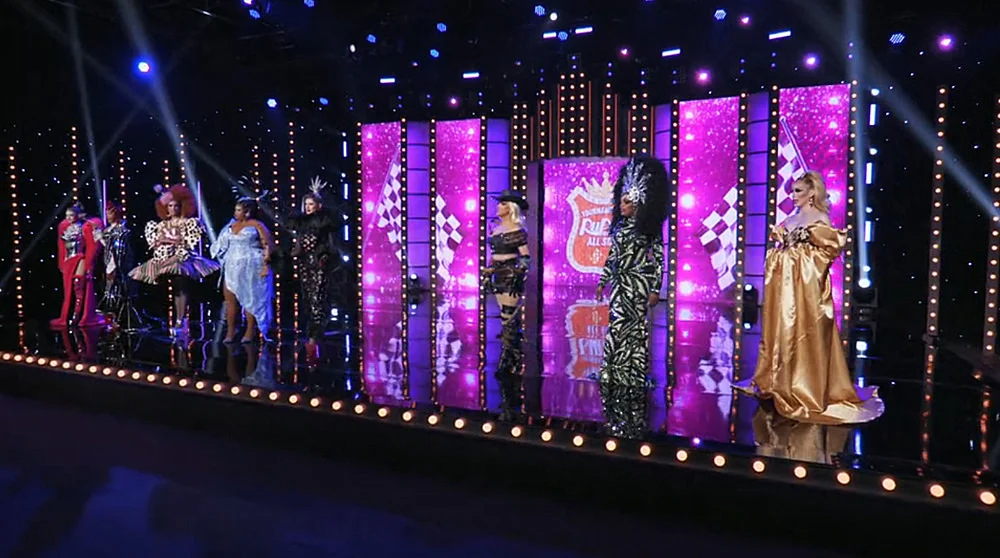

The tenth episode of RuPaul’s Drag Race All Stars Season 11, titled Tell Me Something Good, marked a pivotal turning point in the competition, characterized by the reintroduction of a previously eliminated contestant and the departure of a seasoned veteran. This installment featured a combination of sentimental storytelling, high-fashion runway presentations, and the continued utilization of the controversial Rate-a-Queen scoring system. The episode’s narrative was driven by the return of Joey Jay as a wild card entry and the subsequent elimination of Kennedy Davenport, a move that has sparked significant discussion regarding the intersection of performance merit and strategic voting in the All Stars format.

The Return of the Wild Card and Initial Dynamics
The episode commenced with the remaining seven contestants entering the workroom, only to be met with the high-stakes atmosphere of the semi-finals. The central tension of the opening segment was the revelation of a wild card contestant. Joey Jay, who had been absent from the preceding episodes, made a calculated return to the competition. Her reentry was met with a spectrum of reactions from the incumbent queens, ranging from genuine surprise to strategic dismissal. Joey Jay’s return is part of a broader production trend in the Drag Race franchise to maintain a specific cast count and inject fresh energy into the late-stage competition.

As the queens transitioned from their entrance looks to the workroom, the internal politics of the season became more transparent. A burgeoning conflict between A’keria C. Davenport and Silky Nutmeg Ganache was highlighted, though the specific origins of their disagreement remained largely unaddressed in the dialogue. This interpersonal friction underscored the heightened stakes of the semi-finals, where alliances and historical grievances often dictate the outcome of voting-based elimination systems.

The Main Challenge: Storytelling and Vulnerability
The main challenge for Episode 10 required the contestants to craft and perform a storytelling set titled "Tell Me Something Good." The objective was to narrate a personal experience that offered a lesson to their younger selves. This challenge format is a departure from the traditional comedy or acting challenges, leaning instead into the "moth-style" storytelling popularized in contemporary performance art. It tested the queens’ ability to balance vulnerability with stage presence and narrative structure.

The performances varied significantly in tone and execution:

- Dawn: Presented a narrative focused on adolescent social experiences. While the story was described as rambling by some observers, it maintained a consistent persona.
- Joey Jay: Utilized her return to share a story regarding a drag icon who served as a mentor figure following the loss of her mother. The inclusion of synchronized sound effects was noted as a professional enhancement to her performance.
- Jasmine Kennedie: Focused on the intersection of her early athletic life as a cheerleader and the moment she disclosed her identity to her mother. Her staging was noted for its confidence and clarity.
- Kennedy Davenport: Opted for a less structured, improvisational approach. Her story centered on her upbringing and maternal discipline, but the lack of a clear narrative arc resulted in a performance that struggled to land with the judges.
- Silky Nutmeg Ganache: Leveraged her background in the church to discuss the importance of timing and moderation in performance. Her delivery was characterized by professional comedic timing and a strong connection to the audience.
- A’keria C. Davenport: Shared a story regarding body modification and self-image, concluding with a dramatic visual reveal that served as a punctuation mark to her narrative.
- Sam: Discussed the pressures of conforming to traditional masculine stereotypes through sports before embracing her authentic self.
- Crystal: Employed a "calculated naivety" strategy, delivering a polished story about a childhood experience on a bus. Despite the simplicity of the subject matter, the execution was technically proficient.
Runway Category: Red Carpet Excellence
The runway theme for the evening was "Red Carpet," a category intended to showcase the queens’ highest level of glamour and brand identity. In the context of All Stars, the runway serves as a critical tie-breaker when challenge performances are closely matched.

Silky Nutmeg Ganache was a standout of the evening, presenting a look that was praised for its impeccable construction and cohesive styling from head to toe. Similarly, A’keria C. Davenport presented an homage to Thierry Mugler’s "Alien" dress. While the look was a direct reference to existing high-fashion archives, the craftsmanship was noted as being of a professional industry standard.

Crystal’s presentation offered a hybrid of "clown" aesthetics and high-fashion sensibilities, drawing comparisons to the avant-garde work of designers like Marc Jacobs and Moschino. Conversely, some contestants faced criticism for technical details. Dawn’s garment was noted for construction issues, specifically puckering in the fabric, while Sam’s dress was critiqued for its proportions, specifically the length of the skirt. Jasmine Kennedie’s "society lady" gown was well-received, though minor critiques were directed at the integration of color in her wig styling.

The Rate-a-Queen Twist and Judging Results
The elimination process in Season 11 has been defined by the "Rate-a-Queen" mechanic, where the contestants themselves rank their peers’ performances to determine the top and bottom placements. This system shifts the power dynamic away from the judging panel and into the hands of the competitors, often leading to strategic voting.

In this episode, the collective rankings placed Kennedy Davenport and A’keria C. Davenport in the bottom two. This outcome was particularly significant given the stature of both queens within the franchise. Kennedy Davenport, a veteran of Season 7 and a finalist on All Stars 3, found herself at risk despite her "legend" status. A’keria C. Davenport, also a finalist in her original season, faced the bottom despite a visually stunning runway and a technically ambitious challenge performance.

The decision of the queens to place Kennedy in the bottom was analyzed by observers as a potential strategic move to eliminate a formidable threat before the grand finale. It also reflected the reality of the challenge; while Kennedy is a renowned performer, her lack of preparation for the storytelling segment made her vulnerable to a lower ranking.

The Final Lip Sync and Elimination
The climax of the episode featured a "Lip Sync for Your Life" between the bottom two contestants. As two members of the "Davenport" drag dynasty, the battle between Kennedy and A’keria was charged with emotional and historical weight. The performance was described as one of the most technically proficient of the season, with both queens demonstrating the high-energy choreography and stagecraft for which their drag house is famous.

Ultimately, RuPaul announced that Kennedy Davenport would be the one to leave the competition. This elimination was met with shock from the fanbase, as Kennedy was widely considered a frontrunner for the crown. Her departure marks the end of her fourth competitive run on the show, proving that the Rate-a-Queen system can disrupt even the most established trajectories.

Broader Impact and Season Trajectory
The exit of Kennedy Davenport has significant implications for the remaining episodes of Season 11. By removing a "legacy" queen, the path to the finale has opened for newer favorites like Jasmine Kennedie and Crystal, as well as the wild card, Joey Jay.

The episode also highlighted a recurring theme in modern Drag Race: the tension between "old school" drag values—which prioritize improvisation and stage presence—and "new school" requirements for structured storytelling and brand-heavy aesthetics. Kennedy’s struggle with the storytelling challenge suggested a disconnect with the specific requirements of the modern All Stars format, which increasingly demands a high level of literary and narrative polish.

From a production standpoint, the retention of A’keria C. Davenport over Kennedy Davenport ensures that the unresolved tension between A’keria and Silky Nutmeg Ganache remains a central plot point moving forward. The decision to keep a queen involved in active conflict over a seasoned veteran is a classic hallmark of reality television editing and strategy.

As the competition heads toward its conclusion, the remaining queens must navigate an environment where their peers are their primary judges. The "Tell Me Something Good" challenge successfully forced the contestants to lower their guards, but the subsequent elimination of a drag icon served as a stark reminder that in the world of All Stars, vulnerability does not always guarantee safety. The return of Joey Jay adds an unpredictable element to the final stages, as the other queens must now contend with a competitor who has had the benefit of observing the season from the outside before reentering the fray.