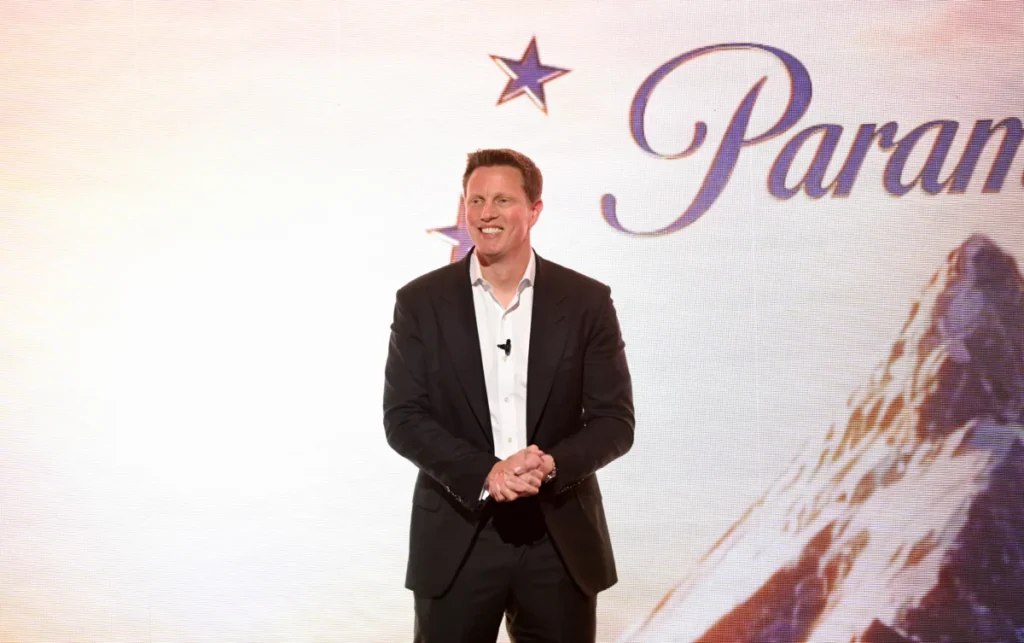

In a high-stakes media landscape defined by rapid consolidation and streaming dominance, David Ellison has cemented his status as Hollywood’s newest and most powerful mogul. Just fourteen months after hosting a heavily guarded press meet-and-greet on the Paramount lot to celebrate his arrival as a studio chief, Ellison stepped before journalists once again. This time, the occasion was exponentially larger: the formal announcement of a staggering $110 billion acquisition of Warner Bros. Discovery.
This monumental transaction brings legendary cinematic and journalistic institutions—including the Warner Bros. film studio, premium cable powerhouse HBO, global news leader CNN, and DC Entertainment—under the expansive umbrella of Ellison’s Skydance. Combined with his existing portfolio, which already features Paramount Pictures, Paramount+, CBS, and a vast network of cable channels, the newly enlarged Skydance is positioned to rival legacy tech and media behemoths like Netflix and The Walt Disney Company. However, this unmatched industry footprint comes paired with monumental financial obligations, leaving the newly minted conglomerate saddled with an estimated $80 billion in debt.
Despite the heavy financial burden, Ellison and his leadership team are signaling an aggressive strategy centered on unmatched output, creative diversity, and a dual-studio operational model designed to reshape the future of global entertainment.
A Historic Consolidation: The Chronology of Skydance’s Ascent
The path to Tuesday’s mega-merger represents one of the most rapid and aggressive expansions in modern media history. In August of the previous year, Ellison’s Skydance successfully secured control of Paramount Global in a deal that captivated Wall Street and Hollywood alike. That initial transition marked the beginning of a new era for the historic Melrose Avenue lot, signaling the end of the Redstone family’s long-standing stewardship and introducing a tech-infused leadership style backed by Ellison’s father, Oracle founder Larry Ellison.
Almost immediately following the integration of Paramount, rumors began swirling regarding further consolidation targets. Warner Bros. Discovery, itself the product of the massive 2022 merger between WarnerMedia and Discovery, had been facing persistent stock pressures, strategic shifts, and ongoing debt reduction efforts under CEO David Zaslav.
As talks progressed through the latter half of the year, the prospective merger sparked intense scrutiny from industry guilds, antitrust regulators, and the creative community. The transaction, valued at approximately $110 billion when accounting for absorbed debt and equity value, represents a seismic shift in how Hollywood content will be funded, produced, and distributed. By merging two of the traditional "Big Five" Hollywood studios—Paramount and Warner Bros.—the landscape of American cinema has fundamentally contracted, leaving fewer, much larger corporate entities controlling the lion’s share of intellectual property, box office receipts, and streaming subscriptions.
Unprecedented Content Spending and Financial Realities
During Tuesday’s press briefing, Ellison made it clear that the newly combined company intends to outspend its primary competitors in the pursuit of dominant cultural reach. "The plan is that the combined companies will spend more on content than any other company in the world," Ellison declared to the assembled press. For emphasis, he reiterated: "More than Disney, more than Netflix."
This declaration of financial force addresses head-on the primary critique facing modern media consolidation: that corporate mergers inevitably lead to reduced output and homogenized storytelling. Ellison’s counter-strategy relies on sheer volume combined with high-budget tentpoles. The company has targeted an ambitious release schedule of up to 30 theatrical feature films per year across its combined studio banners.
However, financial analysts have raised legitimate questions regarding how Skydance plans to service the combined $80 billion debt load while aggressively scaling up production budgets. The entertainment industry has largely pivoted away from volume-based models in recent years, favoring risk-mitigated franchise management and strict cost containment in the wake of the streaming wars. Ellison’s pledge to increase both spending and output runs counter to current industry trends, placing immense pressure on the newly formed leadership team to deliver consistent box office hits and subscriber growth.
Balancing Intellectual Property Franchises with Original Storytelling
While Skydance has built its reputation largely on high-octane franchise filmmaking and co-financing major blockbusters—such as the Mission: Impossible franchise and Top Gun: Maverick—Ellison emphasized that the future of the combined studio will not be exclusively tied to pre-existing intellectual property.
When questioned about how the company plans to balance original creative risks against its massive debt obligations, Ellison pointed to Warner Bros.’ upcoming feature Sinners as his personal favorite movie of the 2025 slate. He stressed that fostering original, non-franchise storytelling remains a core pillar of his vision for the studio.
"You absolutely will see us tell original stories," Ellison stated. "We are not going to solely focus on established franchises. Our goal is to bring things to audiences that they haven’t seen before, while maintaining the financial discipline necessary to protect the health of the company."
Leadership Restructuring and the Co-CEO Dynamic
The integration of two historic studios necessitates a sweeping restructuring of executive leadership. Among the most notable departures resulting from the merger are Mike De Luca and Pamela Abdy, the high-profile Warner Bros. film chiefs who oversaw major critical and commercial successes like Sinners, but whose tenure also saw high-profile box office misfires, including recent theatrical underperformances.
Stepping into the operational leadership roles are Dana Goldberg and Josh Greenstein of the Skydance Motion Picture Group, who will now assume oversight responsibilities for both the Paramount and Warner Bros. film studios.
Furthermore, Ellison was joined at the briefing by his newly appointed co-CEO, Ynon Kreiz, the former head of Mattel who successfully transformed the toy manufacturer into a cinematic powerhouse following the historic success of the Barbie film. Kreiz outlined the operational blueprint for managing two of Hollywood’s most storied production entities under a single corporate roof.
"The plan is to keep the studios creatively independent," Kreiz explained. "Each studio will maintain its own distinct slate, its own relationships, and its own creative opportunities. Our role at the corporate level will be to choreograph the release schedule carefully, optimizing for genre and audience demographics to maximize overall return for the company as a whole."
Regarding physical infrastructure, Kreiz confirmed that both the iconic Warner Bros. lot in Burbank and the historic Paramount lot in Hollywood will remain fully operational. Over the long term, the company plans to consolidate operations such that one lot primarily houses feature film production, while the other serves as the dedicated hub for television and streaming operations. Both Ellison and Kreiz intend to maintain offices on both lots, splitting their time evenly between them, though early operational integration will require a heavier presence at the Warner Bros. facilities.
Navigating Industry Backlash and Rebuilding Creative Trust
The journey toward closing the $110 billion merger was not without friction. Ellison candidly addressed the intense pushback, anxiety, and public skepticism voiced by members of the creative community, talent agencies, and industry guilds during the months leading up to the transaction.
"This was a turbulent process, and at times an ugly process," Ellison acknowledged. "There were significant emotions involved, and I truly respect the people who were apprehensive about what this merger means for the industry. What I want to do now is turn the page, and make sure we are firmly in the business of building trust."
To win over skeptics, Ellison pledged to uphold strict editorial independence across the company’s major journalistic holdings, confirming that CNN and CBS News will remain entirely separate newsrooms with distinct editorial leadership. Additionally, he emphasized that the promised production volume of 30 films annually will not come at the expense of artistic integrity.
"No one company has produced 30 films a year at the quality we are hoping to achieve," Ellison noted. "One of the absolute primary areas where you will see us exercise extreme caution is ensuring we do not do anything to jeopardize the quality of those pictures."
Implications for the Future of Hollywood
The completion of the Skydance-Warner Bros. Discovery merger marks a definitive turning point in the evolution of 21st-century media. By concentrating immense theatrical, television, streaming, and news assets into a single private-public hybrid enterprise, the deal dramatically alters the competitive dynamics of the entertainment sector.
As regulators, competitors, and consumers monitor how the newly expanded Skydance absorbs its monumental debt while attempting to scale production to unprecedented heights, the success or failure of Ellison’s vision will likely dictate the industry’s trajectory for the next decade. Whether this high-risk consolidation ultimately fosters a new Golden Age of cinematic ambition or forces further defensive downsizing remains one of the most compelling storylines in modern corporate history.