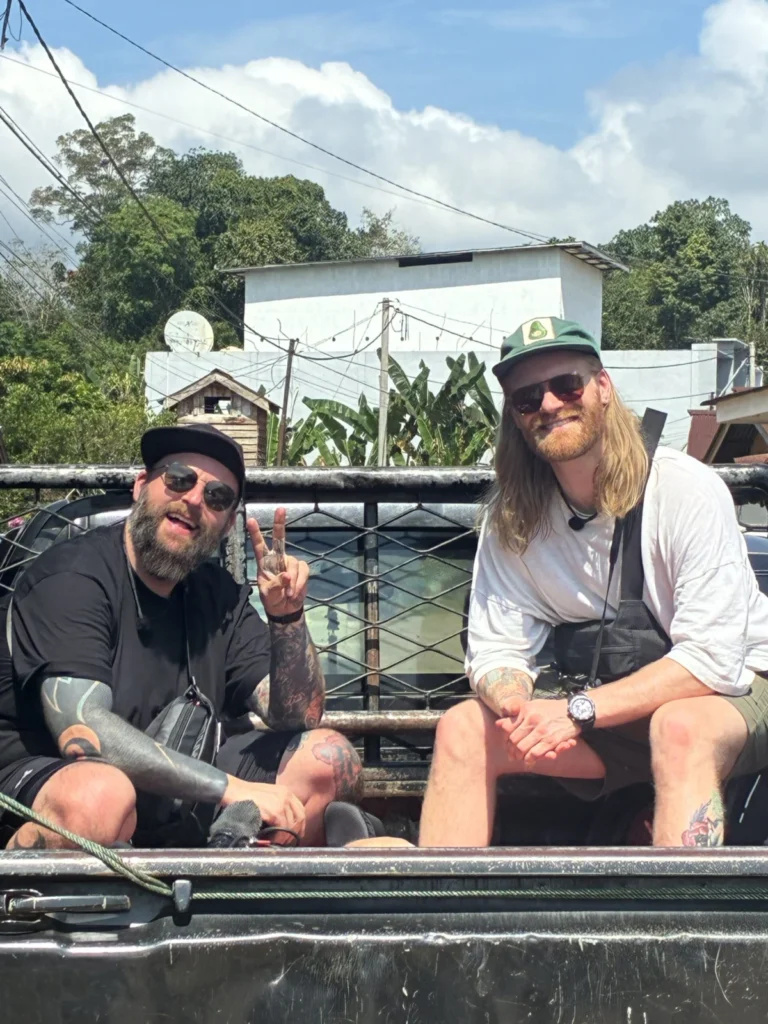

The hit reality television franchise Race Across the World is set to return to screens with a high-stakes celebrity edition that challenges four teams of two to traverse the globe without the convenience of air travel. Stripped of their smartphones, internet access, and the comforts of their celebrity status, the participants must navigate a grueling route from Malaysia to Australia, relying solely on local transport, maps, and their own resourcefulness. As production company Studio Lambert prepares to air the new series this autumn, the show promises to test the endurance, interpersonal dynamics, and survival instincts of its high-profile cast.
The Challenging Route and Rules of Engagement
The upcoming season tasks four pairs with a monumental journey spanning three countries and two continents. The race commences in the vibrant city of Kuching, Malaysia, serving as the starting point for a multi-stage trek that requires the teams to navigate five distinct checkpoints. The ultimate destination is the southern tip of Australia, with the finish line established in Melbourne.
The logistical parameters of the competition remain as stringent as ever. Each team is provided with a budget equivalent to the cost of a flight to their final destination, which averages out to a meager £26 per person per day. This daily allowance must cover all expenses, including food, accommodation, and ground transportation—be it bus, train, or ferry. The prohibition of air travel remains the central tenet of the competition, forcing contestants to navigate complex transit networks across diverse geographical terrains. By removing the ability to use digital communication or GPS, the production ensures that the teams must engage directly with local populations, often relying on the kindness of strangers to secure passage or shelter in unfamiliar environments.
The Celebrity Lineup
This season’s roster features a diverse mix of personalities, each bringing a unique dynamic to the race. Among the most anticipated pairings are Princess and Junior Andre, the children of former glamour model Katie Price and singer Peter Andre. Their participation marks a significant step into the spotlight for the siblings as they navigate the pressure of a global competition under the watchful eye of the camera.

Joining them is Eurovision star and singer-songwriter Sam Ryder, who will be accompanied by his tour manager, Kaz Coles. The presence of a professional tour manager suggests a tactical approach to the travel logistics, though the lack of modern digital tools may level the playing field against other competitors.
The lineup also includes singer-songwriter Ella Eyre, who will compete alongside her childhood friend, Nana Pepera. The inclusion of a non-celebrity friend provides a grounded perspective to the team, as Eyre and Pepera attempt to maintain their bond under the extreme psychological stress of the race. Rounding out the cast is veteran broadcaster Jeff Stelling, who will embark on the trek with his son, Matt. Stelling, known for his decades of work in sports journalism, brings a level of experience and observational skill that could prove vital in the unpredictable conditions of the race.
Chronology of the Production and Format
The concept of Race Across the World, which originated as a civilian competition, has evolved into a staple of the BBC’s entertainment slate. The format is designed to prioritize the "slow travel" movement, emphasizing the journey over the destination. Historically, the transition from civilian to celebrity participants was driven by audience demand for seeing high-profile figures in "unfiltered" environments.
The production timeline for this specific series has been tightly managed to ensure secrecy regarding the eventual winners. Filming took place across the Southeast Asian and Australian landscape earlier this year, requiring extensive logistical planning to ensure the safety and security of the teams while maintaining the "unscripted" nature of their encounters. Following the conclusion of this celebrity series, the network has confirmed that the standard civilian version of Race Across the World will return to BBC One and iPlayer in the spring of 2026.
The Psychological and Physical Demands
Tim Harcourt, the chief creative officer of Studio Lambert, has highlighted the inherent value of the celebrity format in providing a raw look at human behavior under duress. According to Harcourt, the show serves as a lens through which to view two extremes of the contemporary world: the frenetic pace of modern life and the slow, deliberate navigation required by the race.

"This year’s pairs navigate a journey that lays bare two extremes of today’s world," Harcourt stated. "We can’t wait to share how they get on. Contestants give unfiltered and honest reactions to the experiences they face that are as demanding as they are joyful. That’s so rare on television, and it’s clear audiences love seeing their favorite stars deal with these daring challenges in spectacular worlds."
The psychological toll of the race is well-documented in previous iterations of the show. The absence of traditional comforts, combined with the physical exertion of hauling luggage across borders and the constant anxiety of budget management, creates a high-pressure environment. For celebrities accustomed to managed schedules and personal assistants, the experience often acts as a significant reality check, fostering personal growth and forcing a re-evaluation of their priorities.
Implications and Audience Engagement
The success of the celebrity spin-off is largely attributed to the "humanizing" effect of the format. When placed in environments where their fame provides no tangible advantage, celebrities must rely on their core character traits—patience, negotiation skills, and humility. This shift in power dynamics resonates with audiences who are increasingly fatigued by highly produced, artificial reality television.
From a broadcasting perspective, the series serves as a flagship program for BBC One, effectively blending travel documentary elements with competitive reality gaming. By traversing multiple countries, the production also provides a significant window into the cultures of Malaysia, Indonesia, and Australia, offering educational value alongside entertainment.
The economic implications for the locations visited are also noteworthy. The presence of the production team, combined with the contestants’ reliance on local transport and hospitality, can provide a short-term boost to local economies in the regions featured along the route. Furthermore, the global exposure provided by the show often leads to increased tourism interest in the specific, less-traveled paths highlighted by the teams.

Analysis of the "Slow Travel" Trend
The popularity of Race Across the World mirrors a broader societal shift toward "slow travel." In an era dominated by instant gratification and rapid air transit, the show’s premise—that the value of a journey is found in the obstacles and the people met along the way—has found a captive audience. The participants’ inability to use modern technology forces a return to traditional navigation methods, which encourages a deeper engagement with the environment.
Statistically, the show has consistently performed well in the ratings, often outperforming traditional reality competitions. This is largely due to the show’s structure, which avoids the manufactured drama of studio-based programs in favor of authentic, spontaneous interactions. The inclusion of celebrities who are seen to struggle with the same logistical hurdles as the average person creates a sense of relatability that is critical for long-term viewer retention.
Conclusion
As the autumn broadcast date approaches, the excitement surrounding the new series of Celebrity Race Across the World continues to build. With a diverse group of participants—ranging from music icons to sports broadcasting royalty—the show is positioned to provide both entertainment and genuine insight into the resilience of the human spirit. By stripping away the superficial layers of celebrity, the BBC and Studio Lambert have created a unique platform that tests the limits of endurance, friendship, and ingenuity.
Whether the teams can successfully navigate the complexities of their journey from the tropical landscapes of Malaysia to the urban sprawl of Melbourne remains to be seen. However, if previous seasons are any indication, the real triumph of the race will lie not in who arrives first, but in the lessons learned during the thousands of miles in between. The upcoming season promises to be a rigorous exploration of character, serving as a testament to the fact that even for those who seem to have everything, the most meaningful experiences are those that cannot be bought.