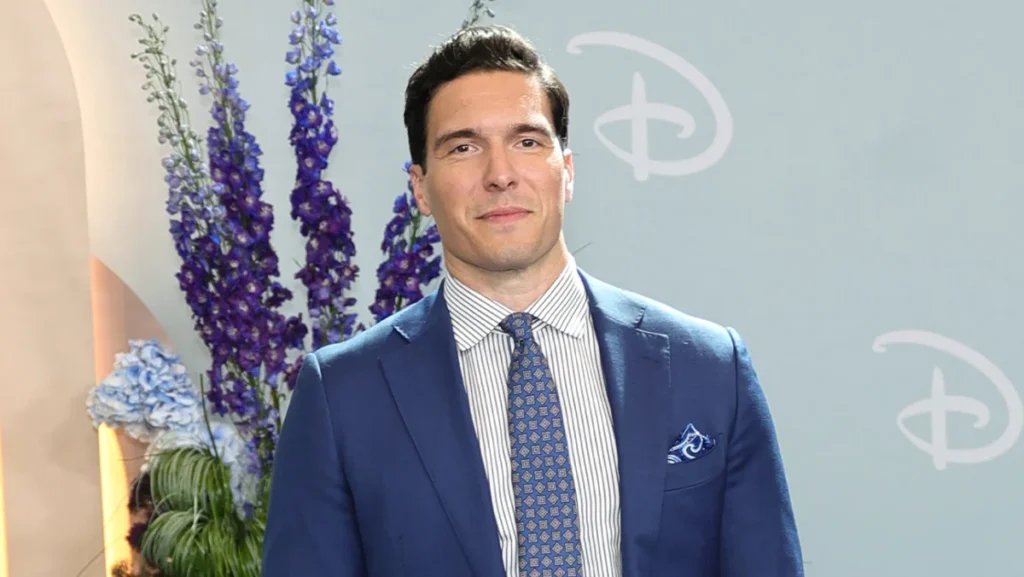

Good Morning America correspondent and anchor Will Reeve has publicly shared his diagnosis and successful recovery from testicular cancer earlier this year, marking a profoundly personal chapter for a journalist whose life has long intersected with significant medical challenges. Reeve, the son of the late iconic actors Christopher and Dana Reeve, revealed that following a rigorous medical regimen consisting of surgery and chemotherapy, a September 8 check-up confirmed he is currently cancer-free.
The announcement, detailed in a recent interview, emphasizes a lifelong philosophy of turning personal adversity into public advocacy. Reeve noted that he was raised to believe that sharing personal struggles can ultimately aid and inform others facing similar circumstances. By bringing public awareness to testicular cancer, Reeve aims to dismantle the stigma and hesitation that often surround men’s health screenings, encouraging proactive medical consultations for unusual physical symptoms.
The Chronology of Diagnosis and Treatment
The trajectory of Reeve’s health journey began in April, when he discovered a tender lump on one of his testicles while showering. Initially dismissing the anomaly as a minor issue that would resolve itself, Reeve credits his wife, Amanda Dubin Reeve, with insisting that he pursue professional medical evaluation. Prompted by her encouragement, he underwent an ultrasound in May, which led directly to the formal diagnosis of testicular cancer.
Following the diagnosis, Reeve underwent an orchiectomy later that month. This standard surgical intervention for testicular cancer involves the removal of the affected testicle. Reflecting on the procedure, Reeve acknowledged that his primary anxiety stemmed from the anticipation of surgery rather than the psychological weight of losing an essential anatomical feature.
Subsequent pathological testing and staging revealed that the malignancy had metastasized, spreading to the lymph nodes within his abdomen. This development necessitated a complex, six-hour surgical procedure in June to remove the affected lymph nodes, followed immediately by two aggressive rounds of chemotherapy. The treatment regimen concluded at the end of July, culminating in comprehensive follow-up testing that verified his cancer-free status on September 8. Moving forward, Reeve’s post-treatment surveillance plan requires routine monitoring, including bloodwork and diagnostic scans three to four times a year to detect any potential recurrence early.
A Legacy of Resilience and Medical History
Reeve’s public disclosure carries a profound historical resonance, deeply connected to his family’s well-documented experiences with severe medical crises. Will was merely two years old in 1995 when his father, Christopher Reeve—internationally renowned for his defining portrayal of Superman—suffered a catastrophic equestrian accident that left him paralyzed from the neck down. Christopher Reeve subsequently became a tireless advocate for spinal cord injury research before passing away in 2004 at the age of 52.
Just two years later, tragedy struck the family again when Will’s mother, Dana Reeve, died from lung cancer in 2006 at the young age of 44. The passing of his mother occurred at Memorial Sloan Kettering Cancer Center, creating a haunting parallel for the journalist. The irony of receiving his own cancer treatment two decades later within the exact same medical institution was not lost on him. Furthermore, Reeve openly praised his wife, Amanda, for seamlessly stepping into the dual role of partner and caregiver throughout his treatment, drawing a direct parallel to the dedicated caregiving his mother provided to his father decades prior.
Broader Context and Medical Statistics on Testicular Cancer
Testicular cancer, though relatively rare compared to other malignancies, is the most common form of cancer diagnosed in young men between the ages of 15 and 35. According to data from the American Cancer Society, an estimated thousands of new cases are diagnosed in the United States annually, yet the disease maintains an exceptionally high long-term survival rate. When detected early—before the cancer has spread beyond the testicle—the five-year relative survival rate approaches 99 percent.
Medical professionals consistently emphasize that self-examinations and immediate consultations with healthcare providers upon discovering abnormalities are critical for favorable outcomes. Symptoms commonly include a painless lump or swelling in either testicle, a feeling of heaviness in the scrotum, or a sudden collection of fluid in the scrotum. Because the condition is highly treatable even when metastasis has occurred, public health campaigns frequently stress the importance of removing social taboos that discourage men from discussing urological health or seeking timely medical evaluations.
Institutional and Professional Support
Throughout his ordeal, Reeve maintained a careful balance between his private medical treatments and his public-facing career at ABC News. He credited his colleagues at Good Morning America and across the broader network for providing unwavering support, describing his professional peers as an extension of his family who stood by him through every phase of the diagnosis and recovery.
Reeve’s public platform as a television journalist provides a powerful megaphone for health advocacy. By detailing the exact steps of his discovery—from noticing the initial symptom in the shower to navigating the hurdles of surgical intervention and chemotherapy—he hopes to normalize conversations surrounding men’s bodies and preventative care. He noted that while the medical journey required navigating significant physical and emotional obstacles, the ultimate outcome could have been drastically worse had he succumbed to hesitation or delayed seeking professional medical advice.
Implications for Public Health Awareness
The decision by public figures to disclose private health battles often yields measurable impacts on public health behavior, a phenomenon frequently documented by medical researchers. When high-profile individuals transparently discuss diagnoses such as cancer, public inquiries into symptoms, screenings, and preventative healthcare measures typically surge.
By framing his recovery not merely as a personal triumph but as a public health imperative, Reeve reinforces the messaging long promoted by oncologists and urologists: early detection saves lives. As he transitions into his post-treatment monitoring phase, Reeve’s narrative serves as both a testament to modern medical advancements in oncology and a reminder of the enduring resilience required to navigate life’s unforeseen medical crises.