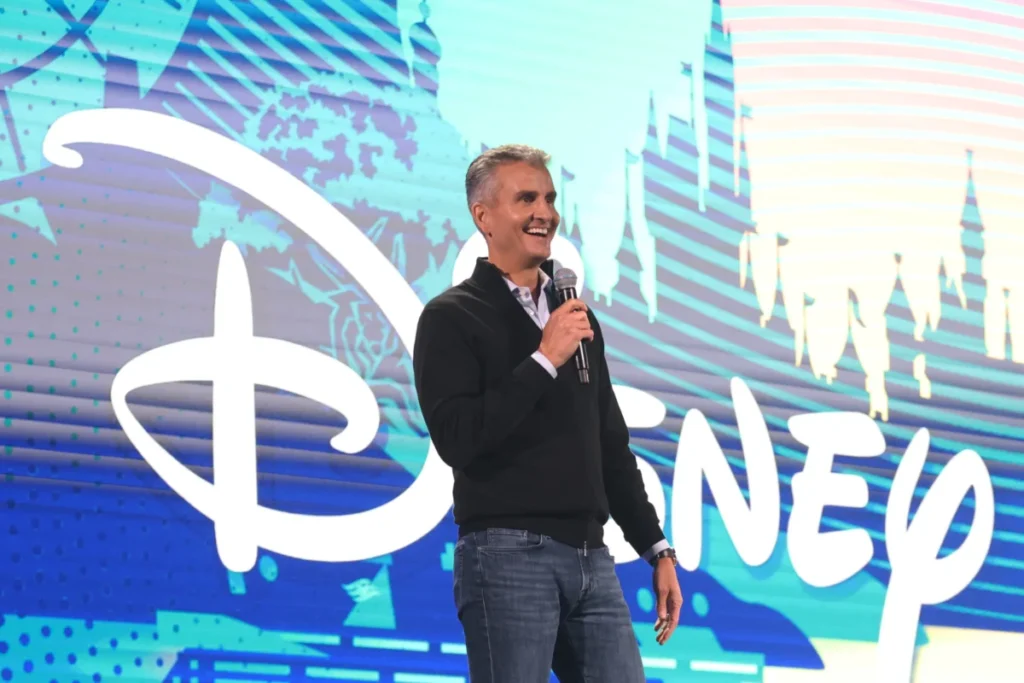

For months, an atmosphere of intense anxiety and speculation has permeated the corporate campuses of The Walt Disney Co., as employees braced themselves for what many anticipated would be an inevitable restructuring. That lingering apprehension materialized on Tuesday when the entertainment conglomerate executed another wave of workforce reductions, impacting several hundred employees primarily stationed within human resources and technology departments, according to sources with direct knowledge of the situation who spoke on the condition of anonymity.
This latest downsizing represents the fourth distinct round of layoffs implemented by the company this calendar year. It underscores a relentless, ongoing effort by Disney executive leadership to streamline corporate operations, reduce overhead costs, and reallocate capital toward emerging strategic priorities—chief among them the integration of artificial intelligence and advanced technological infrastructure.
The cumulative effect of these reductions has deeply affected morale across virtually every major business unit within the sprawling multinational media empire. From its traditional film studios and television networks to sports broadcasting juggernaut ESPN and product development divisions, Disney is methodically dismantling and rebuilding its organizational framework. As the company navigates this turbulent period of transformation, industry analysts, labor advocates, and employees alike are closely examining the broader implications of a corporate strategy that prioritizes agility and automated efficiency over traditional headcount stability.
A Chronology of Retrenchment: Tracking Disney’s 2024 Layoff Waves
The current wave of reductions does not represent an isolated event; rather, it is the continuation of a meticulously phased corporate downsizing strategy that began unfolding earlier this year. Understanding the trajectory of Disney’s workforce reductions requires examining the distinct milestones that have marked the company’s structural pivot over the past several months.
The first major wave of cuts occurred in April, roughly a month after Josh D’Amaro assumed broader executive responsibilities that placed him at the center of the company’s operational restructuring. During this initial phase, approximately 1,000 positions were eliminated. The blow was distributed across several key pillars of the enterprise, heavily impacting the unified marketing organization, traditional studio operations, the television business, ESPN, and the product and technology sectors. For many observers, this April purge served as an unmistakable signal that the post-pandemic recovery era at Disney would be characterized by stringent fiscal discipline rather than aggressive expansion.
Barely three months later, in July, the company initiated its second major round of cutbacks. This phase targeted specific corporate functions, Disney Entertainment Television, and the film studios. The creative bastions of the company were not spared; prestigious subsidiaries such as Pixar Animation Studios and National Geographic bore a disproportionately high number of the July casualties. Furthermore, the July cuts extended into high-profile on-air talent at ESPN, catching media consumers and sports fans by surprise. Longtime broadcasting fixtures, including veteran SportsCenter anchor and Baseball Tonight host Karl Ravech—who had anchored the network since 1993—alongside former NFL player and prominent football analyst Ryan Clark, found themselves exiting the network. Behind-the-scenes staff at ESPN were also heavily impacted, a casualty of operational redundancies connected to the network’s acquisition of the NFL Network earlier in the year.
The third operational shift took place quietly through smaller, targeted department-level reorganizations throughout August and early September. These localized adjustments laid the groundwork for the most recent wave of layoffs on Tuesday, which struck human resources and tech personnel. With executive leadership signaling that the transformation is still ongoing, employees across all remaining divisions remain on high alert for further announcements.
The Strategic Imperative: Cost Cutting and the Pivot to Emerging Technologies
To contextualize Disney’s ongoing retrenchment, one must examine the macro-economic and industry-wide pressures facing legacy media companies in the digital age. Traditional revenue streams, particularly linear television subscriptions and box office stability, have faced sustained headwinds, while the race to achieve sustained profitability in direct-to-consumer streaming services like Disney+, Hulu, and ESPN+ demands unprecedented capital investment.
In response to these converging financial pressures, Disney’s executive suite has communicated a singular vision: operating with heightened speed, agility, and administrative productivity. This operational philosophy was explicitly articulated in an internal corporate letter distributed to staff in August. The communication emphasized the necessity of implementing “meaningful reductions to cost, including labor,” framing the painful downsizing initiatives as a mandatory prerequisite for funding future growth engines.
However, beyond conventional belt-tightening and administrative consolidation, a powerful new catalyst has entered Disney’s restructuring equation: artificial intelligence.
On September 18, Horacio Gutierrez, Disney’s chief legal and global affairs officer, authored a candid internal memo to employees outlining the contours of an impending “transformation process.” Gutierrez explicitly warned the workforce that the sweeping corporate redesign would necessitate “hard choices” as the company aggressively accelerates its adoption of artificial intelligence and other emerging technologies.
While corporate communications have historically avoided explicitly labeling AI as a replacement tool for human labor, Gutierrez’s memo left little room for misinterpretation. Disney, much like its Silicon Valley and Wall Street counterparts, is increasingly deploying advanced machine learning models and automated systems to fundamentally alter how corporate functions are staffed, organized, and executed.
In his address to the legal and global affairs department, Gutierrez pulled no punches, writing that the division “will be a much smaller organization than it is today, and some of you will personally be affected by decisions we make in this process.” This explicit acknowledgment highlights a growing reality across corporate America: artificial intelligence is no longer merely a product feature or creative asset within media companies; it is actively being utilized as a structural restructuring instrument designed to permanently compress corporate headcounts.
Industry Reactions, Labor Concerns, and Economic Implications
The methodical dismantling of traditional corporate structures at The Walt Disney Co. has triggered widespread concern among labor unions, talent agencies, and employment advocates. While Wall Street has historically rewarded legacy media conglomerates for exercising rigorous cost discipline and expanding profit margins through workforce reductions, the long-term human and cultural cost to these creative enterprises remains a subject of intense debate.
Labor representatives have voiced mounting alarm over the opacity of the restructuring process, particularly regarding how rapidly artificial intelligence is being integrated into corporate workflows without standardized ethical guidelines or transparent worker protections. The tech and HR layoffs executed on Tuesday highlight a concerning trend: administrative and operational support roles—traditionally viewed as the institutional memory and operational backbone of a company—are being systematically hollowed out and replaced by automated algorithms, workflow management software, and centralized regional hubs.
Furthermore, the impact on iconic creative brands like Pixar and National Geographic during the July cuts raised serious questions among creative professionals regarding the health of Disney’s artistic culture. Critics argue that an over-reliance on efficiency metrics and algorithmic restructuring risks stifling the imaginative risk-taking that has historically defined the Disney brand. When long-serving creative personnel, veteran journalists, and foundational administrative staff are jettisoned in pursuit of quarterly margin expansion, the institutional knowledge base of the company suffers an irreparable loss.
From an analytical standpoint, Disney’s strategy mirrors a broader macroeconomic shift across the Fortune 500. Following the over-hiring boom of the early pandemic years and the subsequent tightening of monetary policy, major corporations have pivoted decisively toward labor-light business models. By embedding artificial intelligence into legal, administrative, marketing, and technological workflows, Disney is attempting to future-proof its profit margins against inflationary pressures and shifting consumer consumption habits.
Looking Ahead: What to Expect Next in Disney’s Corporate Evolution
As the final quarter of the year unfolds, all indications suggest that Disney’s internal transformation is far from complete. Executives have made it abundantly clear that the ongoing corporate redesign will continue to reshape the organizational chart well into the foreseeable future.
For the thousands of employees currently remaining within the company, the prevailing mood is one of cautious survival. The traditional psychological contract of corporate loyalty—where long tenure and dedicated service offered a degree of career security—has been decisively fractured by successive waves of restructuring.
As Disney prepares to report its next set of quarterly financial results, institutional investors will undoubtedly scrutinize these labor reductions to measure their immediate impact on operating income and streaming profitability. However, the true test of Disney’s aggressive modernization strategy will not merely be found in short-term balance sheet optimizations, but in the company’s long-term ability to sustain its cultural relevance, protect its creative integrity, and maintain workforce morale in an era defined by rapid technological displacement. For now, the corporate ax has fallen once again, and the halls of the Magic Kingdom remain shadowed by the uncertainty of what transformation may bring next.