
As the dust settles on a jury’s antitrust verdict against Live Nation, Billboard unpacks what’s next in the high-stakes legal battle. A jury in New York has found that Live Nation operates an unlawful monopoly that significantly impacts multiple facets of the concert industry, a decision that carries profound implications for artists, fans, and the future of live entertainment. However, the full consequences of this groundbreaking verdict are yet to be determined, with a complex legal process ahead.
The blockbuster verdict, delivered on Wednesday, April 15, following a month-long trial and four days of deliberations, concluded the liability phase of the proceedings. Jurors were tasked with determining whether Live Nation engaged in monopolistic practices within the primary concert ticketing market and unlawfully coerced artists into utilizing its promotion services to secure performances at its owned amphitheaters. Their unanimous "yes" on all counts signifies a decisive victory for the plaintiffs, primarily state attorneys general, who argued that the company’s dominance stifles competition and harms consumers.
The Road to the Verdict: A Chronology of Allegations
The trial culminated years of scrutiny and legal challenges directed at Live Nation, particularly its 2010 merger with Ticketmaster, which critics argued created an insurmountable behemoth in the live entertainment ecosystem. The core of the states’ antitrust case centered on the theory that Live Nation’s control over both ticketing operations and artist promotion grants it an anticompetitive advantage. This alleged advantage, prosecutors argued, manifested in a practice of threatening to withhold concerts from venues that did not exclusively use Ticketmaster for their ticketing needs.
Evidence presented during the trial aimed to demonstrate how Live Nation leveraged its dominant position in ticketing to bolster its promotion arm and vice versa. For instance, the prosecution highlighted instances where artists or promoters felt pressured to align with Live Nation’s promotional services to gain access to desirable venues or favorable ticketing terms. The jury’s verdict appears to validate these claims, suggesting they found sufficient evidence of Live Nation’s coercive practices.
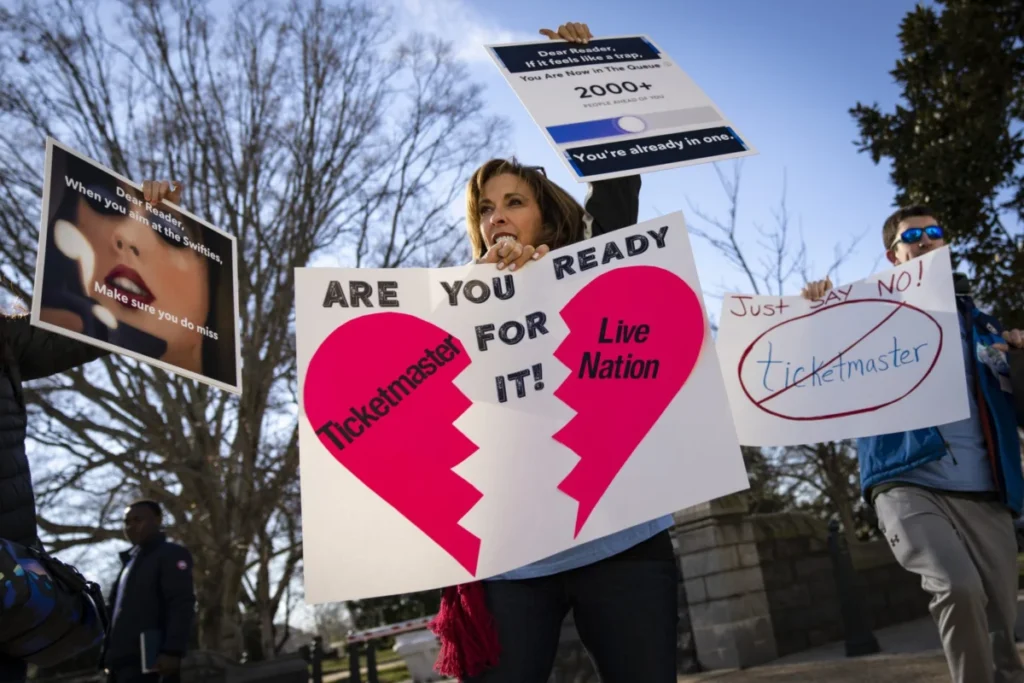
The visual representation of the ongoing debate was starkly captured on January 24, 2023, outside the U.S. Capitol. Penny Harrison and her son Parker Harrison joined a rally protesting the live entertainment ticket industry. This demonstration coincided with a Senate Judiciary Committee hearing focused on exploring whether the merger of Live Nation and Ticketmaster had indeed curtailed competition and negatively affected consumers. Such public displays underscored the widespread concern and frustration surrounding the company’s market power.

Navigating the Legal Labyrinth: What Happens Next?
With the jury having established Live Nation’s liability, the legal battle now shifts to U.S. District Judge Arun Subramanian. Live Nation is expected to file a motion requesting the judge to overturn the jury’s verdict and enter a judgment in its favor. Should Judge Subramanian deny this motion, he will then assume the critical role of determining the "remedy" – the practical consequences of the ruling for Live Nation’s operations. This could involve substantial financial penalties, mandated changes to its business practices, or even a structural breakup of the company.
The Demand for Divestiture: A Key Remedy Sought
Critics of Live Nation, including the coalition of state attorneys general who spearheaded the litigation, are advocating for the most stringent remedy: the forced divestiture of Ticketmaster. They contend that separating the ticketing arm from the promotion and venue ownership would effectively dismantle the alleged monopolistic structure. This outcome would aim to restore a more competitive landscape, potentially leading to lower ticket prices and greater choice for consumers and artists.
However, the path to divestiture is neither straightforward nor guaranteed. While U.S. judges possess the authority to order the breakup of companies, a precedent established in the landmark Standard Oil breakup of 1911, such orders have become increasingly rare in modern jurisprudence.
Precedents and Potential Outcomes: Lessons from Past Antitrust Cases
A compelling parallel can be drawn to the 2024 antitrust case against Google, where the tech giant was found liable for monopolizing the online search market. Despite the verdict, a federal judge opted against ordering the forced divestiture of critical assets like the Chrome browser or the Android operating system. Instead, the judge imposed operational restrictions, mandating changes to Google’s contracting practices and requiring greater data accessibility for rivals.
This precedent suggests that Judge Subramanian might lean towards a less drastic structural remedy for Live Nation. Potential alternatives could include compelling Live Nation to sell off other significant assets, such as its portfolio of owned amphitheaters. Lauren Spahn, an entertainment partner at Buchalter, suggests this approach could "weaken [Live Nation and Ticketmaster] without completely killing the combined companies." Such a strategy might aim to dilute Live Nation’s market power without dismantling the entire entity.

Another possibility is that the court could implement stringent operating guardrails. These could encompass limitations on exclusive ticketing contracts, caps on service fees, or requirements to open up Live Nation-owned amphitheaters to competing promoters. Such measures would aim to curb anticompetitive behavior while allowing the company to continue its core operations.
The Shadow of the DOJ Settlement: A Complicating Factor
Adding a layer of complexity to the proceedings is a proposed settlement Live Nation reached with the Department of Justice (DOJ) just days into the antitrust trial. This agreement reportedly involves a $280 million payment fund and a commitment from Live Nation to implement significant changes to its business practices. The company has expressed confidence that the outcome of the states’ case will align with the terms of this DOJ settlement.
However, this settlement faces its own hurdles. It requires approval from Judge Subramanian, and notably, several state attorneys general who initially joined the DOJ in suing Live Nation have criticized the deal as overly lenient. These states ultimately chose to proceed with their trial independently, creating an unusual situation where the judge is being asked by two different governmental entities to rule on related matters based on the same set of facts – one seeking to approve a settlement and the other potentially pursuing a more severe structural remedy.
Kenneth Dintzer, an antitrust partner at Crowell & Moring with extensive experience at the DOJ, described this scenario as "unprecedented." He noted, "Nobody’s ever seen something quite like this. So exactly how these cards are going to be shuffled is anybody’s guess." This unique confluence of events leaves the court with a challenging decision-making process, balancing the DOJ’s negotiated resolution with the states’ pursuit of a more robust outcome.
A Protracted Legal Battle Ahead
The path forward is unlikely to be swift. Legal experts anticipate that Judge Subramanian will require several months, potentially up to a year, to thoroughly review all arguments and evidence before rendering decisions on both the DOJ settlement and the proposed remedy for the states’ case.

Adding another layer of potential delay, Live Nation has publicly stated its intent to "appeal any unfavorable rulings." Such appeals could extend the legal proceedings by at least another year, further prolonging the uncertainty surrounding the company’s future and its impact on the live entertainment industry.
The Consumer Impact: A Long Wait for Change
For consumers who have long voiced frustrations over exorbitant ticket prices and limited choices, the immediate impact of this verdict may be minimal. As Lauren Spahn observed, "It’s going to take a while before anything trickles down to the consumer level." The intricate legal processes, potential appeals, and the time required for any mandated changes to be implemented mean that tangible benefits for concertgoers are likely months, if not years, away.
The jury’s finding of liability against Live Nation represents a significant moment in the ongoing debate about market power and competition in the live entertainment sector. While the immediate future remains uncertain, this verdict undoubtedly signals a heightened level of scrutiny and a potential turning point for an industry dominated by a single entity for over a decade. The decisions made by Judge Subramanian in the coming months will shape the landscape of live music for years to come, potentially ushering in an era of greater competition and fairer practices for artists and fans alike.
Supporting Data and Context:
- Market Dominance: Live Nation Entertainment, through its acquisition of Ticketmaster in 2010, consolidated control over a substantial portion of the live event ticketing and promotion market. This merger was met with significant regulatory scrutiny and has been a focal point for antitrust concerns.
- Industry Revenue: The live music industry is a multi-billion dollar sector. According to industry reports, gross ticket revenues for concerts can reach tens of billions of dollars annually, highlighting the economic significance of fair competition.
- Ticket Fees: A common point of contention for consumers has been the proliferation of various fees associated with ticket purchases, often amounting to a significant percentage of the base ticket price. Critics argue that Live Nation’s monopolistic practices allow it to maintain these high fees with little competitive pressure.
- Artist Reliance: Many artists, especially mid-tier and emerging acts, rely heavily on promoters and ticketing platforms to reach audiences and manage their tours. Allegations suggest that Live Nation’s control can influence which artists get prominent placement and favorable terms.
- DOJ Settlement Details: The proposed $280 million settlement with the DOJ, though not yet approved, suggests a recognition by the government of certain practices that warrant corrective action, even if not a full breakup. The specific terms of this settlement, once finalized and approved, will provide further insight into the government’s stance on Live Nation’s conduct.
The ongoing legal proceedings and the eventual implementation of any remedies will be closely watched by industry stakeholders, consumer advocacy groups, and legal experts alike, as they collectively determine the future structure and competitive dynamics of the global live entertainment market.