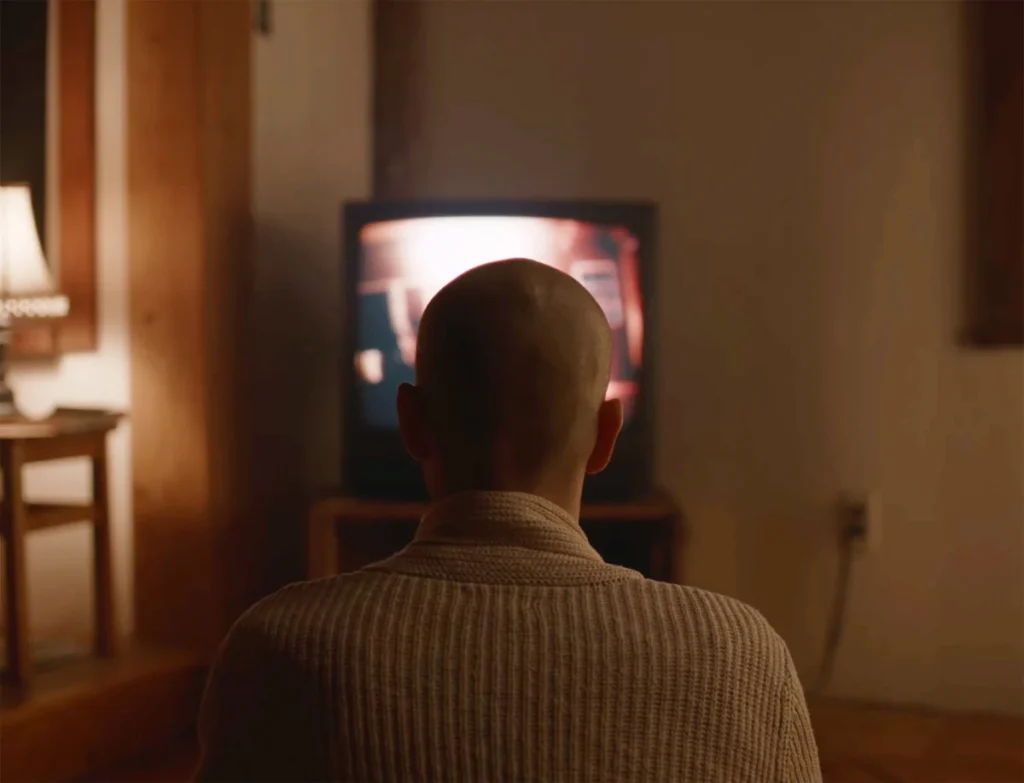

Black Fawn Films has officially released the festival trailer and promotional poster for Death of a Yellow Bird, an upcoming independent psychological horror feature directed by acclaimed Canadian genre filmmaker Cody Calahan. The project, which is scheduled to make its world premiere this month at Fantastic Fest 2026 in Austin, Texas, positions itself at the intersection of avant-garde visual storytelling and vintage, analog-based terror. Early promotional materials and festival descriptions have drawn striking comparisons to visionary auteur Terrence Malick, while cementing the film’s place in the modern wave of liminal, atmospheric horror alongside titles such as Skinamarink, Backrooms, and Undertone.
The feature stars actor Ari Millen in the central role of an unnamed protagonist grappling with terminal illness, profound isolation, and a haunting past. As the indie horror circuit anticipates its upcoming theatrical and festival run, industry observers are closely monitoring how Death of a Yellow Bird will expand the boundaries of acoustic terror and experimental narrative structures within the contemporary horror landscape.
Main Facts and Plot Premise
At the core of Death of a Yellow Bird is a narrative rooted in grief, terminal illness, and psychological deterioration. The plot follows an unnamed protagonist who makes the heavy, solitary decision to halt his cancer treatments. Seeking solace, reflection, and a quiet place to process his reality, he retreats to his family’s long-abandoned cabin situated deep within the freezing expanse of a snowy winter landscape.
Cut off from modern civilization, his only ties to the outside world are strained, infrequent conversations with his wife and mother. However, the anticipated peace of his isolation is quickly shattered when he begins to sense an inexplicable, malevolent presence within the aging structure. This psychological unraveling is compounded by a repressed personal tragedy that he cannot fully recall.
The situation shifts into supernatural territory when the man uncovers an old camcorder and a collection of vintage VHS home videos buried beneath his childhood home. Desperate to maintain a sense of stability, legacy, and connection to his family, he begins recording video diaries intended for his young son. Yet, as he reviews the tapes, he discovers alarming audio anomalies. Garbled, staticky noises, distorted voices, and threatening sounds recorded on the magnetic tape convince him that a hostile, spectral entity is sharing the space with him. The narrative relies heavily on these auditory hallucinations and analog distortions to blur the line between the protagonist’s fading medical condition, his repressed memories, and an actual supernatural haunting.

Production Background and Creative Team
Death of a Yellow Bird is the latest directorial endeavor from Cody Calahan, a prominent figure in Canadian independent genre cinema. Calahan has built a diverse filmography over the past decade and a half, directing notable horror projects including Antisocial and its sequel Antisocial 2, Let Her Out, The Oak Room, and Vicious Fun, in addition to contributing to television projects such as The Haunted Museum series.
Known for his versatility within the genre, Calahan’s involvement in Death of a Yellow Bird extends far beyond traditional direction. Capitalizing on his deep understanding of atmospheric tension, Calahan also served as a producer on the soundscape-driven horror film Undertone, an A24 project released earlier in the year. This background heavily informs the sound design of Death of a Yellow Bird, where audio acts as the primary vehicle for terror.
The film is produced by a tightly knit core team of genre veterans, including Chad Archibald, Cody Calahan, Jeff Maher, and lead star Ari Millen. The production was spearheaded by Black Fawn Films, a production company recognized for championing distinct, independently financed Canadian horror projects that prioritize practical effects, psychological depth, and atmospheric dread over conventional studio tropes.
Chronology of Development and Festival Premiere
The rollout of Death of a Yellow Bird follows a calculated festival trajectory typical of prestige independent horror cinema. Development on the project moved swiftly through Black Fawn Films, with principal photography utilizing the stark, claustrophobic winter environments of rural Canada to enhance the protagonist’s sense of isolation.
The release of the official festival trailer and poster on September 18, 2026, marks the primary public unveiling of the project. This promotional push serves to build momentum ahead of the film’s scheduled world premiere at Fantastic Fest 2026, which takes place this month in Austin, Texas. Fantastic Fest, renowned as the largest genre film festival in the United States, provides a prime launchpad for independent horror features seeking critical acclaim, audience buzz, and potential distribution deals for broader theatrical and streaming rollouts.

As of mid-September 2026, no official wide-release date or secondary distribution platform has been confirmed by the filmmakers or Black Fawn Films. Industry analysts anticipate that following its premiere in Austin, the film will embark on a broader international festival circuit throughout the fall and winter seasons before securing a specialized release.
Supporting Data and Genre Context
The emergence of Death of a Yellow Bird arrives at a time when the horror genre is experiencing a profound shift toward lo-fi, analog, and liminal aesthetics. In recent years, audiences have demonstrated an increasing appetite for minimalist, highly atmospheric horror that rejects high-budget CGI in favor of tactile textures and psychological ambiguity.
Films like Skinamarink demonstrated that micro-budget horror relying on grainy digital textures, prolonged static shots, and ambient soundscapes could achieve both viral success and critical debate. Similarly, projects like the Backrooms phenomenon and Undertone have capitalized on the unsettling nature of liminal spaces—environments that feel familiar yet profoundly wrong.
Death of a Yellow Bird synthesizes these trends by anchoring its supernatural elements in obsolete analog technology: the VHS tape and the camcorder. The use of magnetic tape degradation, video tracking lines, and audio static serves as a metaphor for memory loss and decay, mirroring the protagonist’s terminal diagnosis. Furthermore, the film’s stylistic comparisons to Terrence Malick highlight an ongoing trend within modern horror where directors employ poetic, naturalistic cinematography, contemplative pacing, and non-linear emotional beats to elevate genre filmmaking into the realm of high art.
Statements, Festival Reactions, and Critical Expectations
While comprehensive reviews will follow the film’s upcoming screening at Fantastic Fest 2026, early promotional descriptions from festival programmers have set high expectations for the project. Organizers have categorized Death of a Yellow Bird as a "slow-burn, atmospheric horror" experience designed to test the psychological endurance of viewers while offering a uniquely cathartic emotional resolution.

Programming notes emphasize that the film’s strength lies not in traditional jump scares, but in its meticulous sound design and psychological realism. By utilizing garbled, staticky audio to communicate the presence of the otherworld entity, the film forces the audience to decode the horror alongside the protagonist. This auditory approach has drawn praise from critics of independent cinema, who note that Calahan’s recent work in soundscape-heavy projects has equipped him with the technical expertise necessary to make audio a primary antagonist.
Ari Millen’s performance as the ailing, isolated protagonist is also expected to be a focal point of critical discussion. Millen, an established presence in genre television and independent film, carries the emotional weight of a narrative that balances the very real horror of terminal illness with supernatural dread.
Broader Impact and Industry Implications
The trajectory of Death of a Yellow Bird highlights the ongoing viability and creative health of independent Canadian genre cinema. Operating outside major Hollywood studio systems, production entities like Black Fawn Films continue to carve out a distinct market niche by producing high-risk, artistic horror features that appeal to discerning genre fans.
The film’s success at Fantastic Fest 2026 could have broader implications for how analog horror and experimental storytelling are received by mainstream distribution platforms. As audiences continue to fragment across streaming services and boutique theatrical releases, films that offer distinct visual identities and immersive, sensory-driven experiences are increasingly sought after by specialty distributors such as A24, IFC Films, and Shudder.
Whether Death of a Yellow Bird successfully bridges the gap between arthouse poeticism and traditional genre terror will be determined as it meets audiences in Austin this month. However, the initial response to the trailer indicates a strong public appetite for stories that confront mortality through the distorting lens of memory, technology, and isolation. As the horror community awaits further release date announcements and festival reactions, Cody Calahan’s latest feature stands as a notable entry in the evolving landscape of contemporary independent cinema.