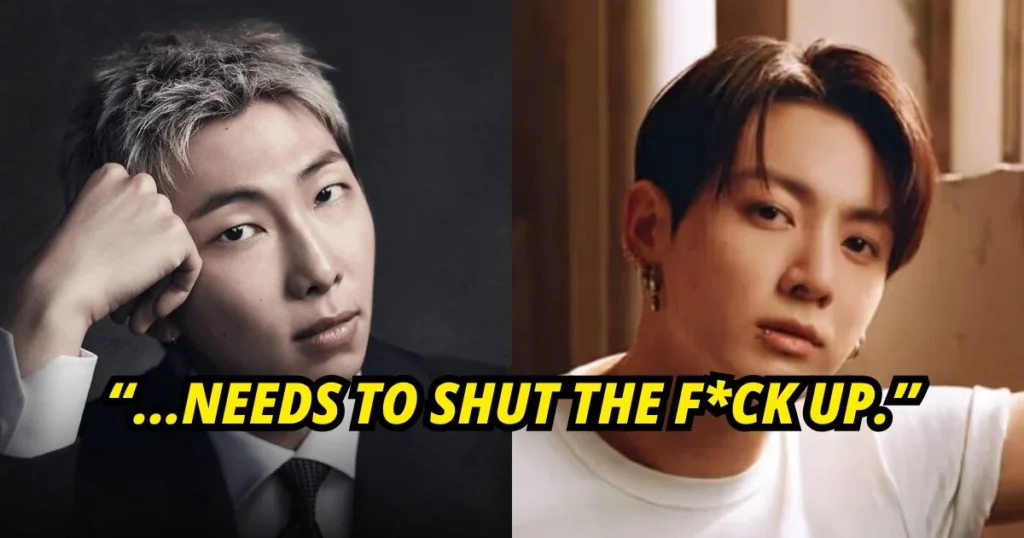

Following the conclusion of BTS’s third consecutive sold-out concert in Las Vegas, the group’s leader, RM (Kim Namjoon), engaged with fans through a live broadcast on the social media platform Weverse. While the session was initially intended to provide behind-the-scenes insights into the group’s latest creative endeavors and their recent return to the global stage, it has instead ignited a complex debate within the global fandom. The controversy centers on RM’s decision to share intimate details regarding the emotional well-being of his fellow member, Jungkook, during the group’s mandatory military service period. As the group navigates its first full-scale world tour since the completion of their enlistments, these comments have highlighted the delicate balance between transparency and the individual privacy of high-profile idols.
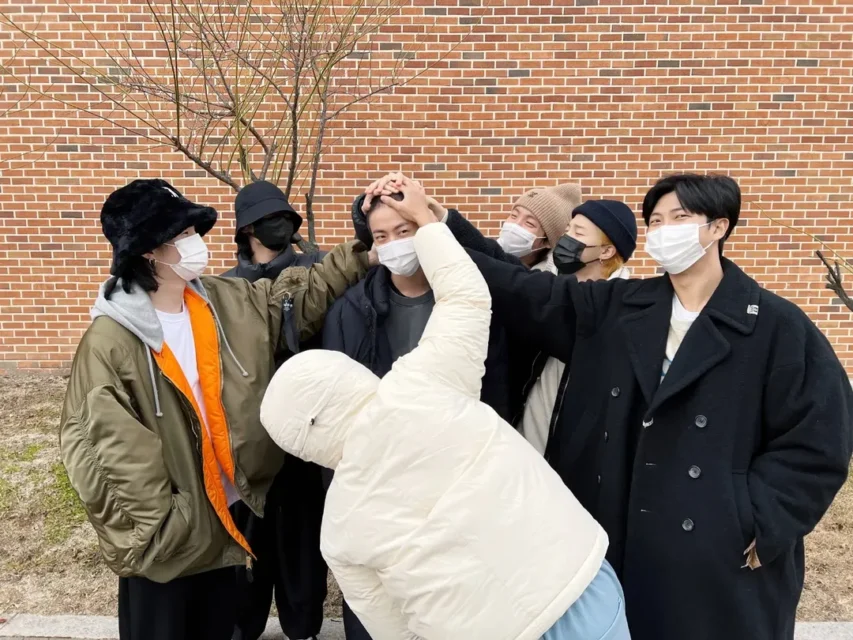
During the broadcast, which took place on May 28, 2026, RM delved into the production history of the group’s recent project, "Arirang." He detailed the rigorous preparation required for the "2.0" choreography, admitting that despite his years of experience, he felt the need to arrive an hour early to dance rehearsals to maintain the group’s high standards. However, the conversation shifted toward the psychological landscape of the members during their time apart. RM reflected on a specific gathering that occurred shortly after the group’s eldest member, Jin, was discharged from service in June 2024. According to RM, this was a period of significant mental strain for the entire group, as they were still roughly a year away from a full reunion. He specifically noted that Jungkook experienced a particularly difficult emotional period, describing a scene where the younger artist was visibly moved to tears while the older members discussed the necessity of staying united to protect the group’s future.
The Chronology of BTS Military Service and Reunion
To understand the weight of RM’s comments, it is essential to look at the timeline of BTS’s hiatus and subsequent return. The group’s transition into military service began in December 2022, when Jin became the first member to enlist. Over the following year, the remaining members—J-Hope, Suga, RM, Jimin, V, and Jungkook—commenced their respective duties. Suga’s discharge in June 2025 marked the official end of the group’s "military era," allowing for the full seven-member reunion that fans had anticipated for over two years.
The period between 2022 and 2025 was characterized by a steady stream of solo releases, which allowed each member to explore their individual musical identities. However, the pressure of maintaining the group’s global brand while serving in the military remained a constant theme in their rare public communications. RM’s recent revelation provides a glimpse into the "re-entry" phase—the period when members began to transition from their roles as soldiers back into their roles as global pop icons. The gathering at Jimin’s house, mentioned by RM, appears to have been a pivotal moment where the members confronted the reality of their long separation and the uncertainty of their collective future.
Divergent Perspectives Within the Fandom
The reaction to RM’s broadcast has been polarized, reflecting broader discussions regarding idol autonomy and the role of a group leader. One segment of the fandom, known as ARMY, has expressed concern that RM overstepped professional and personal boundaries. These critics argue that Jungkook has always been selective about what he shares regarding his personal life and emotional struggles. By revealing that Jungkook cried or felt "miserable" during his service, RM may have inadvertently stripped Jungkook of the agency to tell his own story.

Social media posts from concerned fans highlighted that Jungkook had held numerous live broadcasts of his own since his discharge but had never chosen to disclose those specific vulnerabilities. Some fans went as far as to accuse RM of using Jungkook’s emotional state to bolster a narrative of "leadership" or group unity, suggesting that the details were "made-up nonsense" or exaggerated for dramatic effect. This critique taps into a long-standing tension in K-pop culture: the fine line between a leader acting as a spokesperson for the group and an individual infringing upon the private experiences of their peers.
Conversely, a large portion of the fanbase has come to RM’s defense, viewing his comments as an act of profound vulnerability and honesty. For these supporters, RM’s story was not an attempt to expose Jungkook, but rather a testament to the deep, familial bond shared by the members. They argue that RM’s narrative emphasized the group’s resilience and the "human" side of an industry that often demands perfection. By acknowledging that the members struggled with their mental health and feared for their future, RM provided a relatable context for the group’s triumphant return in 2026. These fans pointed to RM’s reflection on the nature of fame—noting his comment that "people can love you today and hate you tomorrow"—as a realistic assessment of the pressures the group faces, which only their internal bond can mitigate.
Psychological Implications of Military Service on High-Profile Icons
The controversy also brings to light the psychological toll of mandatory military service on South Korean celebrities. For members of a group like BTS, who have spent over a decade in the global spotlight, the sudden transition to the structured, anonymous environment of the military can be jarring. Psychologists specializing in the entertainment industry have often noted that the "gap" in a career caused by enlistment can lead to anxiety regarding relevance and the potential loss of a fanbase.

RM’s description of the members’ "poor mental state" during the middle of their enlistment cycle aligns with documented patterns of "mid-service slump," where the initial novelty of the military wears off, but the end of the term remains distant. For Jungkook, who debuted at a very young age and has spent his entire adult life as a member of BTS, the prospect of the group dissolving or losing its momentum would logically be a source of significant distress. RM’s decision to share this, while controversial, highlights the reality that even the world’s most successful artists are not immune to the pressures of national duty and career uncertainty.
The Role of Leadership in the Post-Enlistment Era
As the leader of BTS, RM has historically occupied the role of the group’s primary communicator, particularly in international settings. His leadership style has often involved a high degree of transparency regarding the group’s creative processes and internal dynamics. However, as the members grow older and their individual brands become more distinct, the expectations for how a leader should represent the group are evolving.
The current backlash suggests that a segment of the audience now expects a more individualized approach to privacy, where even the group leader is expected to seek consent before sharing the emotional experiences of other members. This shift reflects a broader trend in K-pop where "solo stans" (fans of a specific individual within a group) are increasingly protective of their favorite member’s image, sometimes at the expense of group cohesion.
Broader Impact on BTS’s 2026 World Tour and Future Activities
Despite the online debate, the group’s professional momentum remains unaffected. The Las Vegas residency continues to see record-breaking attendance, and the "Arirang" project is performing well on global charts. Industry analysts suggest that while these internal "fandom wars" can be intense, they rarely impact the overall commercial success of a group of BTS’s stature. In fact, the level of discourse surrounding RM’s comments only serves to illustrate the deep emotional investment fans have in the group’s narrative.
Moving forward, the incident may prompt a more cautious approach to future live broadcasts. As the members of BTS continue their 2026 tour, the focus will likely remain on their musical output and the collective celebration of their return. However, RM’s comments have ensured that the story of their military service will not just be remembered as a period of absence, but as a period of significant, and sometimes painful, personal growth.
In conclusion, RM’s Weverse Live has served as a catalyst for a necessary conversation about the boundaries of shared history within a group. Whether viewed as an unnecessary intrusion or a moving tribute to brotherhood, the revelation of Jungkook’s emotional struggle during the military serves as a reminder of the human cost of global stardom. As BTS continues to define the landscape of modern music in 2026, the balance between their public personas and their private realities remains one of the most compelling aspects of their journey. The group’s ability to weather these internal and external pressures will ultimately determine the longevity of their legacy in the post-military chapter of their careers.