
The Initial Selection and Structural Revisions
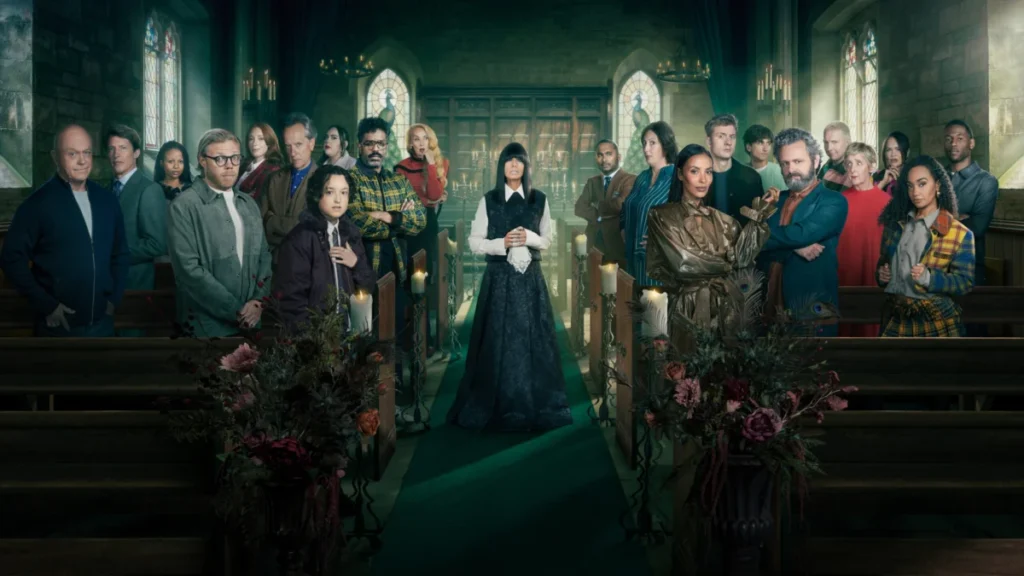
In previous iterations of the celebrity format—most notably the series featuring Alan Carr, Jonathan Ross, and Cat Burns—the production typically launched with a cohort of three established traitors. However, the current season has opted for a leaner, more volatile approach. Producers have confirmed that only two individuals were initially designated as traitors upon their arrival at the Scottish Highland estate.
The selection process, which saw the stars interact with Winkleman regarding their personal preferences for the roles, resulted in the appointment of actor Richard E Grant and television presenter Maya Jama. By narrowing the initial pool to a duo, the production team has fundamentally altered the power dynamics of the opening phase. With fewer traitors to share the burden of deceit, the risk of early detection is amplified, forcing the pair to navigate the social minefield with heightened caution.
Chronology of the Opening Episode
The premiere episode followed a meticulously choreographed sequence of events designed to test the resolve of the participants. Upon their arrival, the celebrities were acclimated to their surroundings before being summoned to the turret for the initial briefing. It was here that Winkleman communicated the deviation from the established format.

As the episode progressed, the tension reached a critical juncture when Richard E Grant inadvertently raised suspicions among the wider group of faithfuls. By declaring his role in a manner that drew unwanted attention, Grant inadvertently placed a target on his back, necessitating an immediate strategy to reinforce the traitor team.
To address the vulnerability of the duo, Winkleman introduced a novel recruitment mechanism. Two faithfuls—journalist Amol Rajan and comedian James Acaster—were identified as potential candidates for recruitment. This process required a theatrical and psychologically taxing confrontation: Rajan and Acaster were instructed to lie in coffins while the existing traitors, Grant and Jama, deliberated on which candidate would better serve their long-term survival. The choice was not merely about loyalty; it was a strategic calculation to mitigate the damage caused by Grant’s earlier indiscretion.
Analytical Overview: The Evolution of The Traitors
The success of The Traitors lies in its synthesis of game theory and human psychology. Since its inception, the show has functioned as a microcosm of social hierarchy and trust-building. By integrating celebrities into this environment, the production leverages the public’s existing perceptions of these figures, adding an extra layer of complexity to the gameplay.
Data from previous seasons indicates that the most successful traitors are those who can successfully balance aggression with subtlety. The decision to limit the initial traitor count to two is a strategic move by the production to drive faster-paced television. By forcing an immediate recruitment from the pool of faithfuls, the show guarantees a shift in power dynamics within the first 48 hours of play. This "pressure cooker" environment is intended to minimize the "coasting" effect often seen in reality television, where contestants remain passive for the duration of the series.

Contextual Background and Production Value
The series continues to be filmed in the atmospheric setting of Ardross Castle in the Scottish Highlands. The location is an integral part of the show’s brand identity, providing a stark, gothic backdrop that reinforces the themes of isolation and paranoia. From a production standpoint, the use of high-definition cinematography and the signature "round table" sequences serves to heighten the visceral nature of the accusations.
Industry observers have noted that the celebrity edition carries a different weight than the civilian version. While civilian contestants often play with a degree of desperation linked to the life-changing prize money, celebrity contestants are frequently motivated by reputation management and the challenge of the game itself. This divergence in motivation often leads to more sophisticated, albeit sometimes more fragile, social alliances.
Implications of the New Recruitment Strategy
The introduction of the "coffin deliberation" segment marks a significant escalation in the show’s psychological intensity. By forcing potential recruits to endure a period of sensory deprivation and uncertainty, the producers are testing the emotional stability of the candidates.
For Amol Rajan and James Acaster, the implications are profound. Accepting a role as a traitor requires the participant to systematically dismantle their existing relationships with the faithfuls. For a public figure, this involves a risk to their personal brand, as the role of the traitor is often perceived negatively by the viewing audience. However, history shows that the "villain" edit is often the most memorable, providing the participant with significant screen time and narrative agency.

Official Statements and Participant Dynamics
While the BBC and Studio Lambert maintain a strict embargo on the results of the recruitment, the buzz surrounding the opening episode has been substantial. Internal sources suggest that the production team sought to "destabilize" the contestants earlier than in previous years.
"The goal this season was to ensure that no one felt comfortable, not even for a moment," stated a source close to the production. "By reducing the number of traitors and forcing a recruitment immediately, we have ensured that the sense of impending ‘murder’ is a constant presence."
The dynamic between Grant and Jama has already become a focal point of discussion. As a seasoned character actor, Grant brings a theatrical quality to his deception, while Jama’s experience in live television and high-pressure environments provides a grounded, observant perspective. Their combined skill set makes them a formidable, if currently exposed, pair.
Broader Impact on the Reality Television Genre
The Traitors has effectively redefined the "competition-reality" genre by prioritizing intellectual engagement over purely physical challenges. The show’s reliance on verbal sparring and tactical voting has resonated with a demographic that may otherwise be disinterested in reality formats.

The inclusion of high-profile figures such as Rajan, a respected journalist, and Acaster, a critically acclaimed comedian, indicates the BBC’s confidence in the format’s prestige. It is no longer merely a game show; it is an exercise in social performance. The success of this season will likely influence how other networks approach the development of psychological reality formats, moving away from "influencer-heavy" casts toward those that prioritize diverse intellectual and professional backgrounds.
Looking Ahead: The Next Phase
As viewers await the conclusion of the recruitment process, the primary question remains: how will the new traitor integrate into the existing team, and how long can the group maintain their facade? The upcoming episode is expected to be a turning point, as the murdered contestant’s identity will be revealed, sparking the first major wave of paranoia among the survivors.
The departure of one contestant—either via murder or the rejection of the recruitment offer—will inevitably create a power vacuum. The faithfuls, currently operating in the dark, will have to rely on their intuition and the strength of their social bonds to identify the traitors before they are eliminated one by one.
In conclusion, the start of this series has set a blistering pace. With the reduction of the initial traitor count and the introduction of a more aggressive recruitment phase, the production has successfully raised the stakes. As the celebrities grapple with the realization that their friends may indeed be their enemies, the audience is provided with a compelling masterclass in human behavior, manipulation, and the fragility of trust. The days ahead promise to be as treacherous as the title suggests, with the ultimate victor likely being the one who can best balance the mask of the faithful with the cold, calculated intent of the traitor.