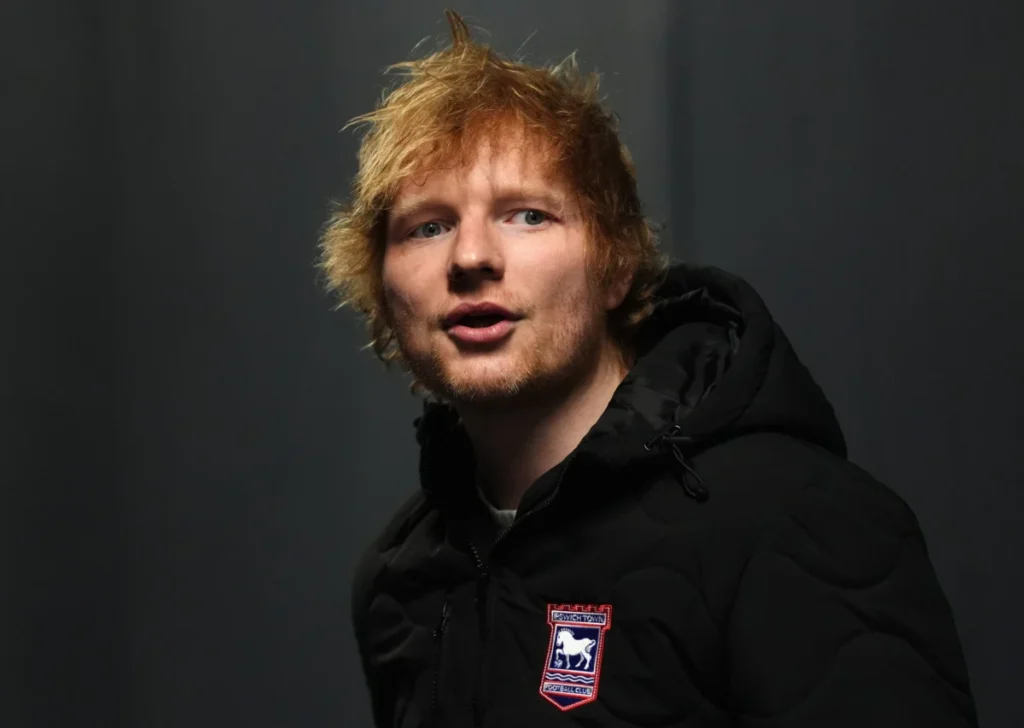

The music industry is currently grappling with a significant fracture as the fallout from Ed Sheeran’s "The Loop" tour intensifies. The sudden removal of rapper Macklemore from the tour’s remaining dates—prompted by an ultimatum from venue owners—has sparked a chain reaction of cancellations, public distancing, and planned demonstrations. The latest development involves the rising girl group Katseye, who have unfollowed Sheeran on Instagram, signaling a shift in industry alliances as artists navigate the intersection of commercial touring obligations and sociopolitical activism.
The Catalyst: Macklemore’s Stance and the Ultimatum
The controversy stems from Macklemore’s vocal activism regarding the ongoing conflict in Gaza. During his performances on the tour, the rapper utilized his platform to perform "Hind’s Hall," a protest song condemning the military campaign in Gaza, while simultaneously addressing the audience about apartheid and human rights. His rhetoric drew significant attention, leading to a direct confrontation between the tour’s logistical requirements and political advocacy.
Reports confirmed that billionaire Robert Kraft, owner of Gillette Stadium, played a pivotal role in the situation. Kraft reportedly mobilized a coalition of stadium owners, presenting Sheeran’s team with a stark ultimatum: either remove Macklemore from the tour or face a total lockout from key venues across the United States. This move effectively forced a choice between commercial viability and the inclusion of an outspoken political artist.

Chronology of the Crisis
The situation escalated rapidly over the course of several days in September 2026:
- September 16: Macklemore uses his platform at the MetLife Stadium to address Jewish audience members directly, clarifying that his criticism of the Israeli government and military policy is not an act of antisemitism, but rather a plea for universal human rights.
- September 17: Following these remarks, the Israeli-American Council launches a formal petition demanding the removal of Macklemore from the tour.
- September 18: The ultimatum from venue owners is delivered. Macklemore announces his departure from the tour, noting that while he values his friendship with Sheeran, he cannot remain silent regarding his convictions.
- September 19: Ed Sheeran issues an official statement acknowledging the ultimatum. He emphasizes his desire to keep his performances "apolitical" to cater to audiences of all backgrounds, while maintaining that his public silence on the conflict does not equate to a lack of personal concern.
- September 20: A wave of support for Macklemore manifests as multiple opening acts, including Finneas, Lukas Graham, and Aaron Rowe, withdraw from the tour. The band Beoga also issues a statement declaring their full support for the rapper’s message.
The "Katseye" Connection and Industry Shifts
The decision by Katseye—the girl group that recently collaborated with Sheeran on the July single "Animal"—to unfollow him on social media serves as a potent barometer of the mood within the younger generation of pop artists. Members Megan Skiendiel, Manon Bannerman, Yoonchae, Daniela Avanzini, Sophia LaForteza, and Lara Raj have effectively distanced themselves from the "Shape of You" singer. The public nature of this move, coupled with Raj and Skiendiel’s explicit support for Macklemore’s posts regarding his departure, suggests a growing divide between artists who prioritize traditional industry silence and those who view their platforms as essential tools for social commentary.
Ed Sheeran’s Internal Struggle
Sources close to the singer-songwriter have painted a picture of a man caught in the middle of a high-stakes geopolitical tug-of-war. Reports indicate that Sheeran is "absolutely furious" at the situation, feeling that he has been "thrown under the bus" by peers who have chosen to withdraw. For an artist who has historically cultivated an image of mild-mannered neutrality, the pressure to adopt a political stance has proven to be a defining crisis.
Sheeran’s team has emphasized that the decision to drop Macklemore was not his own, but rather a concession to the logistical realities of stadium management. Despite this, the narrative has shifted to frame Sheeran as the primary antagonist in the eyes of protesters. The upcoming concert in Philadelphia is now the focus of intense security preparations, as demonstrators plan to protest both outside the venue and, as indicated by some ticket holders, within the arena during the performance.
Data and Financial Implications
The financial implications of the current unrest are substantial. Stadium tours of this magnitude—often grossing upwards of $5 million to $10 million per week—rely on the seamless coordination of promoters, venue owners, and local authorities. The loss of high-profile opening acts complicates the marketing and appeal of the remaining tour dates.
Furthermore, the "apolitical" model that Sheeran adheres to—a standard practice for global pop stars throughout the 2000s and 2010s—is being aggressively challenged by the current climate. Industry analysts note that audiences are increasingly expecting artists to align with their values, making the "middle-of-the-road" approach increasingly difficult to maintain. The boycott organized by venue owners like Robert Kraft represents a significant shift in the power dynamic of live music, where real estate owners are increasingly willing to exercise editorial control over the content performed on their properties.
Broader Impact: The Future of Live Music
The fallout from this tour highlights a burgeoning conflict within the entertainment industry. For years, the "neutrality clause" has been a staple of performance contracts to ensure broad commercial appeal. However, the influence of social media in mobilizing protests and the heightened sensitivity to global conflicts have rendered this neutrality fragile.
When artists like Macklemore use their time on stage to address humanitarian crises, they challenge the sanitized nature of corporate-sponsored tours. When venue owners respond with ultimatums, they risk alienating a generation of artists who view such actions as censorship. The result is an environment where the "touring infrastructure" is no longer a neutral conduit for music, but a contested space where political battles are fought.

Security and Public Safety
As the tour moves to Philadelphia, local authorities have increased security measures. The combination of planned protests and potential "in-stadium" disruption has necessitated a heightened police presence. This shift in operational procedure for a pop concert underscores the severity of the situation. It is no longer just a musical performance; it has become a flashpoint for international debate.
The refusal of artists to cross the "picket line" created by the removal of a peer suggests that solidarity in the music industry is becoming a more potent force than financial incentives. While Sheeran remains a global powerhouse with a massive fanbase, the social capital of the tour is clearly in decline. Whether he can stabilize the tour or if the cascade of departures will continue remains an open question.
Final Observations
The unfolding events represent a critical inflection point for the music industry. The tension between Sheeran’s desire to perform for a broad, inclusive audience and the demand from his peers and fans to take a stance on global issues has created a scenario that few in the industry are equipped to manage. As the tour continues, the focus will likely remain less on the music and more on the political fallout. The incident serves as a reminder that in an increasingly polarized world, the stage is rarely just a place for entertainment; it is a reflection of the societal pressures that define our time.
For Sheeran, the coming weeks will determine whether he can move past this controversy or if his tour will be permanently marred by the political divisions that forced his hand. For the broader industry, the precedent set by this conflict—where venue owners dictate the political content of performances—will likely trigger long-term debates about artistic freedom, contractual obligations, and the moral responsibilities of global stars.