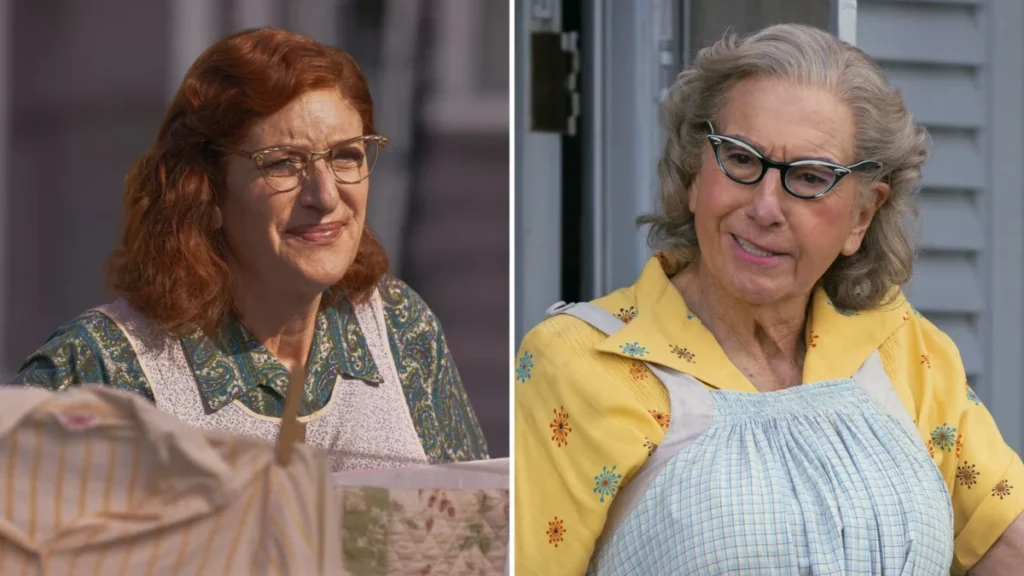

The latest episode of HBO’s sketch comedy series, Life, Larry and the Pursuit of Unhappiness, delves into the historical development of the polio vaccine, specifically focusing on the groundbreaking work of Dr. Jonas Salk. This particular installment, the fourth of the inaugural season, uses a fictionalized historical setting to explore themes that resonate with contemporary public discourse surrounding vaccines, offering a satirical lens on vaccine hesitancy and scientific progress. The episode, created by and starring comedian Larry David, presents a nuanced, albeit comedic, examination of the scientific endeavor and the societal reactions it can provoke.
A Backyard Conversation in 1955: The Genesis of a Sketch
The central sketch unfolds in the suburban backyards of Queens, New York, in the year 1955. The scene features Dora Salk, portrayed by Larry David in drag, engaged in conversation over a fence with her neighbor, Evelyn, played by Judy Gold. The dialogue initially centers on the everyday lives and successes of their children. Dora, the mother of the renowned scientist Jonas Salk, cannot resist her maternal pride, frequently boasting about her son’s tireless work on the polio vaccine. Jonas, the architect of a medical breakthrough that would eventually eradicate polio in many parts of the world, is depicted as being engrossed in his research on the upper level of their home, his concentration frequently interrupted by the demands of his family and the neighborhood.
This seemingly ordinary exchange between two mothers quickly takes a sharp turn, introducing a character that injects a potent dose of contemporary relevance into the historical narrative. While the competitive maternal bragging and the domestic interruptions provide the initial comedic fodder, the true satirical punch lies in the introduction of a neighbor named Bobby. This character, played by Gregg Perrie, is a thinly veiled stand-in for Robert F. Kennedy Jr., a prominent figure known for his outspoken views on vaccines.
The Shadow of Vaccine Skepticism: Bobby’s Introduction
The sketch cleverly positions Bobby as a disruptive element within the Salks’ otherwise idyllic suburban setting. When psychiatric hospital workers arrive in the neighborhood, inquiring about a disturbance, the Salks, perhaps seeking to distance themselves from the perceived eccentricity of their neighbor, direct the authorities towards Bobby. This interaction immediately establishes Bobby as someone who deviates from the community’s norms and potentially causes disquiet.
Bobby’s dialogue and mannerisms are designed to evoke unmistakable parallels with Robert F. Kennedy Jr. His voice bears an uncanny resemblance to the public figure, and his pronouncements are laden with rhetoric commonly associated with vaccine skepticism. The inclusion of concepts like "brain worms" and references to "poached animals" in his speech leaves little doubt about the character’s inspiration. This deliberate choice by the show’s creators serves to draw a direct line from the historical development of a life-saving vaccine to the modern-day controversies surrounding immunization.
The inclusion of this character also carries a personal dimension for the series and its creator. Larry David was formerly married to Cheryl Hines, who is currently married to Robert F. Kennedy Jr. This personal connection adds another layer of insider commentary to the sketch, suggesting an awareness of the intricacies and complexities surrounding vaccine discourse within circles that might otherwise appear closely aligned.
Judy Gold on the Sketch’s Significance
Judy Gold, who portrays Evelyn, shared her perspective on the sketch’s impact and her personal connection to the subject matter. For Gold, the episode touches upon a deeply personal and important issue. "I come from this family that totally believes in vaccines," she told TV Insider. "This issue, for me, is really, really important." This personal investment undoubtedly informed her performance and her understanding of the sketch’s underlying message.
Gold expressed a sense of catharsis in her character’s interactions with Bobby. The opportunity to voice opposition to the character’s anti-vaccine stance, even in a fictional context, provided a release. "We’re never gonna get the opportunity to say ‘f**k you’ and, I know it was make-believe, but being able to scream at him, it was really satisfying in a way," she admitted. This sentiment highlights the emotional weight that vaccine discourse can carry for individuals and families.
Gold further emphasized the power of humor and satire as tools for social commentary. "Humor and satire… yes, it’s a salve, but it’s also a very powerful weapon, and I think Larry used that weapon in the best way possible in this sketch," she stated. Her enthusiasm for participating in a piece that wielded satire so effectively underscores the episode’s intent to provoke thought and discussion.

Larry David’s Vision and the "Jewish Mother" Archetype
Gold also offered insights into working with Larry David and the inspiration behind her character. She described the experience of seeing David in drag as Dora Salk as “hilarious,” noting that he had previously touched upon Jonas Salk’s mother in his stand-up routines, indicating a long-standing interest in this particular narrative. Gold acknowledged David’s reputation as a history buff, suggesting that his engagement with historical figures and events is a consistent element of his creative process.
Regarding her own character, Evelyn, Gold drew inspiration from her own family heritage. "That whole idea of a Jewish woman whose son is a manager of a clothing store, living next door to one of the greatest scientists in the entire world… I love that whole dynamic. It’s ‘Jewish mother’ on so many levels," she explained. This characterization taps into a rich cultural archetype, adding a layer of relatable domesticity and aspiration to the historical setting. The juxtaposition of the ordinary (a clothing store manager’s wife) with the extraordinary (the mother of a medical pioneer) serves to ground the narrative and amplify the comedic potential.
Historical Context: The Polio Vaccine and its Impact
The episode’s focus on Jonas Salk and the polio vaccine is particularly significant given the historical context. Polio, a devastating infectious disease, crippled and killed hundreds of thousands of children annually worldwide before the development of effective vaccines. In the early 1950s, the United States was gripped by fear of polio outbreaks, which often led to summer epidemics that closed schools and swimming pools, profoundly impacting public life.
Jonas Salk, a medical researcher at the University of Pittsburgh, developed an inactivated polio vaccine (IPV). After extensive trials, the vaccine was declared safe and effective on April 12, 1955, marking a monumental public health victory. The announcement was met with widespread jubilation, and the vaccine was quickly rolled out across the nation. This achievement, facilitated by public trust and scientific rigor, stands as a testament to the power of medical innovation.
However, the journey of any significant medical intervention is rarely without its complexities. While the Salk vaccine was overwhelmingly successful, subsequent developments, including the introduction of the oral poliovirus vaccine (OPV) by Albert Sabin, and ongoing debates about vaccine schedules and safety, have contributed to a multifaceted public perception of vaccination.
Broader Implications: Satire as a Tool for Discourse
Life, Larry and the Pursuit of Unhappiness uses this historical moment as a springboard to comment on contemporary vaccine debates. The inclusion of a character so clearly mirroring Robert F. Kennedy Jr. and his well-documented skepticism towards established public health consensus highlights how deeply polarized these discussions have become. The sketch satirizes the tendency for individuals to hold strong, often unscientific, beliefs that can run counter to collective well-being.
The episode implicitly suggests that the anxieties and misinformation that fueled opposition to vaccines in the past, and continue to do so today, are not entirely new phenomena. By framing these debates within a historical context, the show invites viewers to consider the long arc of scientific progress and the persistent challenges of public trust and scientific literacy.
The fact that a major HBO comedy series, helmed by a figure as influential as Larry David, dedicates an entire sketch to this topic underscores the enduring relevance and societal impact of vaccine discourse. It signals that these issues have moved beyond specialized medical and scientific circles into mainstream cultural conversations. The use of satire, as Gold pointed out, serves not only as entertainment but also as a critical tool for examining societal trends and challenging deeply entrenched beliefs.
Conclusion
Life, Larry and the Pursuit of Unhappiness Season 1, Episode 4, offers a compelling blend of historical narrative and contemporary social commentary. Through its portrayal of the Salk family and the introduction of a thinly veiled representation of Robert F. Kennedy Jr., the episode uses humor and satire to explore the historical development of the polio vaccine and its enduring relevance in today’s vaccine-hesitant climate. The sketch, enriched by the perspectives of its cast and the historical weight of its subject matter, serves as a potent reminder of the ongoing dialogue surrounding public health, scientific advancement, and the societal challenges of navigating complex information. The series continues to air Fridays at 9/8c on HBO and is available for streaming on HBO Max.