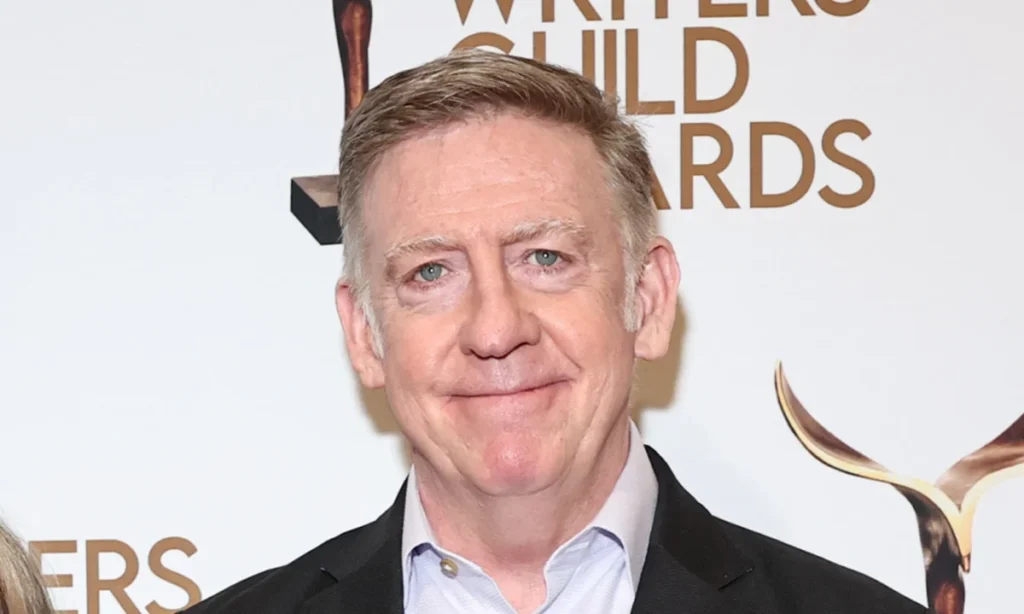

Former 60 Minutes executive producer Bill Owens has publicly declared his unwavering support for veteran correspondent Scott Pelley, following Pelley’s explosive remarks regarding CBS News editor-in-chief Bari Weiss. The public endorsement came as Owens accepted the prestigious New York Press Club’s Gabe Pressman Truth to Power Award on Monday night, a moment he used to underscore his solidarity with Pelley and express profound concerns about the current direction of the storied news program.
"Scott Pelley can smell a fraud a mile away," Owens stated during his acceptance speech, as reported by Deadline. "He stood up the way that I did a year ago, and I couldn’t be prouder of him, and I know all the people at 60 Minutes couldn’t be prouder of him." Owens’ forceful defense echoes his own departure from the program in April 2025, a decision he attributed to a loss of guaranteed editorial independence.
The controversy ignited during a heated staff meeting on Monday, June 1st. According to The Hollywood Reporter, Pelley confronted newly appointed 60 Minutes executive producer Nick Bilton. The exchange reportedly escalated when Bilton asserted that Weiss "loves 60 Minutes." Pelley’s sharp retort was immediate and damning: "She’s murdering 60 Minutes. She does not love this place, she was brought in to kill it and is doing exactly that."
This dramatic confrontation occurred in the wake of significant leadership and personnel changes within the 60 Minutes newsroom. Just last week, Weiss announced that Tanya Simon would be replaced as executive producer by filmmaker Nick Bilton. Furthermore, executive producer Draggan Mihailovich and prominent correspondents Cecilia Vega and Sharyn Alfonsi were reportedly terminated from their positions.
Bill Owens, who served as executive producer for 60 Minutes for many years, characterized these firings as deeply problematic. "They were fired by people who don’t even know what we do, who don’t actually care," Owens stated, implying a disconnect between the new leadership and the core mission of the program. He further alleged the existence of an "internal spy ring" allegedly established by corporate interests within the news division, suggesting a climate of suspicion and control.
Owens also expressed skepticism regarding Nick Bilton’s suitability for the executive producer role, particularly in light of his background. "He’s never worked in television news and thinks that 60 Minutes can be better," Owens remarked. He recounted Bilton’s presentation to staff, where the new producer reportedly presented a notebook filled with ideas and stressed the importance of a commitment to fairness in story selection, the editing room, and the broadcast itself. Owens’ sarcastic interjection, "Right," underscored his deep-seated doubts about the sincerity and potential efficacy of these pronouncements under the new regime.
The former executive producer further elaborated on what he perceives as a stifling environment by referencing the recent ousting of London bureau chief Claire Day. Owens detailed an instance where Day had facilitated arrangements for a CBS News team to travel to Iran, a region where conflict was ongoing and of significant geopolitical interest. However, this reporting initiative was allegedly quashed by higher-ups in New York, citing concerns about it presenting a "bad look."
"It is mindblowing to think CBS News wouldn’t go to the place where war was being prosecuted by our country, but that’s where we are," Owens lamented. His statement highlights a perceived abandonment of critical international reporting, a hallmark of 60 Minutes throughout its history. He concluded his critique with a poignant observation: "So it’s a pity because CBS News and 60 Minutes are institutions, not places where partisans and ideologues should be employed."

Background and Timeline of the Controversy
The current turmoil at 60 Minutes is not an isolated incident but appears to be the culmination of escalating tensions and strategic shifts within CBS News. Understanding the sequence of events provides crucial context for the recent outburst and Owens’ staunch defense of Pelley.
- April 2025: Bill Owens resigns as executive producer of 60 Minutes, citing a lack of guaranteed editorial independence. This decision signals early concerns about the program’s future direction and editorial integrity.
- Early June 2026: Bari Weiss is appointed CBS News editor-in-chief. Her tenure is marked by a series of significant personnel and structural changes within the news division, particularly impacting 60 Minutes.
- June 1, 2026 (Monday): Weiss announces that filmmaker Nick Bilton will replace Tanya Simon as the executive producer of 60 Minutes. Concurrently, executive producer Draggan Mihailovich and correspondents Cecilia Vega and Sharyn Alfonsi are reportedly terminated.
- June 1, 2026 (Monday, Afternoon): During a 60 Minutes staff meeting, Scott Pelley confronts Nick Bilton. When Bilton claims Weiss "loves 60 Minutes," Pelley vehemently disagrees, stating, "She’s murdering 60 Minutes. She does not love this place, she was brought in to kill it and is doing exactly that."
- June 1, 2026 (Monday Evening): Bill Owens accepts the New York Press Club’s Gabe Pressman Truth to Power Award and publicly endorses Scott Pelley’s actions, reinforcing his own criticisms of the current leadership and strategic direction.
This timeline illustrates a rapid series of changes and a growing schism, culminating in Pelley’s public dissent and Owens’ strong backing. The events suggest a deep-seated disagreement over the identity, mission, and editorial priorities of 60 Minutes.
Broader Implications for Investigative Journalism
The public dispute at 60 Minutes raises significant questions about the future of long-form investigative journalism within major broadcast networks. The program, a cornerstone of CBS News for decades, has been lauded for its in-depth reporting and its willingness to tackle complex and often controversial subjects. The recent firings and leadership changes, coupled with accusations of a corporate agenda, could have far-reaching consequences.
Impact on Editorial Independence: Owens’ resignation and Pelley’s outburst both point to a perceived erosion of editorial independence. If journalists feel their work is being compromised by external pressures or a lack of understanding from new leadership, the quality and depth of reporting are likely to suffer. This can lead to a chilling effect, where journalists may self-censor or avoid challenging stories for fear of reprisal or organizational disapproval.
Talent Retention and Recruitment: The departure of experienced producers and correspondents, alongside the alleged dismissal of seasoned professionals, could make it difficult for CBS News to attract and retain top journalistic talent. In an era where investigative journalism is increasingly vital yet faces funding challenges, a perceived hostile or politically charged environment can be a significant deterrent.
Public Trust and Reputation: 60 Minutes has built a formidable reputation over its long history, earning the trust of millions of viewers through its commitment to truth and accountability. Public disagreements and accusations of mismanagement can damage this hard-won trust. If the program is seen as succumbing to corporate or ideological pressures, its credibility with the audience could be severely undermined.
The Role of Legacy Institutions: Owens’ lament that "CBS News and 60 Minutes are institutions, not places where partisans and ideologues should be employed" speaks to a broader concern about the preservation of journalistic integrity within established media organizations. The challenge for these institutions is to adapt to a changing media landscape without sacrificing the core principles that have historically defined their value. The current situation at 60 Minutes serves as a case study in the complex interplay between corporate governance, journalistic ethics, and the pursuit of truth in a high-stakes media environment.
The future of 60 Minutes hinges on its ability to navigate these challenges, potentially through a renewed commitment to its journalistic heritage and a transparent approach to leadership and editorial decision-making. The coming months will likely reveal whether the program can restore confidence and continue its legacy as a beacon of impactful investigative journalism.