

The rapid evolution of digital communication technologies has fundamentally transformed how individuals build relationships, bridge geographical divides, and interact within global communities. However, this hyper-connected landscape has simultaneously created unprecedented avenues for malicious actors to exploit public trust. Among the most pervasive and financially devastating cybercrimes to emerge in recent years is the celebrity-targeted romance scam. By leveraging advanced digital fabrication tools, including artificial intelligence and deepfake media, fraudulent operators are increasingly capable of impersonating high-profile public figures to manipulate vulnerable victims into transferring substantial sums of money.
A stark illustration of this alarming trend surfaced when prominent South Korean actor Lee Dong Wook was inadvertently dragged into a sophisticated romance fraud scheme. A broadcast report by the Seoul Broadcasting System (SBS) brought to light the harrowing experience of a woman in her thirties who fell victim to an elaborate impersonation plot. Over the span of nearly a year, the victim believed she was engaged in a genuine romantic relationship with the acclaimed television and film star. The incident has not only exposed the psychological manipulation tactics employed by modern cybercriminals but has also triggered a swift institutional response from the entertainment industry, prompting renewed warnings regarding the dangers of digital impersonation and financial fraud.
The Anatomy of a High-Tech Romance Scam
The mechanics of contemporary romance scams have grown exponentially more complex with the advent of generative artificial intelligence. Historically, internet fraudsters relied on stolen photographs, rudimentary text-based messaging, and fabricated biographical details to deceive targets. Today, sophisticated syndicates utilize deepfake video technology, voice cloning algorithms, and AI-generated imagery to simulate the physical appearance, voice patterns, and daily lifestyles of trusted celebrities.

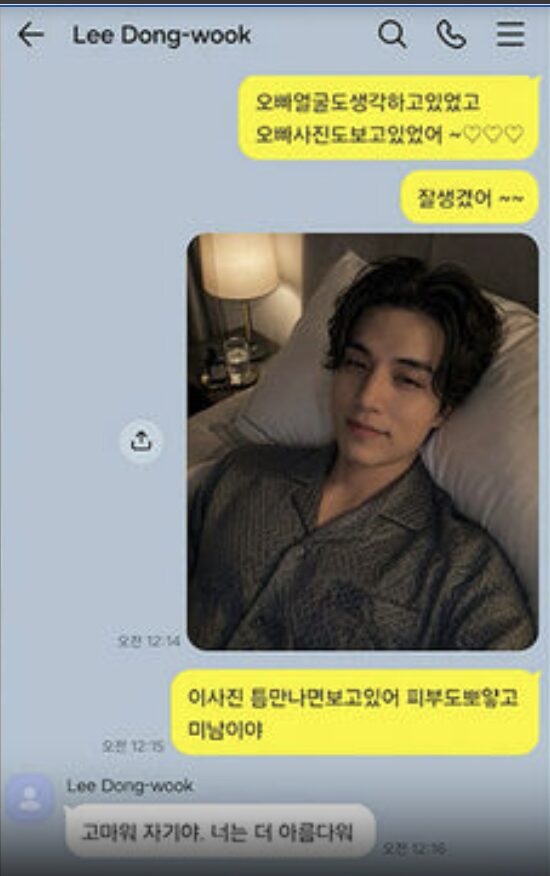
In the case publicized by SBS, the victim—identified only as a woman in her thirties—was ensnared by an individual who meticulously crafted the persona of Lee Dong Wook. To maintain the illusion of authenticity, the perpetrator supplied continuous digital proof, including intricately manipulated photographs and real-time text message exchanges designed to mimic the actor’s communication style. The psychological grip of the scam was so absolute that the victim maintained absolute conviction regarding the legitimacy of the bond, viewing the interactions not as an online encounter, but as a deeply personal, committed courtship with a major public figure.
A Timeline of Deception and Financial Exploitation
The relationship unfolded over a prolonged period, allowing the perpetrator to systematically break down the victim’s financial boundaries and emotional defenses. According to statements provided by the victim during the broadcast investigation, the courtship escalated rapidly from casual digital messaging into discussions of long-term commitment and familial integration.
"Mr. Lee Dong Wook kind of confessed to me, you know," the victim recounted during her interview with SBS. "We even talked about visiting my parents together and having our families formally meet. That’s how far things progressed. So, we ended up becoming romantically involved. He said, ‘I love you, honey.’ I called him ‘oppa,’ and he called me ‘jagiya.’ We talked to each other like that for nearly a year."
As the psychological entanglement deepened, the perpetrator introduced financial pretexts to extract funds from the victim. Under the guise of personal emergencies, investment opportunities, or lifestyle necessities associated with the high-maintenance demands of a celebrity lifestyle, the scammer steadily drained the woman’s financial reserves. To meet these continuous monetary requests, the victim liquidated her personal savings accounts and diverted funds originally earmarked for essential living expenses. By the time the deception was fully uncovered, the total financial loss amounted to approximately 35 million Korean Won (KRW), equivalent to roughly $25,400 USD.

Official Response and Agency Interventions
As public awareness surrounding the SBS broadcast grew, the entertainment industry moved quickly to address the fallout and distance represented talent from the fraudulent activity. On September 16, King Kong by Starship, the management agency representing Lee Dong Wook, issued a formal and unequivocal statement regarding the incident.
The agency sought to clarify the strict operational boundaries governing official communication between artists and their fan bases, emphasizing that legitimate representatives of the entertainment industry will never solicit monetary transactions, private financial details, or valuable items through unofficial channels.
"Artists under King Kong by Starship do not ask for money, payment, personal information, or other valuables through personal messaging apps or social media accounts," the agency stated in its official release.
Furthermore, King Kong by Starship urged the public to exercise extreme caution when interacting with accounts claiming to represent its roster of actors. The agency strongly encouraged individuals to report any suspicious communications, suspected impersonations, or fraudulent financial solicitations directly to the management company or local law enforcement authorities to prevent further victimization.

Broader Economic and Societal Implications
The exploitation of Lee Dong Wook’s identity highlights a troubling escalation in cybercrime trends across South Korea and the wider international digital ecosystem. Romance scams directed at emotionally vulnerable individuals generate billions of dollars annually for organized crime rings operating across borders. The integration of artificial intelligence into these schemes represents a critical turning point, lowering the barrier to entry for fraudsters while increasing the credibility and persuasiveness of their deceptive narratives.
Sociological experts note that public figures operating within the entertainment sphere face unique reputational vulnerabilities in the digital age. While celebrities maintain official fan cafes, verified social media handles, and sanctioned communication platforms such as Bubble or Weverse, the sheer volume of informal digital interactions creates vast gray areas where bad actors can operate with relative impunity. Fans, particularly those seeking emotional solace or personal connection, often lower their guard when confronted with flattering attention from individuals they perceive as trusted cultural icons.
The psychological fallout for victims of romance scams is frequently severe, encompassing not only profound financial ruin but also acute emotional distress, feelings of intense shame, and lasting trauma. Mental health professionals stress that victims of sophisticated digital manipulation should not be viewed merely as negligent, but rather as targets of calculated psychological coercion executed by professional criminal enterprises.
Preventive Measures and Future Outlook
In response to the rising tide of AI-driven fraud, legal scholars, cybersecurity experts, and regulatory bodies are calling for enhanced legislative frameworks to penalize digital impersonation and enforce stricter platform accountability. Major social networking sites and messaging applications are under mounting pressure to deploy advanced detection algorithms capable of identifying deepfake media, automated bot behavior, and fraudulent solicitation patterns before they reach vulnerable users.
For consumers and fans navigating the digital landscape, cybersecurity advocates recommend adhering to stringent verification protocols. Key defensive measures include:
- Verifying the authenticity of social media accounts through official blue checkmarks or direct cross-referencing with official agency announcements.
- Recognizing that legitimate public figures and entertainment agencies are strictly prohibited from soliciting private monetary transfers, cryptocurrency, or bank account details from fans.
- Maintaining healthy skepticism when approached by high-status individuals via direct messaging features on open networking platforms.
- Reporting suspected fraudulent activities immediately to platform moderators, consumer protection agencies, and law enforcement.
As artificial intelligence technology continues to mature, the challenges of verifying digital authenticity will only intensify. The incident involving Lee Dong Wook serves as a poignant reminder of the urgent need for comprehensive digital literacy education, robust institutional protections, and proactive public awareness campaigns designed to safeguard citizens from the sophisticated tactics of modern cyber syndicates.