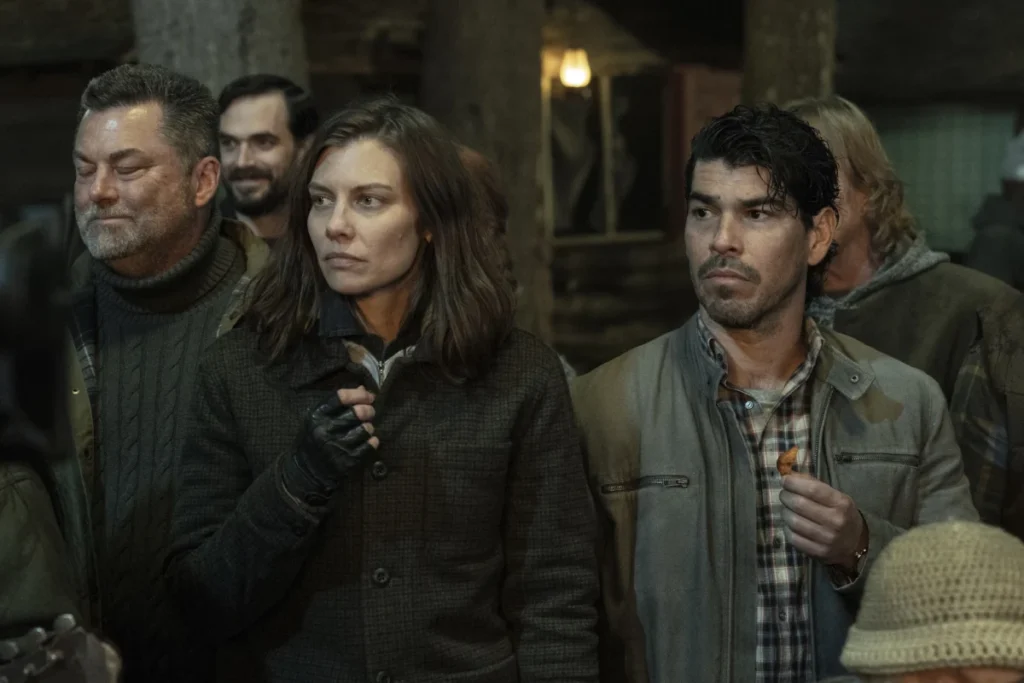

The third season of The Walking Dead: Dead City has officially concluded, leaving the post-apocalyptic landscape of Manhattan irrevocably altered and the complex, volatile partnership between Maggie Rhee and Negan Smith at a significant crossroads. As the credits rolled on the eighth episode, viewers were left with a definitive shift in the status quo, prompting immediate questions regarding the future of this flagship spinoff. While AMC has not yet issued a formal renewal for a fourth season, industry indicators, statements from leadership, and the current narrative trajectory suggest that the network is actively evaluating the potential for further installments.
A Chronology of the Manhattan Conflict
The narrative progression of Dead City has been marked by a transition from a rescue mission to a broader struggle for territorial control. When the series debuted, the primary objective was singular: Maggie Rhee, portrayed by Lauren Cohan, sought to retrieve her son, Hershel (Logan Kim), from the clutches of a ruthless faction in New York City, which had been cordoned off from the mainland. To navigate this hostile environment, she was forced to align with Negan (Jeffrey Dean Morgan), the man responsible for the death of her husband, Glenn.
Throughout three seasons, this dynamic evolved from forced cooperation to a begrudging, albeit functional, alliance. Season 3 raised the stakes significantly by shifting the focus from individual survival to community governance. The introduction of characters such as the physician Luis, played by Raúl Castillo, and the community leader Renata, played by Aimee Garcia, provided a necessary structural backbone to the series. The season culminated in a violent confrontation with the antagonist Dillard, portrayed by Jimmi Simpson. Dillard’s descent into instability served as the catalyst for the season’s resolution, resulting in a power vacuum that Maggie ultimately filled, positioning herself as a leader with Negan serving as her second-in-command and sheriff.
Narrative Implications of the Season 3 Finale
The conclusion of the third season represents a departure from the traditional survivalist themes of The Walking Dead universe. By having Maggie formally appoint Negan as her lieutenant, the show has signaled a maturation of their relationship. The act of Maggie discarding her wedding ring symbolizes an internal shift—an acknowledgment that the past, while not forgiven, can no longer dictate the tactical requirements of the present.
This development provides a robust framework for a potential fourth season. With the threat of Dillard neutralized and the community in Manhattan established, the narrative scope is now set to expand toward the reclamation of the remainder of New York. This shift from "surviving the dead" to "rebuilding civilization" mirrors the themes explored in the original series but applies them to the unique vertical, claustrophobic environment of the Manhattan ruins.
Industry Context and Strategic Direction
The broader strategy for The Walking Dead franchise is currently undergoing a period of transition. Scott M. Gimple, the Chief Content Officer for The Walking Dead Universe, has been vocal about the shift in production philosophy. Following the conclusion of The Walking Dead: Daryl Dixon in 2027, the network is prioritizing a "quality over quantity" approach. This strategic pivot involves longer development cycles and a more deliberate rollout of new content to ensure that storytelling remains resonant with the audience.
In recent commentary, Gimple emphasized that while the franchise is entering a new phase, it is not retreating. The intention remains to keep "ongoing things" in active rotation, provided they continue to meet viewership expectations and narrative standards. The decision to renew Dead City will likely be predicated on a combination of streaming performance metrics on AMC+ and linear ratings on the AMC network. As of mid-2026, the series remains one of the most consistent performers in the portfolio, which serves as a strong indicator of its potential for renewal.

Supporting Data and Demographic Performance
Since its inception, the spinoff has maintained a distinct demographic appeal. Unlike the original series, which relied on a large ensemble cast, Dead City has leaned into the "buddy-cop" dynamic between Cohan and Morgan. This pairing has historically provided a high return on investment for the network, as the two actors possess a proven chemistry that drives engagement on social media and keeps long-term fans invested in the resolution of their arc.
Internal analysis of the 2026 television landscape suggests that niche, character-driven dramas in established intellectual properties are performing better than broader, less focused genre projects. Dead City benefits from the built-in audience of the original series while maintaining enough distance to attract viewers who may have drifted away from the flagship show in its later years. The consistent viewership retention from the premiere of Season 1 through the finale of Season 3 demonstrates a loyal, albeit discerning, audience base.
Casting and Production Continuity
Should AMC move forward with a fourth season, the logistical path is clear. The primary cast, led by Cohan and Morgan, has expressed a commitment to their respective roles, and the integration of supporting characters like Logan Kim’s Hershel allows for a multi-generational narrative. The production team, including executive producers Brian Bockrath and Colin Walsh, alongside showrunner Seth Hoffman, has established a distinct visual and tonal language for the series. This continuity is essential for a potential Season 4, as the series relies heavily on the atmospheric depiction of a decaying New York.
The production timeline typically follows an 18-month cycle from greenlight to release. Given that the finale of Season 3 has just aired, a formal announcement regarding the future of the series is expected within the next fiscal quarter. The production schedule will likely be influenced by the availability of the lead actors, both of whom remain high-demand talent in the industry.
The Broader Impact on the Walking Dead Universe
The existence of Dead City is a testament to the longevity of the franchise. It has proven that the universe can sustain itself through localized, high-stakes narratives that do not require the massive scale of the original series. By focusing on the moral ambiguity of its leads, the show has carved out a unique space that distinguishes it from other entries in the franchise, such as The Ones Who Live or the aforementioned Daryl Dixon.
The implications for the franchise are significant: if Dead City continues to succeed, it validates the model of smaller, more intimate spinoffs. Conversely, the finale’s open-ended nature—with the reclamation of New York still in its infancy—creates a narrative obligation. To end the series now would leave the most significant structural arc of the show unresolved. From a business and storytelling perspective, a fourth season is the most logical step to capitalize on the momentum established by the conclusion of the Dillard conflict.
Final Outlook
As the franchise moves toward 2027 and beyond, the role of Dead City remains pivotal. It provides the grit and moral complexity that has defined the brand for over a decade while successfully integrating new, high-concept urban settings. The audience is clearly invested in the resolution of the Maggie and Negan arc, and the network is cognizant of the value this specific IP provides to their streaming services.
While fans await the official word from AMC, the narrative evidence and the public comments from the Chief Content Officer provide a clear roadmap. The story of Manhattan is far from concluded. Whether through a traditional fourth season or an alternative format, the trajectory of Maggie Rhee and Negan Smith is expected to continue, likely focusing on the difficult transition from warriors to administrators in a world that remains as dangerous as ever. The bridge between the chaos of the past and the uncertainty of the future is where the next chapter of The Walking Dead: Dead City will undoubtedly be written.