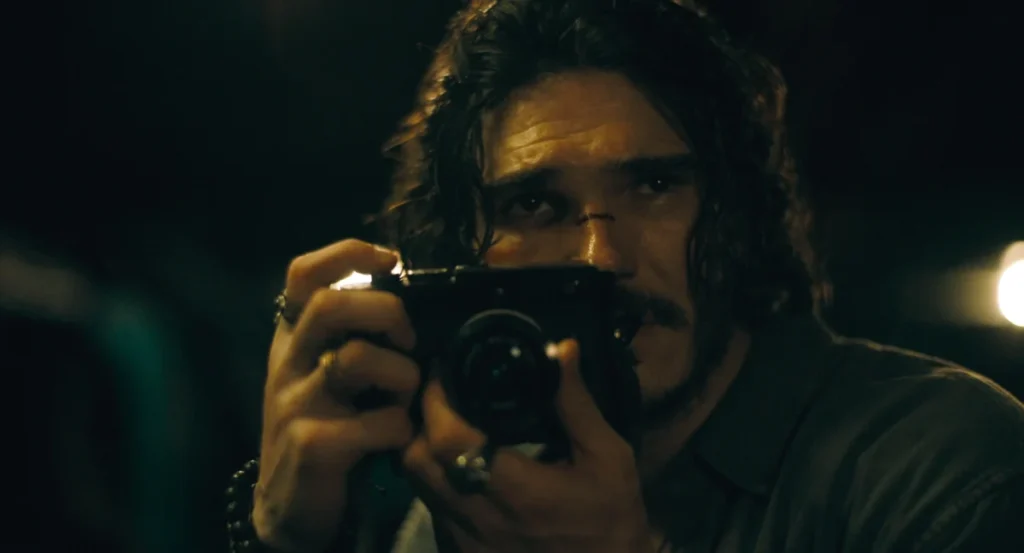

The Toronto International Film Festival (TIFF) has long served as a high-stakes launchpad for major cinematic experiments, but few projects arriving at the 2026 autumn showcase have commanded as much pre-premiere curiosity or generated as sharp a post-screening divide as Zack Snyder’s The Last Photograph. Premiering on Sunday within the festival’s prestigious “Special Events” section, the action thriller represents a monumental shift for the filmmaker. Billed as Snyder’s 13th feature film, the production breaks new ground for the director as his very first fully independent venture, completely bypassing traditional major studio or streaming service financing during its realization.
Yet, as the house lights came up in Toronto, the initial wave of critical and audience reactions proved to be profoundly polarized. While a select contingent of viewers championed the film as a bold, visually arresting evolution of Snyder’s stylistic language, the overwhelming majority of early reviews characterized the project as a grueling, indulgent, and deeply flawed cinematic misfire.
Anatomy of an Independent Passion Project
The road to the screen for The Last Photograph has been exceptionally long, functioning as a true labor of love for the director. Snyder first conceived the original story two decades ago, nurturing the concept through various phases of his career while primarily operating within the high-budget studio system for comic book adaptations and science fiction epics, such as Man of Steel, Batman v Superman: Dawn of Justice, and his two-part Netflix space opera Rebel Moon—the latter of which also featured screenwriting contributions from Kurt Johnstad, who penned the script for The Last Photograph.
Operating outside the conventional Hollywood apparatus, the project was brought to life through independent financing and production. It was produced by Snyder and Deborah Snyder’s banner, The Stone Quarry, alongside Gianni Nunnari’s Hollywood Gang Productions. In a further testament to his hands-on approach, Snyder took on the additional duties of cameraman and cinematographer, striving to imprint his personal visual aesthetic directly onto the celluloid without corporate or editorial oversight.
The narrative framework of the film follows an embattled ex-DEA operative who ventures deep into the remote wilderness of South American mountain ranges to locate the children of his murdered diplomat siblings. He is accompanied and aided on his perilous journey by a troubled, drug-addicted photographer who happened to witness the killings. As the duo navigates the treacherous terrain, the protagonist is forced to confront deep-seated personal demons as the boundaries between reality and psychological torment blur. The cast is anchored by Scottish actor Stuart Martin and Northern Irish actor Fra Fee, while the atmospheric sonic landscape was sculpted by Snyder’s frequent collaborator Hans Zimmer, working in tandem with composers Omer Benyamin and Steven Doar.
A Torrent of Mixed Critical Responses at TIFF
Despite the pedigree behind the camera and the deeply personal nature of the production, the premiere screening triggered an immediate backlash from a substantial portion of the attending press corps and festival audiences, punctuated by sharp division over the total lack of studio filtering.
Detractors pointed to the film’s unvarnished excesses as its primary downfall. Prominent critics did not mince words in their initial dispatches from the festival circuit. Writing for industry and cultural outlets, reviewers labeled the picture everything from a "grotesque, shameless and an utter disgrace" to a "nasty piece of business" that felt like an unfiltered exercise in directorial vanity. Several reviews drew unflattering thematic and stylistic comparisons to controversial socio-political indie dramas, with critics arguing that the film’s 135-minute runtime sagged under the weight of self-serious posturing, excessive and gratuitous violence, and questionable narrative ethics.
"The Last Photograph is about 90 minutes of it is a brutal, unrelenting thriller," noted trade publication coverage from JoBlo.com, capturing the core tension of the reviews. "Some incredible action and uncompromisingly rough. But there’s another 45 supremely indulgent auteur gunk that is snicker-worthy. There’s a good movie in it—but the cut we saw is a (fascinating) mess."
Other critics were less forgiving. Commentators highlighted what they perceived as a bloated, tedious structure, with specific grievances aimed at the handling of female characters, sluggish pacing, and unconvincing lead performances. Reviewers argued that without a studio executive or a traditional gatekeeper to reign in the director’s worst impulses, Snyder delivered an overly indulgent venture that stretched patience thin.
Conversely, a small fraction of the immediate response praised the movie for its uncompromising vision. Supporters commended Snyder for stepping away from green-screen-heavy blockbusters to deliver an intimate, rugged story underscored by stunning natural vistas of Colombian landscapes, evocative framing, and Zimmer’s towering musical compositions. For this appreciative demographic, The Last Photograph represents a courageous, visually striking departure that rewards viewers willing to engage with Snyder’s signature directorial cadence.
Broader Industry Implications and Future Outlook
The intensely divisive debut of The Last Photograph raises significant questions about the commercial and critical viability of Zack Snyder’s brand as he navigates the post-studio landscape. For years, the filmmaker has enjoyed a fiercely loyal global fan base capable of mobilizing massive online campaigns—most notably demonstrated by the multi-year crusade that successfully willed the "Snyder Cut" of Justice League into existence. However, transitioning from studio-backed comic book adaptations and massive streaming packages to independent cinema exposes a filmmaker to a completely different set of critical metrics.
Because The Last Photograph was produced independently without a pre-sold studio distributor or a guaranteed global streaming rollout, its festival run at Toronto serves as a critical temperature check for potential buyers and international distributors. While polarizing films frequently manage to secure niche distribution or find passionate championing among arthouse curators, the vitriolic nature of several mainstream festival reviews may complicate wider acquisition talks.
Furthermore, the discourse surrounding the film touches upon a broader cinematic debate regarding the necessity of editorial oversight. Hollywood history is replete with examples of legendary directors granted absolute "final cut" or complete creative freedom, occasionally resulting in masterpieces, but just as frequently yielding bloated, self-indulgent projects that alienate general audiences. The widespread consensus among dissenting voices at TIFF 2026—that the film’s primary flaw was the complete absence of studio intervention—highlights a growing skepticism among critics toward unfiltered auteur-driven passion projects in the contemporary action genre.
As the Toronto International Film Festival continues, all eyes will remain on how distributors react to the public fallout from the premiere. Whether The Last Photograph undergoes structural revisions, finds a specialized home platform, or remains a polarizing anomaly in Snyder’s filmography, the project has undeniably succeeded in sparking intense industry-wide conversations about artistic freedom, auteur accountability, and the boundaries of modern independent filmmaking.