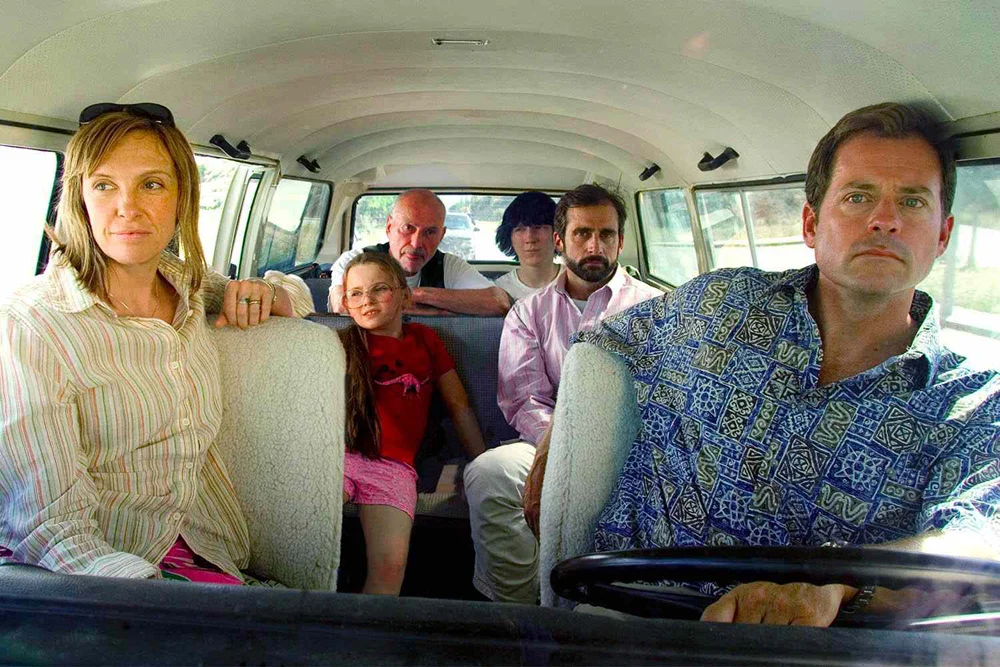

The 2006 film Little Miss Sunshine, directed by the husband-and-wife team of Jonathan Dayton and Valerie Faris, remains a cornerstone of American independent cinema, yet its enduring legacy continues to spark debate regarding its portrayal of social class and its highly stylized aesthetic. Nearly two decades after its premiere at the Sundance Film Festival, the film serves as a primary case study for the "indie dramedy" genre—a movement characterized by dysfunctional family dynamics, road-trip narratives, and a specific "twee" visual language. While the film was a massive critical and commercial success, earning over $100 million against an $8 million budget and winning two Academy Awards, modern critical reappraisals often focus on the tension between its quirky production design and the lived reality of the American working class.
The Genesis and Sundance Phenomenon
The production history of Little Miss Sunshine is as storied as the film’s plot. Screenwriter Michael Arndt, who would later win an Oscar for the script, spent years refining the story of the Hoover family. The narrative follows a fractured family unit—consisting of a struggling motivational speaker, a harried mother, a Nietzsche-reading teenager, a suicidal Proust scholar, a foul-mouthed grandfather, and an aspiring child beauty queen—as they travel from Albuquerque to Redondo Beach in a yellow 1971 Volkswagen Type 2 bus.

The film’s journey to the screen was fraught with financial hurdles. It was originally set up at Focus Features, but after several years in development hell, it was eventually produced independently. Its premiere at the 2006 Sundance Film Festival became legendary when Fox Searchlight Pictures purchased the distribution rights for $10.5 million, one of the largest deals in the festival’s history at that time. This investment paid off significantly, as the film became a "sleeper hit," resonating with audiences who were drawn to its blend of cynical humor and sentimental heart.
Characterization and Performance Analysis
A significant portion of the film’s success is attributed to its ensemble cast, which included established actors like Toni Collette and Greg Kinnear alongside rising stars like Steve Carell and Abigail Breslin. However, critical analysis of these performances often reveals a divide between the actors’ capabilities and the limitations of the script.
Greg Kinnear’s portrayal of Richard Hoover, the patriarch obsessed with his "nine-step" program for success, is frequently cited as a point of contention. Critics have noted a lack of consistency in the character’s writing; the film wavers between presenting him as a truly toxic, emotionally abusive figure and a well-intentioned, if over-stressed, loser. This ambiguity complicates the film’s climax, where the family’s sudden rally around Richard’s failures feels unearned to some viewers.

Toni Collette, playing Sheryl Hoover, provides the emotional anchor of the film. While Collette’s performance is universally praised for its groundedness, retrospective critiques suggest the script gave her little to do beyond embodying the "harried mother" archetype. Similarly, Alan Arkin’s performance as Grandpa Edwin, which won him the Academy Award for Best Supporting Actor, is often viewed today as a collection of "edgy" indie tropes—the drug-using, inappropriately blunt elder—that had already begun to feel cliché by the mid-2000s.
Steve Carell’s role as Frank Ginsburg, a gay scholar recovering from a suicide attempt, was a departure from his comedic work on The Office. While groundbreaking at the time for its sensitive portrayal of depression, the "tragic gay" trope has since been scrutinized for its lack of agency, with some modern audiences finding the characterization dated.
The Conflict of Aesthetic vs. Reality
The most persistent critique of Little Miss Sunshine involves its visual language and production design, overseen by Kalina Ivanov. The film is celebrated for its iconic imagery, specifically the bright yellow VW bus. Screenwriter Michael Arndt chose the vehicle based on his own childhood memories, but this choice highlights what some critics describe as a lack of "aesthetic honesty."

In 2006, the American working class was facing significant economic shifts. Critics argue that the Hoovers, portrayed as being on the brink of financial ruin, live in a world that looks more like a curated vintage shop than a household struggling with poverty. The home is filled with well-preserved mid-century furnishings and nostalgic items, such as a vintage McDonald’s glass from the 1970s. While these items are intended to signify the family’s humble status and "stuck-in-time" nature, they represent a "twee" sensibility that clashes with the reality of 21st-century struggle.
True working-class poverty in the mid-2000s was characterized by the "cheap, the broken, and the disposable"—mass-produced items from big-box retailers rather than aesthetic collectibles. The use of a 35-year-old Volkswagen bus as a primary family vehicle for a man like Richard Hoover, who is obsessed with the appearance of success, is seen by some as a narrative inconsistency. A "striver" in Richard’s position would more likely be driving a dilapidated but newer American sedan or a high-mileage SUV, rather than a classic vehicle that would require significant maintenance and carry a "cool" vintage cachet.
Supporting Data and Financial Milestones
Despite these critiques, the film’s impact on the industry was undeniable. The following data highlights its commercial and critical footprint:

- Box Office: The film grossed $59.8 million in the United States and $40.6 million internationally, totaling $100.5 million. This represented a more than twelve-fold return on its production budget.
- Awards: The film received four Academy Award nominations: Best Picture, Best Original Screenplay (Won), Best Supporting Actor for Alan Arkin (Won), and Best Supporting Actress for Abigail Breslin.
- Sundance Impact: The $10.5 million acquisition by Fox Searchlight set a benchmark for indie film valuations, influencing how studios approached festival acquisitions for the next decade.
- Cultural Footprint: The yellow VW bus became a symbol of the "indie spirit," and the film’s soundtrack, featuring DeVotchKa and Sufjan Stevens, helped popularize the folk-inflected "indie sound" in mainstream media.
Chronology of Key Events
- 2000-2004: Michael Arndt writes the screenplay; the project spends several years in development at Focus Features before being dropped.
- 2005: Marc Turtletaub and Big Beach Films provide the $8 million budget. Filming takes place over 30 days in Arizona and Southern California.
- January 20, 2006: The film premieres at the Sundance Film Festival, receiving a standing ovation.
- January 21, 2006: Fox Searchlight wins a bidding war for distribution rights.
- July 26, 2006: Limited theatrical release begins in seven theaters, expanding to over 1,600 theaters by September.
- February 25, 2007: The film wins two Academy Awards, cementing its place in cinematic history.
Broader Impact and Implications for Cinema
Little Miss Sunshine was a pioneer of the "precious" indie aesthetic that dominated the mid-to-late 2000s, paving the way for films like Juno (2007) and (500) Days of Summer (2009). Its success signaled to major studios that there was a massive market for "quirky" stories about the American family, provided they were packaged with a specific visual and musical flair.
However, the film also serves as a cautionary tale regarding the "gentrification" of poverty in cinema. By making struggle look "quirky" and "vintage," filmmakers risk distancing the audience from the actual hardships of the characters. When a film’s aesthetic works against its themes of financial desperation, it creates a dissonance that can undermine its emotional honesty.
The debate over whether a film’s look can contradict its story remains relevant. In the case of Little Miss Sunshine, the "twee" production design may have contributed to its commercial appeal, but it also invited a deeper critique of how Hollywood perceives the working class. As the industry moves toward more diverse and authentic representations of socio-economic status, the film remains a vital point of reference for understanding the evolution of the American "indie" identity. Whether viewed as a heartwarming masterpiece or a stylized misrepresentation, its influence on the landscape of 21st-century film is permanent.