
The Great American State Fair, conceived as a cornerstone celebration for America’s 250th birthday in 2026, has undergone an unprecedented transformation following the withdrawal of numerous musical acts, culminating in former President Donald Trump announcing his intention to headline the event himself. This pivot signifies a dramatic shift from a planned broad-appeal cultural festival to a overtly political rally, reshaping the nature and perception of what was intended to be a unifying national observance.
The Genesis of the Great American State Fair
The Great American State Fair was initially touted as a grand spectacle, designed to commemorate a quarter-millennium of American independence. Envisioned as a multi-day event blending traditional state fair elements—such as agricultural showcases and family entertainment—with high-profile musical performances, it aimed to attract a diverse audience to Washington, D.C. The event was positioned to be a unifying platform, celebrating American heritage, innovation, and cultural achievements. Organizers had reportedly sought to curate a lineup that would resonate across generations and musical tastes, reflecting the nation’s rich artistic tapestry. Initial promotional materials hinted at an apolitical, festive atmosphere, focusing on patriotism and shared national identity. Such large-scale national celebrations often draw significant public and private investment, with an emphasis on inclusive programming to appeal to a broad cross-section of the American populace. Historically, national commemorative events, while sometimes featuring political figures, rarely have them as the primary entertainment, especially in a partisan capacity.
Initial Lineup and Early Disclosures
The fair’s original artist roster was a diverse mosaic, featuring a mix of hip-hop legends, R&B icons, country stars, and rock veterans. Among the names initially announced were Morris Day and The Time, Young MC, The Commodores, Martina McBride, and Bret Michaels. This eclectic mix suggested an attempt to cast a wide net, appealing to various demographics that typically attend state fairs and large-scale music festivals. For instance, the inclusion of acts like Young MC and The Commodores aimed to tap into nostalgic appeal, while Martina McBride and Bret Michaels would cater to country and rock fans, respectively. These artists represent different eras and genres, suggesting an organizational intent to create a broad, celebratory atmosphere rather than a niche event. The fees for such artists, particularly headliners or legacy acts, can range from tens of thousands to hundreds of thousands of dollars per performance, reflecting the significant financial commitment typically associated with booking a diverse, high-caliber lineup for a national event.
A Cascade of Withdrawals: The "Bait-and-Switch" Allegation
However, the initial enthusiasm surrounding the lineup began to wane as artists started to publicly withdraw their participation. The first announcements of cancellations created ripples of concern, which quickly escalated into a wave of repudiations. Morris Day and The Time, Young MC, The Commodores, Martina McBride, and Bret Michaels all independently issued statements confirming their non-participation.
A recurring theme in their explanations was a perceived misrepresentation of the event’s nature. Young MC, known for his hit "Bust a Move," explicitly referred to the situation as a "bait-and-switch." This sentiment was echoed by other artists, who indicated they were unaware of, or misled about, the event’s underlying partisan affiliations at the time of booking. It suggests that the fair might have been initially presented to artists’ agents as a non-political, patriotic celebration, only for its political leanings to become clearer as the event approached or as its association with specific political figures became more prominent. Such revelations can place artists in a difficult position, as their participation might be misconstrued as an endorsement of a political agenda they do not support, potentially alienating parts of their fanbase. The integrity of an artist’s brand and their perceived neutrality often dictate their willingness to perform at politically charged events.
The withdrawals underscored a significant logistical and reputational challenge for the fair’s organizers. Losing multiple announced performers, especially those with established fan bases, not only creates scheduling gaps but also casts a shadow of controversy over the entire event, raising questions about its planning and transparency.
The Remaining and Ambiguous Participants
Amidst the exodus, a few acts either confirmed their participation or remained in a state of ambiguity. Vanilla Ice, the iconic 90s rapper, officially confirmed his involvement. Meanwhile, Fab Morvan of Milli Vanilli was slated to appear. The detail that Morvan did not sing on Milli Vanilli’s original studio recordings adds a layer of irony, given the context of a performance lineup in flux and the subsequent criticism of "third-rate artists." C+C Music Factory reportedly experienced internal disputes regarding their appearance, highlighting potential divisions even within groups about performing at the event. Flo Rida, another prominent artist, had yet to publicly weigh in on his status, leaving his participation uncertain. The fragmented nature of the lineup—with some confirmed, some withdrawn, and others in limbo—painted a picture of an event struggling to maintain its initial vision and secure its talent.
Donald Trump’s Intervention and Declaration
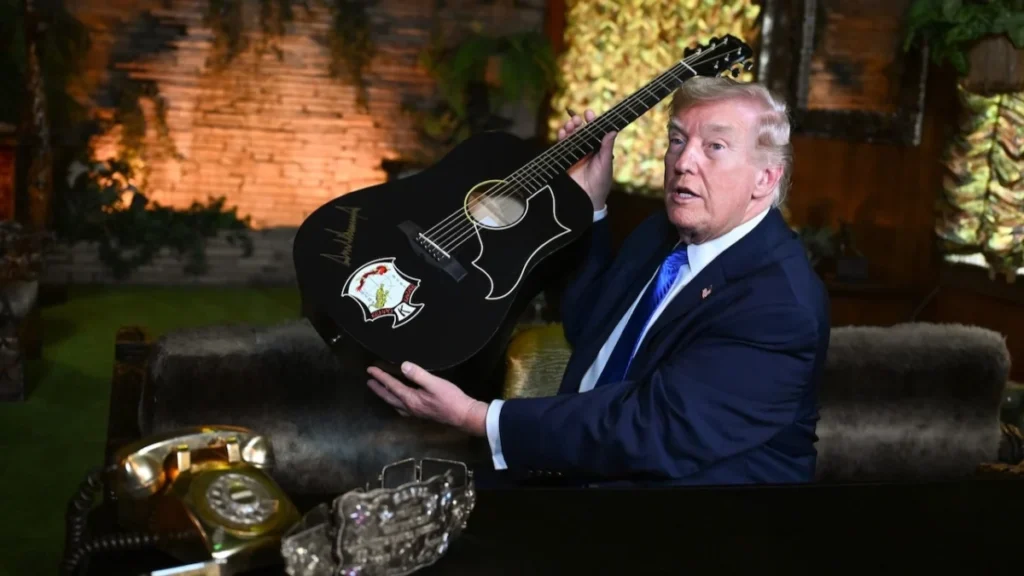
On a Saturday, in a characteristic post to Truth Social, former President Donald Trump addressed the mounting artist withdrawals directly, announcing his intention to fill the void himself. His declaration marked a definitive turning point for the Great American State Fair. Trump framed the artists’ cancellations as evidence of their professional shortcomings and unhappiness, stating, "I understand Artists are getting ‘the yips’ having to do with their performance… so I am thinking about bringing the Number One Attraction anywhere in the World, the man who gets much larger audiences than Elvis in his prime, and he does so without a guitar, the man who loves our Country more than anyone else, and the man who some say is the Greatest President in History (THE GOAT!), DONALD J. TRUMP, to take the place of these highly paid, Third Rate ‘Artists,’ and give a major speech, rallying the Country forward like I have done ever since being President!"
He further elaborated on his preference for specific types of individuals, stating, "I don’t want so-called ‘Artists’ that get paid far too much money, who aren’t happy. I only want to be surrounded by Happy People, Smart People, Successful People, and People that know how to WIN." This statement underscored his desire for an event populated by those aligned with his political and personal philosophy.
Crucially, Trump’s post included a directive: "So, by copy of this TRUTH, I am ordering my Representatives to look at the feasibility of doing an AMERICA IS BACK Rally on Wednesday, Washington, D.C., same time, same location. Only Great Patriots invited – It will be a Wild and Beautiful Celebration of America!" This effectively transformed the Great American State Fair from a potentially bipartisan cultural event into an explicitly partisan political rally, complete with a new name and a targeted audience. The choice of "AMERICA IS BACK Rally" aligns directly with his past campaign rhetoric and political branding, signaling a clear shift in purpose and audience.
Logistical and Financial Implications of the Shift
The transformation of the Great American State Fair into an "AMERICA IS BACK Rally" carries significant logistical and financial implications. Organizing a music festival or a traditional state fair involves complex coordination, including stage setup, sound and lighting, artist hospitality, diverse vendor management, and broad public access. Permits for such events often depend on their non-partisan nature and public benefit.
Conversely, a political rally, while also requiring robust security and staging, operates under different parameters. The focus shifts from varied entertainment to a singular speaker and message. Security protocols for a former president are extensive, often managed by federal agencies in coordination with local law enforcement, and can be considerably more costly and restrictive than for a musical performance. The change in event type also affects permitting. A permit for a music festival might be easier to obtain than one for a large political demonstration or rally in a prime Washington, D.C. location, especially if it involves road closures or significant public space usage.
Financially, the impact is multi-faceted. The cancellation of multiple artists likely incurs contractual penalties or loss of deposits for organizers. Replacing multiple high-paid performers with a single political speaker, while potentially saving on artist fees, introduces new costs associated with rally logistics, enhanced security, and potential legal challenges from withdrawn artists or dissatisfied sponsors. Furthermore, the shift from a broad commercial event to a partisan rally could deter non-political sponsors and vendors who might have been interested in the original fair’s wider appeal. The expected demographic of attendees would also shift dramatically, impacting potential revenue from concessions, merchandise, and local tourism beyond rally-specific sales.
Political and Cultural Analysis
This development is not merely an event cancellation; it represents a significant commentary on the intersection of politics, entertainment, and national celebration in a deeply polarized society. Trump’s self-insertion as the headliner underscores his unique political brand, which often blurs the lines between political campaigning and celebrity performance. His claim of drawing larger audiences than Elvis, even without a guitar, reflects his consistent narrative of unparalleled popularity and influence.
From a political standpoint, transforming a national celebration into a campaign-style rally serves multiple purposes. It allows Trump to maintain a high public profile, energize his base, and control the narrative leading up to future political engagements. The invitation to "Only Great Patriots" reinforces an us-vs.-them dichotomy, a common feature of his political rhetoric, and solidifies the event’s partisan identity. This move also capitalizes on the controversy surrounding artist withdrawals, reframing it from an organizational failure into a perceived victory against "unhappy," "third-rate" artists who are not "winners."
Culturally, the episode highlights the challenges of organizing seemingly apolitical national events in an era of heightened political polarization. Artists, often reliant on broad public appeal, are increasingly wary of being associated with events that carry overt political baggage, especially if that baggage becomes apparent after initial commitments. The "bait-and-switch" accusations suggest a growing demand for transparency from event organizers regarding political affiliations, particularly for events marketed as universal celebrations. The incident also serves as a potent example of how public figures can leverage social media platforms like Truth Social to make significant, unilateral announcements that reshape major public events, bypassing traditional media channels and event protocols.
Broader Implications for National Celebrations and Event Planning
The Great American State Fair saga offers critical insights into the future of national commemorative events. The difficulties encountered in securing and retaining diverse artistic talent, coupled with the eventual political takeover, suggest that future celebrations of national milestones, such as America’s 250th, may face similar challenges. Organizers will likely need to be more explicit about their affiliations and intentions from the outset to avoid controversies and artist withdrawals.
This situation also underscores the increasing politicization of public spaces and cultural events. What might have once been a neutral ground for entertainment and community gathering can now quickly become a battleground for ideological expression. The incident may prompt a reevaluation of how such events are funded, promoted, and managed, particularly concerning their susceptibility to political influence.
Ultimately, the transformation of the Great American State Fair into an "AMERICA IS BACK Rally" with Donald Trump as its sole headliner represents a significant moment in the ongoing narrative of American political and cultural division. It illustrates the formidable power of a single political figure to reshape a national celebration into a partisan platform, signaling a new chapter in the complex relationship between entertainment, patriotism, and political identity in the United States.