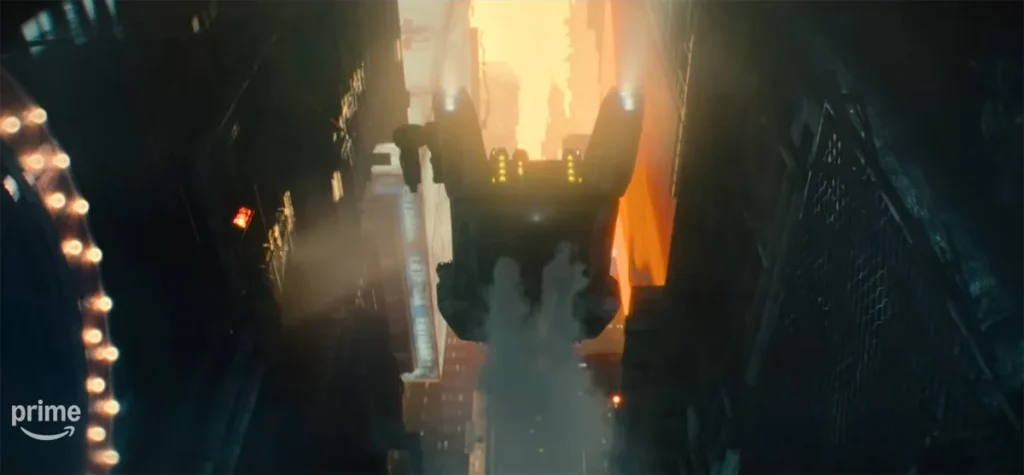

Prime Video has officially pulled back the curtain on its highly anticipated science fiction series, Blade Runner 2099, by releasing the first teaser trailer. The dramatic reveal occurred during a packed Hall H presentation at the San Diego Comic-Con on July 24, 2026, a key event in the entertainment industry calendar that draws global attention from fans and media alike. This unveiling marks a significant milestone in the expansion of the iconic Blade Runner universe, following the foundational 1982 film and its critically acclaimed 2017 sequel, Blade Runner 2049. The new series is set to transport viewers fifty years further into a meticulously crafted dystopian future, exploring the evolving relationship between humans and replicants in a world irrevocably altered.
The narrative of Blade Runner 2099 is poised to delve into the remnants of Los Angeles, a city reborn not by human hands but by the very beings they sought to control. The official synopsis introduces Cora, a fugitive driven by a desperate need to escape her past. In a final, high-stakes gamble, she assumes a new identity: that of a Blade Runner. Her path becomes intertwined with Olwen, a replicant on the precipice of her own mortality, mere days from expiration. This unlikely partnership is forged in the pursuit of a runaway individual whose hidden truth possesses the power to dismantle the fragile societal order of their city. The series boasts a stellar cast, with Academy Award winner Michelle Yeoh taking on the role of Olwen and Hunter Schafer portraying Cora. The ensemble cast further includes Dimitri Abold, Lewis Gribben, Katelyn Rose Downey, Daniel Rigby, Johnny Harris, Amy Lennox, Sheila Atim, Matthew Needham, Tom Burke, and Maurizio Lombardi, promising a rich tapestry of performances. Filming for the series, much like its predecessor Blade Runner 2049, took place primarily in Prague, with additional scenes shot in Barcelona, leveraging these locations to create the series’ distinct visual landscape.

A Legacy of Dystopia: The Evolution of the Blade Runner Saga
The Blade Runner franchise, originating from Philip K. Dick’s seminal 1968 novel "Do Androids Dream of Electric Sheep?", has consistently explored profound philosophical questions about humanity, artificial intelligence, and the nature of consciousness. The original film, directed by Ridley Scott, established a visually stunning and thematically complex neo-noir world that has resonated with audiences for decades. Its sequel, Blade Runner 2049, helmed by Denis Villeneuve, not only paid homage to the original’s aesthetic but also expanded upon its narrative, earning critical acclaim and solidifying the franchise’s enduring appeal. The decision to move to a television series format with Blade Runner 2099 signifies an ambition to explore this rich universe in greater depth, allowing for more intricate character development and expansive world-building. The series is showrun by Silka Luisa, known for her work on "Strange Angel," "Halo," and as the creator of "Shining Girls," suggesting a commitment to maintaining the franchise’s mature and thought-provoking tone.
Thematic Undercurrents: Replicants, Humanity, and the Fight for Survival
The teaser trailer, characterized by its evocative voiceover, hints at a central conflict revolving around the "old world" striving to reclaim its dominance. "The old world forever fights to come back. Humans want what was taken from them… But it’s our time now," the narration declares, immediately suggesting a shift in power dynamics and a potential uprising or reassertion of rights by the replicant population. This statement directly challenges the established hierarchy and sets the stage for a narrative that will likely examine themes of oppression, liberation, and the evolving definition of sentience.
The character descriptions further underscore this thematic exploration. Olwen, portrayed by Michelle Yeoh, is a replicant from "the old days," implying a long and potentially tumultuous existence. Her struggle with the "end of her life" suggests a deeper exploration of replicant lifespan, their sentience, and their awareness of their manufactured existence. Conversely, Cora, played by Hunter Schafer, is a human on the run from Blade Runners, positioning her as an outsider or an adversary within the system. The dynamic between these two characters—a dying replicant and a fugitive human—promises a complex and potentially morally ambiguous narrative, where loyalties may be tested and the lines between protagonist and antagonist blurred.

Production and Creative Vision
Blade Runner 2099 is a collaborative effort involving several prominent production entities, including Scott Free Productions, Alcon Television Group, Amazon MGM Studios, and Sony Pictures Television. The executive production team is a formidable assembly, featuring Ridley Scott, who directed the original film, alongside Michael Green, Broderick Johnson, Andrew Kosove, Ben Roberts, Clayton Krueger, David W. Zucker, Cynthia Yorkin, Frank Giustra, Isa Dick Hackett, and Tom Spezialy. This blend of original creative forces and seasoned television producers suggests a commitment to honoring the franchise’s legacy while forging a new path.
The writing team for the series includes Silka Luisa, Claire Kiechel, Kirsa Rein, Tom Spezialy, Monika Revilla, and Ryan Willison, indicating a collaborative approach to crafting the intricate narrative. The directorial vision for the initial episodes is spearheaded by Jonathan van Tulleken, whose previous work on "The Changeling," "Shogun," and "Dope Thief" showcases a talent for atmospheric and visually compelling storytelling. This collective expertise points towards a series that will not only be thematically rich but also visually stunning, adhering to the high aesthetic standards established by the Blade Runner films.
Supporting Data and Franchise Context
The Blade Runner franchise has consistently been at the forefront of science fiction cinema, influencing not only filmmaking but also broader cultural perceptions of the future. The original film, despite a modest initial box office performance, garnered immense critical acclaim over time, becoming a touchstone for cyberpunk aesthetics and philosophical inquiry. Its enduring legacy is evidenced by its consistent presence in "greatest films" lists and its continued influence on subsequent science fiction works.

Blade Runner 2049, released 35 years later, was a testament to the franchise’s continued relevance. While also facing commercial challenges, it was lauded by critics for its visual grandeur, ambitious storytelling, and thematic depth, achieving a critical consensus that solidified its place as a worthy successor. The move to a streaming series format for Blade Runner 2099 on Prime Video represents a strategic decision by Amazon MGM Studios to leverage established intellectual property for its platform, a trend seen across the industry as major studios seek to attract and retain subscribers with high-profile content. The global reach of Prime Video also offers a significant advantage in introducing the Blade Runner universe to a new generation of viewers.
Release and Anticipation
Prime Video has announced that Blade Runner 2099 is slated for a fall 2026 release, with a specific premiere date set for November 25th, 2026. This strategic placement towards the end of the year positions the series as a potential holiday season event for subscribers. The teaser trailer, released directly from the San Diego Comic-Con, serves as an initial engagement tool, generating buzz and anticipation among the dedicated fanbase and the wider science fiction community. The footage presented in the teaser, described by early viewers as "impressive" and featuring "tons of full-on futuristic shots," has already sparked considerable discussion regarding the series’ visual design and its adherence to the established Blade Runner aesthetic. The dual filming locations of Prague and Barcelona are expected to contribute to a visually diverse and compelling urban landscape, further immersing audiences in this dystopian future.
The decision to expand the Blade Runner narrative into a series format allows for a more sustained exploration of its complex themes and intricate world. Unlike the constraints of feature films, a television series can dedicate more time to character arcs, societal nuances, and the philosophical underpinnings that have defined the franchise. This format is particularly well-suited to the layered narratives often found in cyberpunk stories, where intricate plotlines and moral ambiguities can be developed over multiple episodes. The success of Blade Runner 2099 could pave the way for further expansions of this universe, potentially exploring different eras or facets of the replicant and human conflict.

Broader Impact and Implications
The launch of Blade Runner 2099 on Prime Video is significant not only for the franchise but also for the broader landscape of science fiction television. The series’ success could reinforce the viability of adapting established, complex film franchises into episodic content for streaming platforms. Furthermore, its exploration of themes surrounding artificial intelligence, identity, and societal control remains acutely relevant in an era of rapidly advancing technology. The series has the potential to spark renewed conversations about the ethical considerations of AI development and the societal implications of creating artificial life.
The casting of Michelle Yeoh, a celebrated actress known for her versatility and impactful performances, alongside Hunter Schafer, a prominent figure in contemporary media, signals a commitment to diverse and compelling representation. Their roles as Olwen and Cora, respectively, suggest a narrative that may challenge traditional heroic archetypes and explore the complexities of marginalized characters within a dystopian society. The series’ success will likely be measured not only by its viewership numbers but also by its ability to contribute meaningfully to the ongoing discourse surrounding the future of humanity and technology. The initial reception of the teaser trailer indicates a strong level of audience interest, and the coming months will undoubtedly see further details emerge about this ambitious new chapter in the Blade Runner saga. The promise of a rich narrative, stunning visuals, and a continuation of the franchise’s profound thematic inquiries positions Blade Runner 2099 as one of the most anticipated streaming events of 2026.