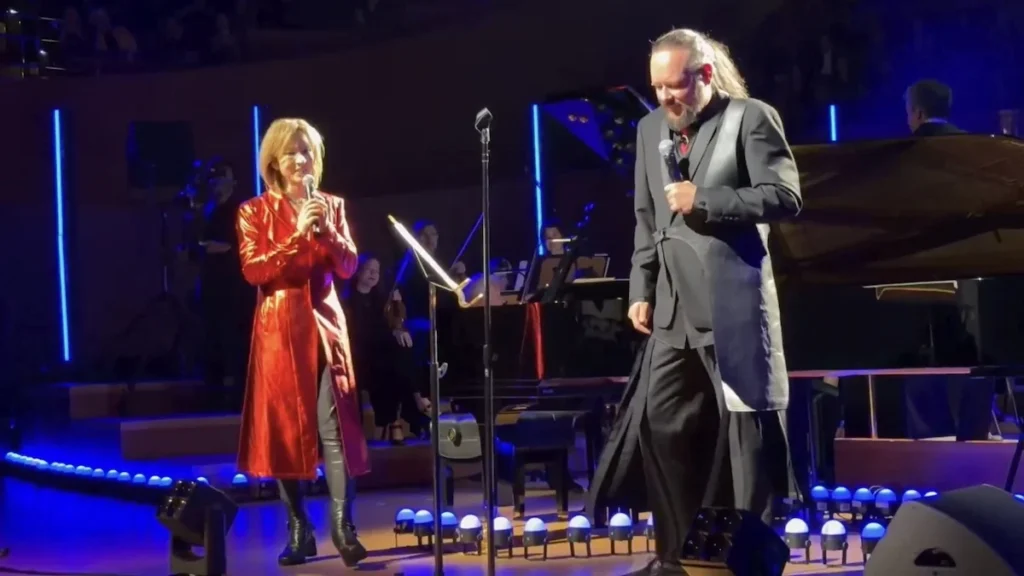

In a groundbreaking convergence of musical genres, Jonathan Davis, the iconic frontman of nu-metal pioneers Korn, made a surprise appearance at Yoshiki’s “Yoshiki Classical in Los Angeles” concert series, delivering a stunning classical rendition of Korn’s seminal hit, “Freak on a Leash.” The unprecedented collaboration unfolded on Thursday, marking the first of a two-night stand for the legendary Japanese rock luminary at the prestigious Walt Disney Concert Hall in Los Angeles. This unexpected fusion of raw nu-metal aggression with the refined elegance of classical orchestration captivated an eclectic audience, underscoring the ever-evolving landscape of contemporary music.
The event, titled “Yoshiki Classical in Los Angeles,” showcases Yoshiki, the multifaceted leader, drummer, pianist, and composer of the globally renowned Japanese metal band X Japan, performing alongside a full orchestra. Known for his ambitious classical crossover projects, Yoshiki presented an evening of his original compositions and reimagined works, culminating in the highly anticipated collaboration with Davis. For the performance of “Freak on a Leash,” Davis’s notoriously visceral vocals underwent a remarkable transformation. Initially, his delivery was notably subdued, a departure from the track’s original frantic intensity, lending an almost melancholic depth to the familiar lyrics. As the performance progressed, however, Davis gradually escalated, allowing his signature aggressive vocalizations to resurface towards the song’s powerful climax, creating a dynamic arc that mesmerized the audience. Yoshiki, ever the maestro, began the piece at the grand piano, seamlessly integrating his intricate classical melodies with the orchestral arrangement. In a climactic shift, he transitioned to the drums for the final, more aggressive segment of Davis’s performance, adding a percussive intensity that echoed the song’s rock roots while still maintaining the classical framework. This masterful interplay between piano, orchestra, drums, and Davis’s evolving vocal performance transformed a nu-metal anthem into a sophisticated yet emotionally charged classical piece.
The Artists: A Legacy of Innovation and Impact
The collaboration between Jonathan Davis and Yoshiki represents a significant moment, bringing together two figures whose careers have profoundly influenced their respective musical landscapes.
Jonathan Davis, as the frontman of Korn, has been a pivotal force in shaping the nu-metal genre since the band’s inception in 1993. Korn’s self-titled debut album in 1994, followed by critically acclaimed works like Life Is Peachy and the multi-platinum Follow the Leader, established them as innovators known for their distinctive blend of heavy metal, hip-hop, and industrial influences, characterized by down-tuned guitars, syncopated rhythms, and Davis’s deeply personal and often harrowing lyrics. “Freak on a Leash,” released in 1998 as a single from Follow the Leader, became one of Korn’s most recognizable tracks, celebrated for its unique scat vocal bridge and groundbreaking music video. Davis’s vocal style, which ranges from guttural growls and screams to haunting melodies and spoken-word passages, has always been a hallmark of his artistry. His willingness to explore diverse musical avenues, including solo work, film scores, and electronic music projects, has consistently demonstrated an artist unafraid to transcend genre boundaries. This classical collaboration with Yoshiki further underscores his artistic versatility and willingness to reinterpret his own iconic material through a new lens.
Yoshiki, on the other hand, is a cultural icon in Japan and a globally recognized musician, composer, and producer. As the leader and co-founder of X Japan, he spearheaded the visual kei movement, propelling the band to unparalleled success in the late 1980s and early 1990s. X Japan’s blend of speed metal, power ballads, and theatrical aesthetics garnered them a massive following, selling over 30 million albums and singles. Beyond his prolific work with X Japan, Yoshiki is a classically trained pianist and composer, having released several classical albums and performed at prestigious venues worldwide, including Carnegie Hall, Wembley Arena, and the Royal Albert Hall. His "Yoshiki Classical" series is a testament to his ambition to merge the raw power of rock with the emotional depth of classical music. He has collaborated with an array of international artists, including Queen, Kiss, and Sarah Brightman, solidifying his reputation as a cross-genre visionary. Yoshiki’s humanitarian efforts, particularly through his Yoshiki Foundation America, also highlight his commitment to global causes, further enhancing his public persona as an artist with a broad societal impact.
The "Yoshiki Classical" Series: A Vision Realized
The "Yoshiki Classical" series is not merely a concert tour but an artistic statement, reflecting Yoshiki’s lifelong dedication to bridging the seemingly disparate worlds of rock and classical music. Initiated as a formal touring concept in the early 2010s, it allows Yoshiki to present his compositions, both new and from X Japan’s extensive catalog, through the rich tapestry of a full orchestra. These performances are typically intimate yet grand, focusing on Yoshiki’s piano prowess and compositional genius.
Prior to the Los Angeles engagement, Yoshiki has brought his classical vision to major cities across the globe, consistently selling out iconic venues. Notable past "Yoshiki Classical" performances include his headlining debut at Carnegie Hall in New York City, where he performed two nights with the Tokyo Philharmonic Orchestra, and a historic show at the Royal Albert Hall in London, making him the first Japanese artist to headline both legendary venues. These performances are characterized by their emotional intensity, often featuring Yoshiki’s deeply personal compositions that reflect themes of loss, resilience, and hope, often intertwined with visual elements and multimedia presentations. The series serves as a platform for Yoshiki to express a different facet of his musical identity, one that underscores his formal training and profound understanding of orchestral dynamics, moving beyond the explosive energy of X Japan to a more contemplative, yet equally powerful, musical expression. The inclusion of rock vocalists like Jonathan Davis into this classical framework demonstrates Yoshiki’s ongoing commitment to pushing artistic boundaries and creating unexpected, compelling musical dialogues.
Genre Fusion: Bridging Worlds and Reimagining Classics
The collaboration on “Freak on a Leash” exemplifies a growing trend in the music industry: the thoughtful and often audacious fusion of rock and metal with classical orchestration. This trend acknowledges the inherent theatricality and emotional depth present in both genres, providing a fertile ground for artists to reinterpret their work and reach new audiences. Historically, artists from Metallica and Scorpions to Deep Purple have famously performed with orchestras, showcasing how rock’s raw power can be amplified by classical grandeur.
What makes the “Freak on a Leash” rendition particularly noteworthy is the specific subgenre involved. Nu-metal, with its aggressive, often dissonant, and rhythmically complex structures, presents a unique challenge for classical adaptation. The original track’s signature elements—Davis’s frantic vocalizations, the heavy, syncopated guitar riffs, and the overall sense of angst and controlled chaos—were meticulously recontextualized. The orchestra likely took on the role of expanding the sonic palette, using strings for soaring melodies or unsettling dissonances, brass for dramatic emphasis, and woodwinds to add textural layers. Yoshiki’s piano likely provided the core harmonic and melodic framework, transforming the guitar riffs into intricate arpeggios or powerful chord progressions. The shift from Davis’s subdued opening to his more aggressive conclusion, matched by Yoshiki’s move from piano to drums, illustrates a carefully planned dynamic arc that respects the original’s emotional journey while reimagining its sonic delivery. This delicate balance of honoring the original’s spirit while infusing it with new classical textures is crucial for such genre-bending endeavors to succeed, moving beyond mere novelty to genuine artistic expression.
Venue Significance: Walt Disney Concert Hall
The choice of the Walt Disney Concert Hall as the venue for this groundbreaking performance is itself symbolic. Designed by architect Frank Gehry and opened in 2003, the Walt Disney Concert Hall is renowned globally for its stunning architectural design, characterized by its curving, stainless-steel exterior, and its acoustically exceptional main auditorium. It serves as the home of the Los Angeles Philharmonic and the Los Angeles Master Chorale, primarily hosting classical music performances.
For an event that so boldly crosses genre lines, holding it within such a hallowed classical institution adds an extra layer of significance. It signals an institutional acknowledgment of the artistic validity of these genre fusions and provides an unparalleled setting for the nuanced interplay between rock vocals, piano, and orchestra. The hall’s superb acoustics would have undoubtedly enhanced every detail of the classical arrangement, from the subtle nuances of Davis’s voice to the intricate layers of the orchestral performance and Yoshiki’s piano work. The decision to host "Yoshiki Classical" at this venue, particularly with a guest like Jonathan Davis, underscores a broader cultural movement towards inclusivity and appreciation for diverse musical expressions within traditional artistic spaces.
Anticipated Reception and Broader Implications
The collaboration was anticipated to draw a remarkably diverse audience. Fans of Korn, accustomed to mosh pits and heavy riffs, would have shared the space with devotees of X Japan, who appreciate Yoshiki’s blend of theatrical rock and classical elegance, as well as traditional classical music enthusiasts curious about the crossover. This demographic blend itself speaks to the unifying power of music and the artists’ abilities to transcend their core fanbases.
While official statements from Davis or Yoshiki regarding this specific collaboration are pending, it can be logically inferred that both artists approached this project with a shared vision of artistic exploration and mutual respect. Davis likely embraced the opportunity to showcase his vocal range and emotional depth in a new, challenging context, potentially expanding his artistic repertoire and appealing to a broader audience. Yoshiki, in turn, would have seen Davis as an ideal collaborator for his classical series, appreciating his unique voice and willingness to push boundaries. This event not only reinforces Yoshiki’s status as a global ambassador for Japanese music and a master of genre fusion but also highlights Davis’s versatility beyond the confines of nu-metal.
The implications for the broader music landscape are significant. Such high-profile collaborations continue to blur the lines between genres, challenging conventional notions of musical categories and encouraging artists and audiences alike to embrace eclecticism. It demonstrates that iconic rock anthems can possess a timeless quality, capable of being reinterpreted and appreciated in vastly different sonic environments. For the music industry, these events create unique touring opportunities, expand market reach, and foster creative innovation. They also underscore the enduring power of live performance, particularly when unexpected elements combine to create a truly memorable and unique experience.
In conclusion, Jonathan Davis’s appearance with Yoshiki at the Walt Disney Concert Hall for a classical rendition of “Freak on a Leash” was more than just a musical performance; it was a testament to artistic courage, genre fluidity, and the universal language of emotion expressed through sound. It stands as a powerful example of how musical boundaries are not limitations but rather invitations for collaboration and reinvention, leaving an indelible mark on the tapestry of contemporary music.