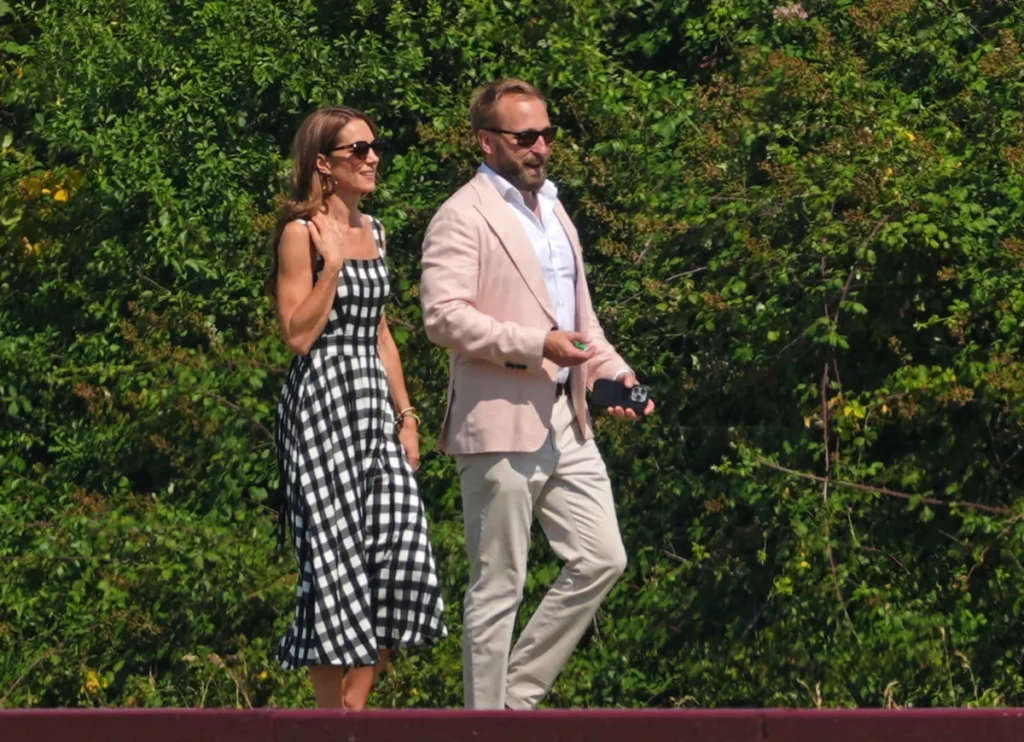

The Princess of Wales made a high-profile appearance at the DMMI Royal Charity Polo Cup today, joining spectators to support the Prince of Wales as he competed in the annual philanthropic sporting event. The appearance, which took place under bright summer skies, highlighted both the royal family’s long-standing connection to the sport of polo and their ongoing commitment to raising significant funds for a diverse range of charitable causes. Accompanied by Lieutenant Colonel Mike Reynolds, the Prince of Wales’ equerry, the Princess maintained a relaxed yet poised presence throughout the afternoon, engaging with guests and staff while observing the match from the sidelines.
The event, held at a prestigious polo club, serves as a cornerstone of the royal summer calendar, specifically designed to generate financial support for organizations that align with the Prince and Princess’s core philanthropic pillars. These include mental health initiatives, early childhood development, and environmental conservation. As the Princess of Wales watched the proceedings, her presence underscored the strategic importance of these informal yet highly visible engagements in maintaining the public profile of the monarchy’s charitable work.
The Significance of the Royal Charity Polo Cup
The Royal Charity Polo Cup is not merely a social gathering but a sophisticated fundraising engine. Over the past decade, charity matches involving the Prince of Wales have raised millions of pounds for various organizations. This year’s event continued that tradition, with proceeds earmarked for several key beneficiaries, including London’s Air Ambulance Charity, Mountain Rescue England and Wales, and the SHOUT mental health support service.

Polo has been a staple of the British Royal Family for generations, serving as both a recreational outlet and a platform for public service. By participating in these matches, Prince William follows in the footsteps of his father, King Charles III, and his grandfather, the late Prince Philip, both of whom were avid players. However, the modern iteration of these events is more pointedly focused on impact. Data from previous years indicates that the Royal Charity Polo Cup consistently raises upwards of £1 million per event, a figure that provides critical operational funding for the recipient charities.
Chronology of the Event
The proceedings began in the late morning as guests arrived at the venue, which was secured with the standard protocol for high-level royal attendance. The Princess of Wales arrived shortly before the commencement of the main match, greeted by event organizers and officials from the DMMI group.
- Arrival and Reception: Upon arrival, the Princess was seen in conversation with Lieutenant Colonel Mike Reynolds. As an equerry, Reynolds plays a vital role in the royal household, assisting with the coordination of the Prince of Wales’s official diary and providing support during public and private engagements. His presence ensured the smooth transition of the Princess from the arrival point to the royal viewing area.
- The Match: The Prince of Wales took to the field as part of a four-man team. The match was characterized by a competitive but friendly spirit, typical of charity-led sporting events. The Princess of Wales observed the game from the marquee, often seen applauding successful plays and discussing the nuances of the match with those in the royal box.
- The Trophy Presentation: Following the conclusion of the match, the Princess of Wales took a central role in the prize-giving ceremony. She presented the winning team with the DMMI Royal Charity Polo Cup and offered commendations to individual players for their sportsmanship and contribution to the day’s fundraising efforts.
- Post-Match Reception: The afternoon concluded with a private reception where the Princess met with representatives from the benefiting charities. These interactions are often where the most substantive discussions regarding the impact of the funds raised take place, allowing the royals to hear firsthand about the challenges and successes of the organizations they support.
Sartorial Analysis and the "Kate Effect"
The Princess of Wales’s choice of attire for the event drew significant attention from fashion analysts and the public alike. Opting for a sleeveless dress by Temperley London, she embraced a more relaxed, summer-appropriate aesthetic that deviated slightly from her more structured formal wear. The dress was complemented by Ralph Lauren sunglasses, Camilla Elphick shoes, and jewelry from Sezane.
Journalistic observation of royal fashion often focuses on the balance between tradition and modernization. The Princess’s decision to wear a sleeveless garment in a semi-public setting reflects a subtle shift in the royal dress code, aligning with contemporary standards while maintaining a high level of elegance. This "sartorial diplomacy" is a key tool in the Princess’s repertoire, allowing her to appear accessible and relatable during outdoor charity events.

Beyond the aesthetic appeal, her fashion choices have a measurable economic impact, often referred to as the "Kate Effect." When the Princess is photographed in specific brands, those items frequently sell out within hours, providing a substantial boost to the British retail and fashion sectors. By choosing a mix of high-end British designers like Temperley London and more accessible international brands like Sezane, she supports both the domestic luxury market and broader retail interests.
The Role of the Equerry: Mike Reynolds
The presence of Lieutenant Colonel Mike Reynolds alongside the Princess of Wales highlights the behind-the-scenes structure that supports the senior members of the Royal Family. An equerry is a high-ranking officer from the armed forces who is appointed to serve a member of the Royal Family for a period of usually three years.
Reynolds, an officer in the Royal Air Force, is responsible for the meticulous planning that goes into every public appearance. During the polo cup, his role was to act as a liaison between the Princess and the event organizers, ensuring that the schedule was maintained and that the Princess was briefed on the individuals she was meeting. The visibility of the equerry at such events serves as a reminder of the close and historic ties between the British Monarchy and the Armed Forces.
Philanthropic Impact and Beneficiary Data
The primary objective of the DMMI Royal Charity Polo Cup is the distribution of funds to organizations that provide essential services to the public. In recent years, the Prince and Princess of Wales have narrowed their focus to ensure that the funds raised have a concentrated impact.

- Mental Health: A significant portion of the proceeds is allocated to the Royal Foundation’s mental health initiatives. This includes support for emergency responders and the development of digital tools for those in crisis.
- Early Childhood: Through the Centre for Early Childhood, the Princess of Wales advocates for the importance of the first five years of life. Funds from the polo match contribute to research and awareness campaigns aimed at transforming how society views early childhood development.
- Conservation: The Prince of Wales’s commitment to the environment, primarily through the Earthshot Prize, is also a beneficiary. The funds help support grassroots conservation efforts across the United Kingdom.
Financial reports from the Royal Foundation indicate that these charity sporting events are among the most cost-effective methods of fundraising, with a high percentage of the gross revenue going directly to the charities after minimal overhead costs are covered by corporate sponsors like DMMI.
Broader Implications for the Modern Monarchy
The attendance of the Princess of Wales at the DMMI Royal Charity Polo Cup is emblematic of the "soft power" wielded by the modern British Monarchy. In an era where the relevance of traditional institutions is frequently scrutinized, the Royal Family’s ability to convene wealthy donors, corporate sponsors, and the general public for charitable purposes remains one of their most potent functions.
The event also illustrates the strategic division of labor within the royal household. While the Prince of Wales engages in the physical and competitive aspect of the day, the Princess of Wales manages the social and ceremonial elements. Together, they project an image of a coordinated and contemporary partnership dedicated to public service.
Furthermore, the informal nature of the polo match allows for a different type of public engagement than the rigid formality of a state visit or a balcony appearance. It provides a visual narrative of a family that is active, engaged with popular sports, and capable of operating within a modern social context. This helps to bridge the gap between the ancient traditions of the Crown and the expectations of a 21st-century audience.

As the royal summer season continues, the success of the DMMI Royal Charity Polo Cup will be measured not just in the goals scored on the field, but in the final tally of donations that will support vital social services across the country. The Princess of Wales’s participation remains a central element of this success, leveraging her global platform to ensure that the focus remains on the charitable missions at the heart of the event.